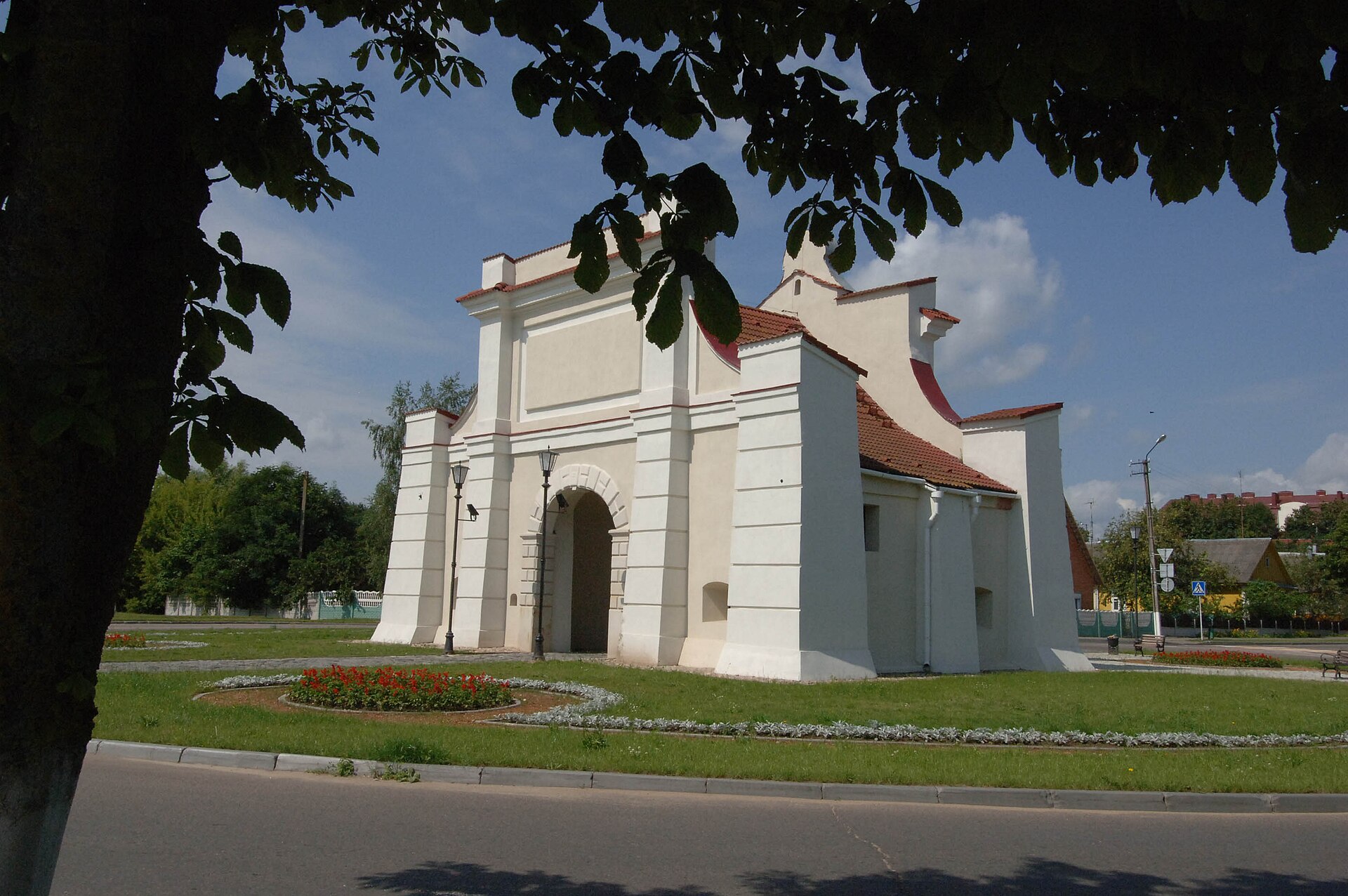
Slutsk is one of those Belarusian towns that quietly holds centuries of history within its streets, and few places embody this as vividly as the Slutsk Gate. Standing at the edge of the old town, this structure is a rare surviving fragment of the fortifications that once encircled the city. Built in the 17th century, the gate was part of a larger defensive system designed to protect Slutsk from invasions and raids. Over time, as the town expanded and modernized, most of the walls were dismantled, leaving the gate as one of the few tangible reminders of Slutsk’s medieval past.
The architecture of the Slutsk Gate reflects the practical yet sturdy design typical of Belarusian fortifications of its era. Constructed from red brick, the gate features a simple arched passage that once served as the main entrance to the town. Above the arch, a small tower rises, adding both height and a sense of grandeur to the structure. The brickwork, though weathered by time, still bears the marks of skilled craftsmanship, with patterns that hint at the gate’s original purpose as both a defensive barrier and a symbol of the town’s importance. Unlike more elaborate gates in larger European cities, the Slutsk Gate is modest in scale, yet its presence is striking in its authenticity.
For centuries, Slutsk was a significant center of trade and culture in the Grand Duchy of Lithuania, and the gate played a role in this history. Merchants, travelers, and even armies passed through its arch, making it a silent witness to the ebb and flow of life in the region. The town’s strategic location along trade routes meant that it was often caught in the crosscurrents of political and military conflicts. The gate, though not as imposing as some of its counterparts in other cities, was nonetheless a crucial part of Slutsk’s identity, marking the boundary between the town and the wider world beyond.
Today, the Slutsk Gate stands as a quiet monument to the town’s resilience. While much of the original fortifications have disappeared, the gate remains, offering a glimpse into a time when such structures were essential for survival. It’s not a grand tourist attraction in the traditional sense—there are no museums inside, no guided tours, and no souvenir stands nearby. Instead, it’s a place that invites reflection, a spot where visitors can pause and imagine the sounds of carts rolling through the arch, the voices of merchants haggling in the streets, and the distant echoes of history that still linger in the air.
The area around the gate has changed dramatically over the centuries. What was once a bustling entrance to a fortified town is now a quiet corner of modern Slutsk, surrounded by low-rise buildings and tree-lined streets. The gate itself is well-preserved, thanks to restoration efforts that have maintained its original character without over-polishing it. Walking through the arch, you can still feel the weight of history, even as the town around it moves forward. It’s a reminder that places like Slutsk are not just dots on a map but living repositories of stories that stretch back hundreds of years.
For those who take the time to visit, the Slutsk Gate offers more than just a photo opportunity. It’s a chance to connect with a part of Belarus that often goes unnoticed by travelers focused on the country’s larger cities. The gate doesn’t demand attention; it simply stands there, a testament to the layers of history that make up this region. Whether you’re a history enthusiast or just someone passing through, it’s worth stopping for a moment to appreciate the quiet dignity of this small but significant landmark.
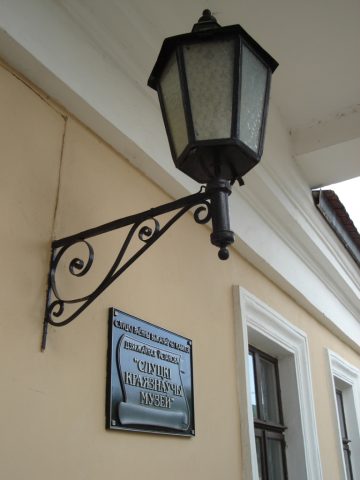
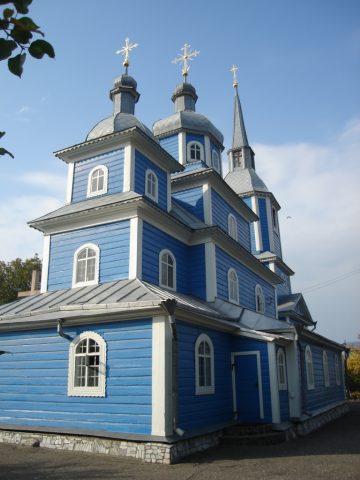
Slutsk itself is a town that rewards exploration. Beyond the gate, the streets are lined with buildings that reflect different eras of the town’s development, from wooden houses with intricate carvings to more modern structures. The nearby St. Michael’s Church, with its striking blue domes, is another point of interest, while the local history museum offers a deeper dive into the town’s past. But the Slutsk Gate remains one of the most evocative spots, a place where the past feels almost tangible.
In a way, the gate is a metaphor for Slutsk as a whole—unassuming yet deeply rooted in history. It doesn’t shout its significance, but those who pay attention will find that it has much to say. Whether you’re drawn to the town for its history, its architecture, or simply the chance to experience a quieter side of Belarus, the Slutsk Gate is a place that lingers in the memory long after you’ve walked through its arch.