The Bernardine Monastery in Slutsk is one of those rare places where time seems to stand still, preserving the quiet dignity of the past amid the hum of a modern town. Perched on the banks of the Sluch River, which gave the city its name, its weathered walls have witnessed centuries of change. Founded in the early 18th century, the monastery was more than just a religious site—it was a cornerstone of Slutsk’s cultural and intellectual life, shaping the rhythms of the town long before the world beyond its borders began to move at today’s relentless pace.
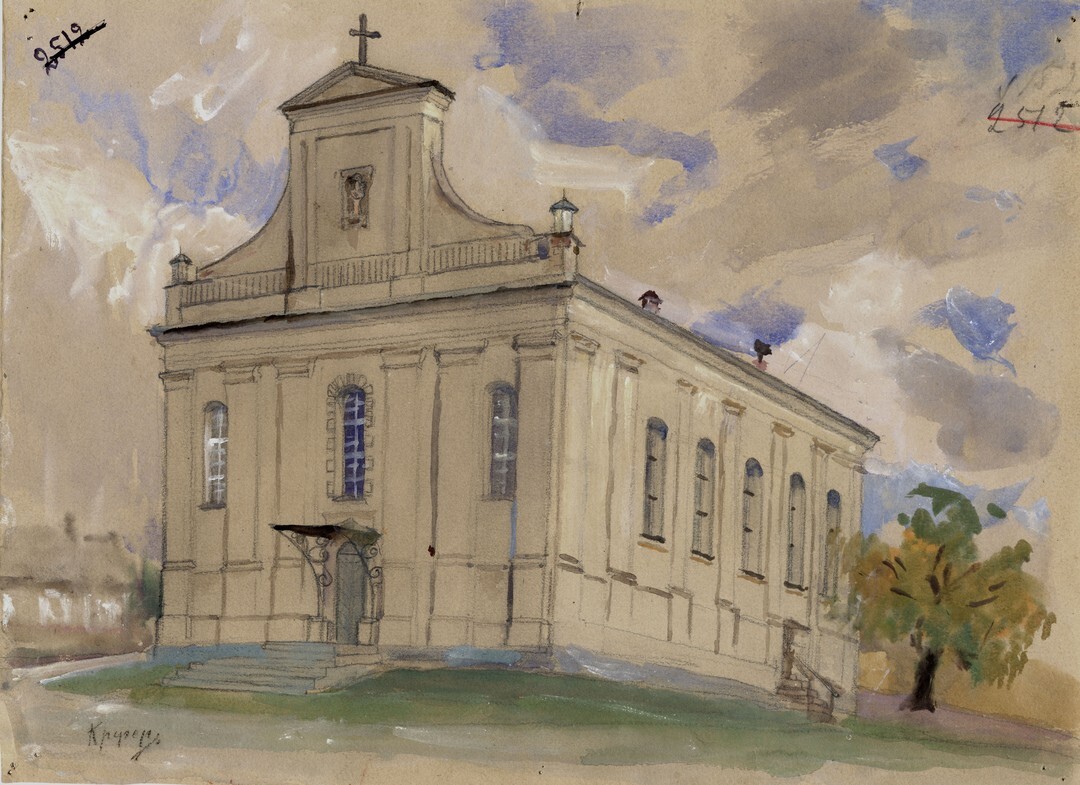
The architecture here is a fine example of late Baroque, a style that flourished in the Belarusian lands during that era. The Church of St. Anthony of Padua, the monastery’s centerpiece, strikes a balance between restraint and elegance. Its façade is adorned with pilasters and niches, while tall windows filter soft light into the interior, casting a gentle glow over the space. The adjoining monastery buildings form a secluded courtyard, once a place of quiet reflection and prayer. Though the complex has endured wars, neglect, and repurposing, its original grandeur still lingers in the details—the curve of an arch, the texture of aged brick, the way the light falls across the stone.
Slutsk itself was a city of significance in the 18th century, a thriving center within the Grand Duchy of Lithuania. The Bernardines, a Franciscan order, played an active role in its affairs, running schools, aiding the poor, and even engaging in the political currents of the time. Their influence waned after the partitions of Poland, when the monastery found itself under Russian rule. By the 19th century, its halls had been repurposed as military barracks, and later, as administrative offices. It wasn’t until the late 20th century that restoration efforts began, slowly returning the complex to its former purpose as a place of worship and reflection.
Inside the church, much of the original decoration has been lost, but what remains offers a glimpse into its past splendor. The high vaulted ceilings, fragments of frescoes, and intricate woodwork speak of the skill of the artisans who once worked here. The altar, though diminished by time, still commands attention with its solemn presence. The monastery buildings now house exhibits on the history of Slutsk and the monastery itself, adding another layer of meaning to a visit. Walking through these spaces, it’s easy to imagine the monks who once lived here, their daily routines woven into the very fabric of the place.
The monastery is more than just a relic of history—it’s a living connection to the past. The quiet of the courtyard, the murmur of the river beyond the walls, the worn stones underfoot—all of it creates an atmosphere that feels timeless. There’s no rush here, no modern clamor, just the sense of being in a place where the weight of centuries is palpable. It’s the kind of spot where you might find yourself lingering, lost in thought, or simply soaking in the stillness.
Today, the monastery serves as both a spiritual and cultural hub. Exhibitions, concerts, and lectures are held here, drawing locals and visitors alike. In the warmer months, the courtyard often hosts small gatherings, where the past and present mingle effortlessly. The monastery has found its place in modern Slutsk without losing its historical essence, acting as a bridge between eras. It’s a reminder that history isn’t just something we read about—it’s something we can still touch, see, and feel.
For anyone visiting Slutsk, the Bernardine Monastery is a must-see. It sits in the heart of the city, an easy walk from other landmarks like the ruins of Slutsk Castle and the old merchant rows. Even if history isn’t your primary interest, the monastery offers something rare: a moment of quiet in a world that seldom slows down. There are no crowds here, no tourist traps—just the quiet dignity of a place that has endured.
The monastery is a testament to how architecture and history can be preserved, not as museum pieces, but as living parts of a community. It may not be as famous as some of Belarus’s other landmarks, but that only adds to its charm. Here, you can step away from the noise of the present and into a space where the past feels close enough to touch. If you find yourself in Slutsk, take the time to visit—it’s a place that lingers in the memory long after you’ve left.