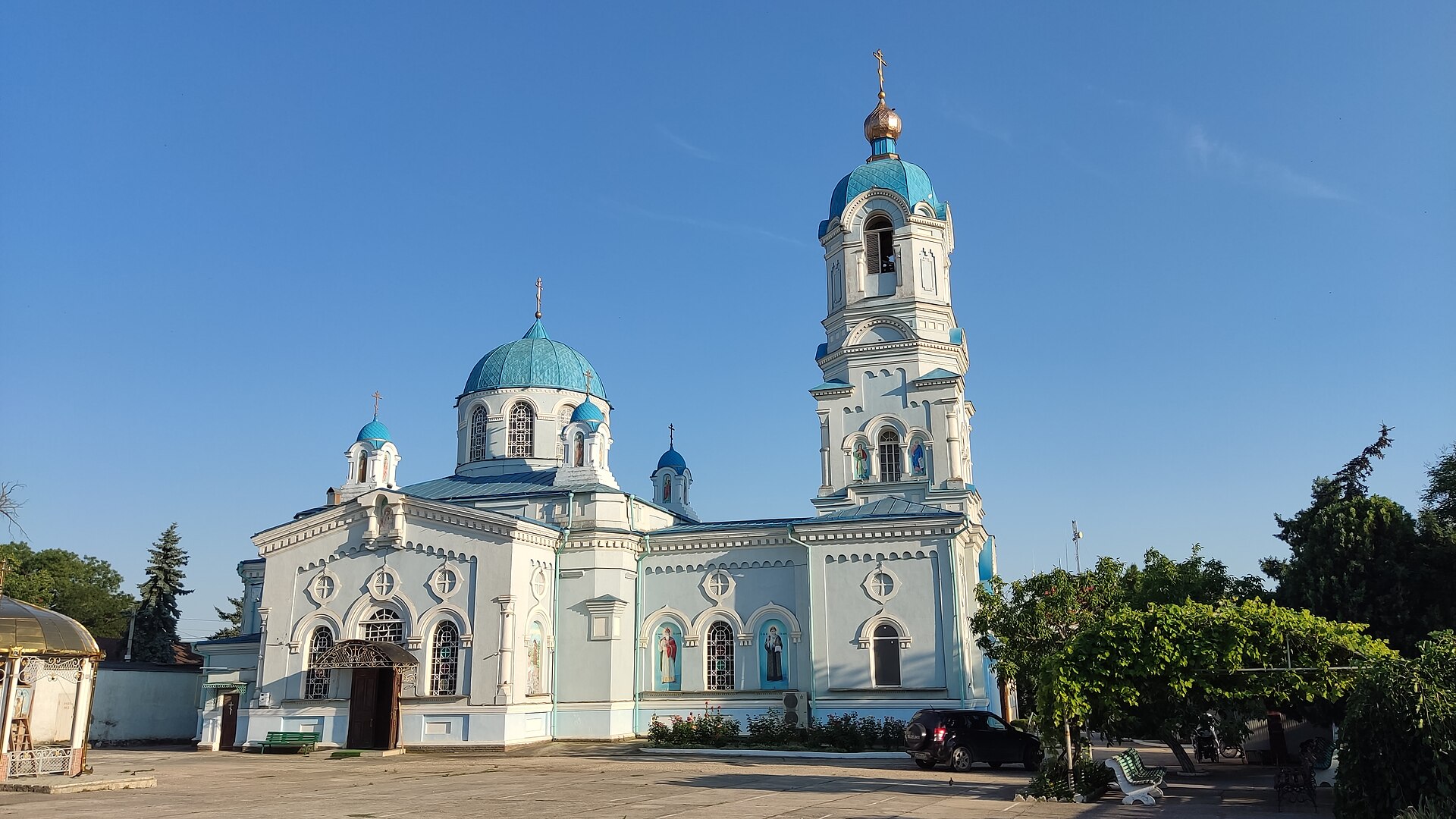
Saky’s St. Elijah Church is one of those quiet places that seem to exist outside of time, preserving the solemnity and warmth of Orthodox tradition. Tucked away in the heart of the town, it doesn’t immediately catch the eye, but as you approach, its presence becomes unmistakable—a sense of stillness, as if the world moves just a little slower here. The church is dedicated to the Prophet Elijah, one of the most revered saints in Orthodoxy, a figure associated with spiritual strength, protection, and divine guidance.
The history of this church is woven into the fabric of Saky itself. Known primarily for its therapeutic mud and salt lakes, the town has long been a place where life unfolded at its own unhurried pace, shaped by the rhythms of nature and work. For generations, the local Orthodox community gathered in small prayer houses or traveled to neighboring towns for services. It wasn’t until the late 19th century, when Saky began to grow as a resort destination, that the need for a proper church arose. St. Elijah’s was built not just as a place of worship but as a cultural and spiritual anchor for both residents and visitors.
The church’s architecture is modest yet harmonious, reflecting the style common to southern Russian Orthodox churches of its time. A single dome crowns the structure, its whitewashed walls standing out against the Crimean sky. The bell tower above the entrance adds a touch of grace, while the interior remains intimate and uncluttered. The iconostasis, painted in traditional style, glows softly in the light filtering through narrow windows. There’s no grandeur here, no overwhelming opulence—just a quiet authenticity that feels more profound than any ornate decoration.
Like many religious sites in Russia, St. Elijah’s endured hardship during the Soviet era. The church was closed, its space repurposed as a warehouse, and worshippers were forced to gather in secret, risking repercussions. Yet even in those years, the memory of the church lived on, passed down through stories and whispered prayers. When the building was returned to the faithful in the 1990s, restoration began slowly, funded by donations. Today, the church stands as if the decades of neglect never happened, a testament to the resilience of both the structure and the community that cherishes it.
Now, St. Elijah’s is more than just a place of worship—it’s a living part of Saky’s daily life. Services, baptisms, weddings, and funerals are held here, each marking the milestones of the town’s residents. On major holidays like Easter, Christmas, and the feast day of the Prophet Elijah, the church fills with people, not all of them regular parishioners but those drawn by the sense of celebration. Summers are especially busy, as visitors from across Russia and beyond stop by to light a candle, say a prayer, or simply sit in the quiet, away from the bustle of the resort.
For locals, the church is deeply personal. Many were baptized here, married within its walls, or brought their children for their first confession. Older residents remember sneaking in as children, playing in the courtyard, and now they bring their own grandchildren. The church is a place where faces become familiar—where people come not just to pray but to talk with the priest, share news, or seek advice. There’s no rigid divide between clergy and congregation; the priest is as much a part of the community as anyone else.
Despite its unassuming appearance, St. Elijah’s plays a vital role in Saky’s identity. The town is known for its healing mud and salt lakes, but the church reminds visitors that there’s more to this place than its therapeutic reputation. It’s a town with a soul, where history isn’t just preserved in museums but lived in the everyday. The church serves as a bridge between past and present, connecting generations and offering a glimpse into the deeper rhythms of life here.
There’s no tourist hustle around St. Elijah’s. No souvenir stalls, no guided tours, no crowds snapping photos. It’s a place for those seeking quiet, reflection, or a moment of peace. You might visit early in the morning, when the sun is just rising and the only sounds are birdsong and the rustle of leaves. Or you could come in the evening, when the soft glow of lamps from within makes the church feel like a sanctuary suspended in time. In those moments, it becomes clear that true beauty isn’t in grand architecture but in the atmosphere created by the people who come here—their faith, their memories, and the sense of continuity they carry with them.