Saky’s Resort Park is one of those quiet, unassuming places that feels like it has always been here, as if the trees and pathways settled into their rhythm long before anyone thought to name them. Tucked along the western coast of Crimea, where the Black Sea stretches out in shades of blue and gray, the park serves as a green heart for a town better known for its therapeutic mud and mineral springs. Unlike the grand, manicured gardens of imperial palaces or the self-conscious charm of modern wellness resorts, this place has grown organically, shaped by time and the slow accumulation of small, everyday moments.
The park’s origins trace back to the late 19th century, when Saky began to attract visitors seeking relief from ailments in its saline lakes and healing waters. Back then, Crimea was already a favored retreat for Russian aristocracy and intellectuals, but Saky remained a modest alternative to the more glamorous resorts of Yalta or Alupka. The park was likely planted as part of a broader effort to make the town more appealing to those who came not just for treatment, but for rest. Over the decades, it expanded, with trees brought in from different parts of the peninsula—oaks, pines, and acacias that now stand tall, their branches forming a canopy over the winding paths.
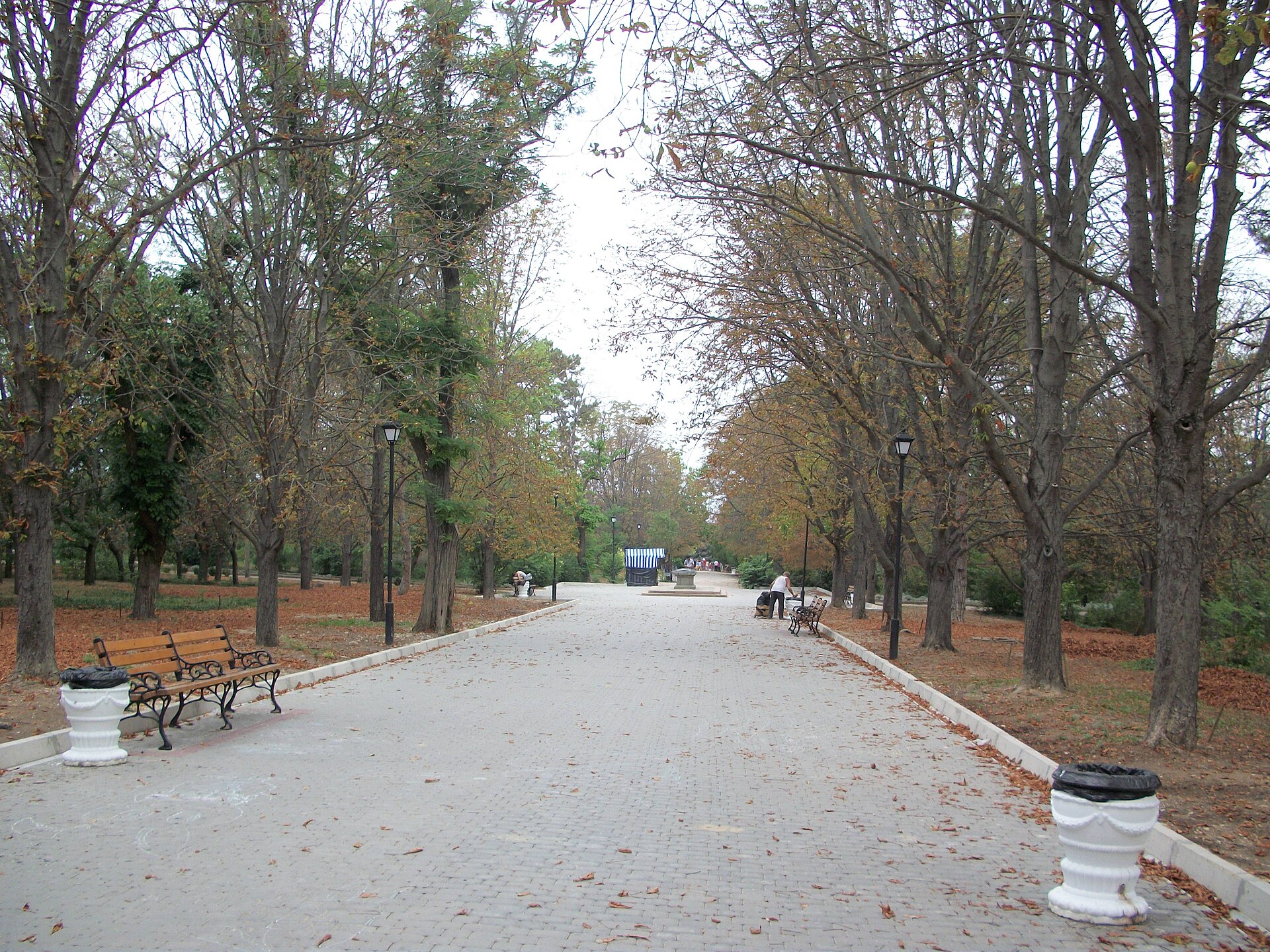
Walking through the park today, it’s easy to forget you’re in a place with a specific purpose. There are no grand fountains or marble statues, no neatly labeled botanical collections. Instead, the space feels lived-in, almost casual, as if the locals have claimed it as their own. In the mornings, elderly couples stroll along the gravel paths, their pace unhurried, while children dart between the trees or play near the small ponds. In the summer, the air is thick with the scent of pine and the faint saltiness of the sea, which is never far away. Even in winter, when the wind off the water turns sharp, the park retains a certain warmth, its bare branches creating a different kind of beauty.
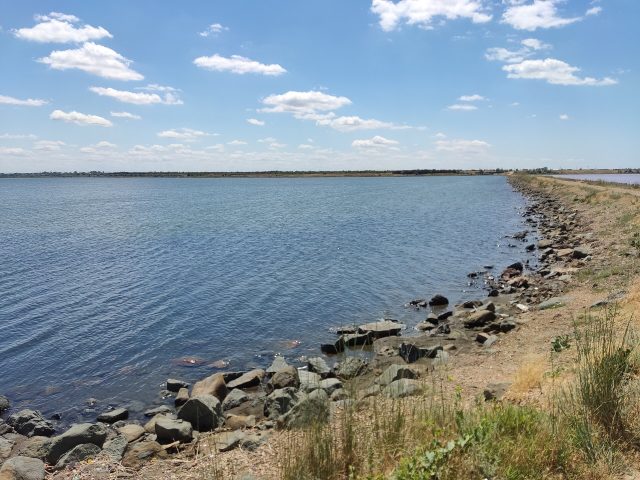
One of the most striking features of the park is its connection to the sea. Unlike many urban parks that turn their backs on the water, this one seems to lean into it. The paths curve toward the shore, where a narrow strip of beach separates the greenery from the waves. Here, the park’s design feels almost accidental, as if the trees simply grew where the land met the water, and no one saw a reason to change it. The beach itself is unremarkable—pebbly, with patches of seaweed and the occasional driftwood—but it adds to the park’s understated character. On clear days, the horizon blurs into the sky, and the only sounds are the rustling of leaves and the distant murmur of the sea.
The park’s layout is simple, almost intuitive. There are no rigid geometric patterns or grand alleys; instead, the paths meander, splitting and rejoining in a way that encourages exploration. Some lead to quiet clearings where benches offer a place to sit and watch the light filter through the leaves. Others wind down to the water, where small piers jut out into the shallows, their wooden planks worn smooth by years of use. In the warmer months, these spots are popular with fishermen, who cast their lines into the water while the sun dips low over the sea. There’s a sense of timelessness here, as if the park has always been a place where people come to slow down, to step away from the rush of daily life.
Over the years, the park has seen its share of changes. In the Soviet era, it became part of a larger network of health resorts, with sanatoriums and clinics built nearby to cater to those seeking treatment. The park itself was expanded and maintained, though never transformed into something grander. After the collapse of the Soviet Union, the town—and the park—fell into a period of neglect, like much of Crimea. But in recent years, there’s been a quiet revival. The paths have been repaved, the benches repaired, and the trees pruned, though the park retains its unpretentious charm. It’s not a place that demands attention, but rather one that rewards those who take the time to notice its details.
What makes Saky’s Resort Park special is its lack of pretense. It’s not trying to be anything other than what it is—a green space where people come to walk, to sit, to breathe in the sea air. There are no guided tours, no must-see attractions, no Instagram-worthy backdrops. Instead, it offers something far more valuable: a sense of place. The park feels rooted in its surroundings, shaped by the climate, the sea, and the people who have passed through it over the decades. It’s a reminder that not every destination needs to be grand or extraordinary to leave an impression.
For those who visit Saky, the park often becomes a part of the daily routine. After a morning at the mud baths or a session in the mineral springs, many head here to unwind, to let the quiet seep in. In the evenings, when the light softens and the air cools, the park takes on a different mood. The paths are lit by old-fashioned streetlamps, their glow casting long shadows on the gravel. The sound of laughter drifts from the nearby cafes, where locals gather for tea or a glass of Crimean wine. It’s a scene that could have taken place a hundred years ago, or last week.
The park’s future is as uncertain as the future of Crimea itself. Political tensions and shifting borders have made the region a complicated place to visit, and Saky, like many towns along this coast, has had to adapt. Yet the park endures, a quiet constant in a landscape of change. It doesn’t ask for much—just a little care, a little attention—and in return, it offers a space where time seems to move differently. For those who find their way here, it’s a place to pause, to reflect, to remember that sometimes the most meaningful experiences are the ones that unfold slowly, without fanfare.