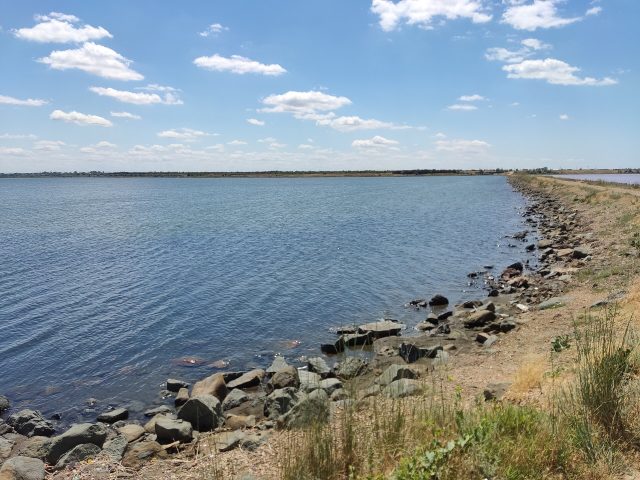
Saky is one of those quiet Crimean towns that rarely makes it onto tourist itineraries, yet it holds a small surprise for those who wander its streets. Along the shore of Lake Saky, where the air carries the faint tang of salt and the water shimmers under the sun, stands an unusual monument that catches the eye even of seasoned travelers. It’s not a tribute to a war hero or a historical figure, but something far more unexpected—a dramatic scene from the distant past, frozen in stone.
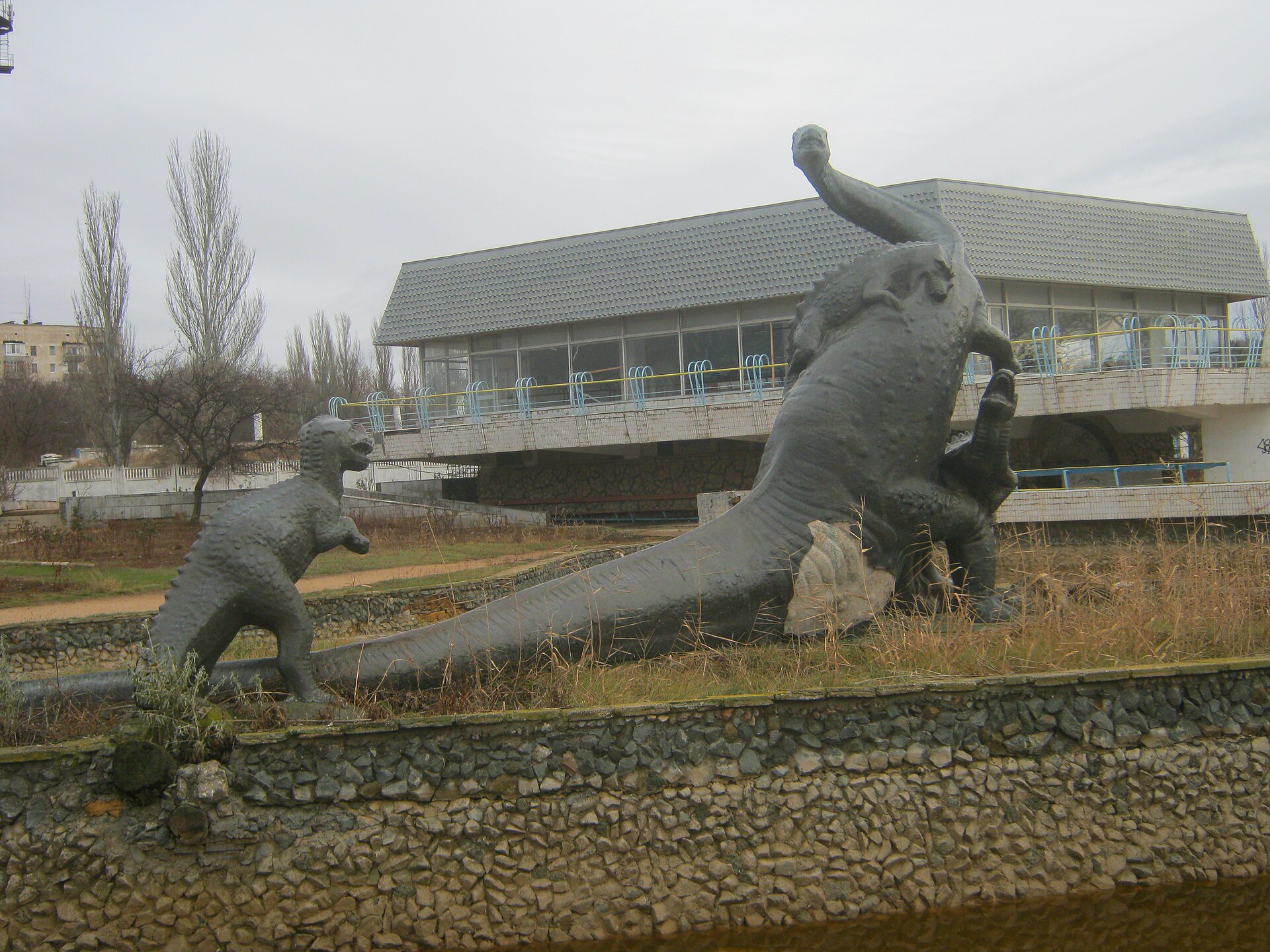
The sculpture depicts a fierce struggle between two prehistoric creatures: a towering brontosaurus and a pair of ceratosaurs, their bodies locked in a tense, almost cinematic battle. The brontosaurus, with its long neck arched and massive frame rooted to the ground, seems to brace itself against the attack. Its stillness is deceptive, though—there’s a sense of coiled strength, as if it could suddenly lunge forward. The ceratosaurs, smaller but far more aggressive, twist and snap at their prey, their jaws wide and claws poised to strike. The artist captured the moment with striking realism, making the stone appear almost alive, as if the fight could resume at any second.
The monument was created in the late 1980s by Igor Lysenko, a Crimean sculptor known for his work in animalistic and historical themes. Lysenko had a knack for bringing ancient creatures to life, and this piece was one of his most ambitious. He wasn’t aiming for scientific precision—what mattered was the raw energy of the scene, the way it could make viewers feel like they’d stumbled upon a lost world. Decades later, the sculpture still holds that power. The way the light plays on the rough surfaces, the way the shadows stretch across the ground, it all adds to the illusion that these creatures once roamed this very shore.
Lake Saky itself is a place steeped in quiet mystery. Known for its therapeutic mud and mineral-rich waters, the lake has a timeless quality, as if the land around it hasn’t changed in millennia. Standing near the sculpture, it’s easy to imagine the scene playing out here millions of years ago, when the air was thick with the calls of prehistoric beasts and the ground trembled under their weight. The monument is positioned just above the waterline, so on clear days, the dinosaurs cast long, dramatic shadows across the sand. At night, when the streetlights flicker on, their silhouettes take on an eerie, almost mythical presence.
Originally, this sculpture was meant to be part of a larger dinosaur-themed park, a project that never fully materialized. In the 1980s, such parks were a popular concept across the Soviet Union, blending education with entertainment. The idea was to give people a glimpse into the distant past while offering a place to relax. But for whatever reason, the full vision never came to be, and the *Battle of the Brontosaurus and Ceratosaurs* remained the sole remnant of those plans. Yet it doesn’t feel incomplete. On the contrary, the sculpture stands perfectly on its own, framed by the still waters of the lake and the gentle hills that surround Saky.
For a town without grand palaces or ancient fortresses, this monument has become something of a local landmark. It’s not the kind of place that draws crowds, but that’s part of its charm. There’s no fanfare, no guided tours—just the quiet presence of these stone creatures, waiting to be discovered. Visitors often pause here to take photos, while children clamber over the rocks, pretending to be part of the scene. The sculpture has a way of sparking the imagination, of making the past feel just a little more tangible.
What makes this monument particularly interesting is how it reflects the cultural moment of its time. The 1980s were a period of fascination with dinosaurs, fueled by new paleontological discoveries and a growing public interest in Earth’s ancient history. Lysenko’s work bridged the gap between science and art, turning dry facts into something visceral and emotional. The sculpture doesn’t just depict dinosaurs—it invites you to feel the weight of time, the fragility of life, and the vastness of the world that came before us.
Over the years, the monument has weathered, its stone surface darkened in places, small cracks appearing here and there. But rather than detracting from its appeal, these signs of age give it character. It feels less like a polished museum piece and more like a relic from another era, something that has endured long enough to tell its own story. There’s a certain magic in that—standing before it, you can almost hear the distant roar of the creatures it represents, the echo of a world that once was.
If you ever find yourself in Saky, take a moment to visit this unassuming corner of the town. Walk along the shore, let the breeze off the lake brush against your skin, and stand close to the sculpture. Reach out and touch the cold stone. For a brief instant, you might just feel like you’ve stepped back in time, to an age when giants ruled the earth. There’s no need for grand gestures or elaborate explanations—some places speak for themselves, quietly leaving their mark on those who take the time to listen.