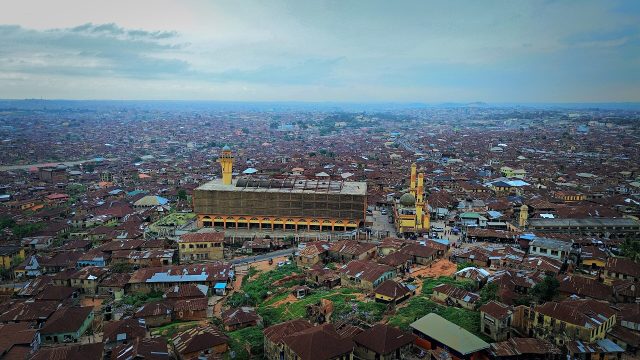
The Osun-Osogbo Sacred Grove is one of those rare places where nature and faith intertwine so deeply that they become something far greater than a mere landmark. Tucked away on the outskirts of Osogbo, this forested sanctuary along the banks of the Osun River has been the spiritual heart of the Yoruba people for centuries. Unlike crowded tourist sites, it remains a quiet, almost timeless space, where the rustling leaves and flowing water set the rhythm of life. Pilgrims still come here to honor the old gods, their presence subtle but meaningful, as if the grove itself dictates the pace of reverence rather than the other way around.
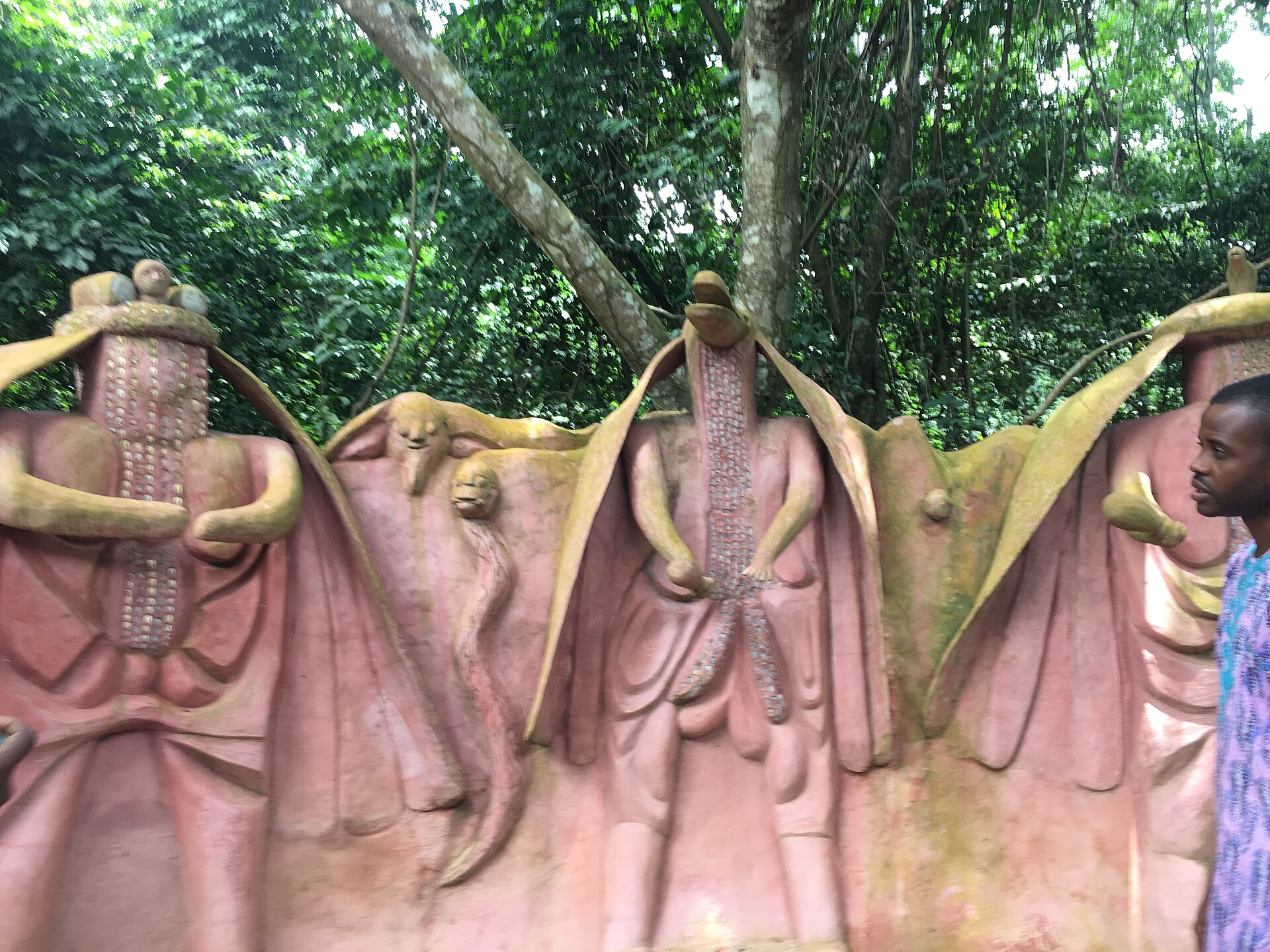
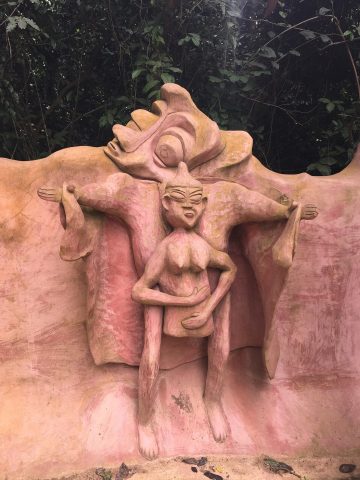
The journey into the grove begins along a wide path leading toward the river, flanked by wooden sculptures carved by local artisans. These figures represent Orunmila, the god of wisdom, and other Yoruba deities, but they are not mere decorations. They are active participants in rituals, their forms worn by time and touch, bearing the marks of countless offerings. The trees here are towering, their dense canopies casting cool shade even in the midday heat. Some are considered sacred, believed to house the spirits of ancestors, and treated with a quiet, unwavering respect. The air carries the scent of damp earth and foliage, mingling with the faint metallic tang of the river.
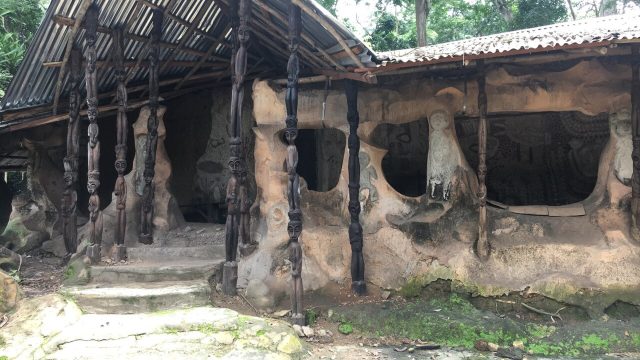
At the heart of the grove stands the shrine of Osun, the goddess of fertility, love, and fresh water. The structure itself is modest—a small building of clay and wood, surrounded by intricately carved figures and sacrificial bowls. Yet this unassuming place becomes the center of one of Nigeria’s most vibrant cultural events each August, when thousands of pilgrims gather for the Osun-Osogbo Festival. The grove comes alive with drumming, singing, and dancing, as people bring offerings of fruit, fabric, and coins. Priestesses in white robes perform purification rituals, their movements deliberate and graceful. The festival is not just a celebration; it is a living tradition, passed down through generations for over five hundred years, a testament to the enduring power of belief.
The grove’s history is inseparable from the founding of Osogbo itself. According to legend, in the 18th century, a group of Yoruba people fleeing war and hardship arrived in this area. Their leader, Laroye, struck a covenant with Osun, who promised protection and prosperity in exchange for devotion. From that moment, the grove became sacred ground, and Osogbo grew into a city where the worship of nature spirits never faded. Even during the colonial era, when Christianity and Islam spread across West Africa, the grove remained a stronghold of traditional beliefs. Today, it stands as both a religious sanctuary and a symbol of cultural resilience, a reminder that ancient traditions can endure even in a rapidly changing world.
The architecture of the grove is unassuming yet deeply intentional. There are no grand monuments here, only structures built by hand from local materials—clay, wood, and stone—using techniques passed down through generations. The carvings on the gates leading to the river depict scenes from Yoruba mythology, stories of gods and heroes that are still told to children today. Each figure, each curve, carries meaning, turning the gates into a kind of open-air storybook. The pigments used for decoration come from natural sources, grounding the art in the land itself. Even the shrines, though simple in design, feel alive, as if they are not just places of worship but extensions of the forest around them.
The Osun River, winding through the grove, holds its own sacred significance. Its waters are believed to possess healing properties, particularly for women seeking fertility. On certain days of the year, people come to bathe in the river or collect its water in special vessels, convinced of its magical power to grant wishes. The riverbanks are often dotted with women in vibrant garments, praying or singing hymns to Osun. The water is clear, with a faint greenish hue, and even in the dry season, the river never runs dry—a fact that locals see as further proof of its divine nature. The river is not just a physical presence but a living entity, central to the rituals and daily life of those who revere it.
Beyond its spiritual role, the Osun-Osogbo Sacred Grove has also become a place of cultural exploration. In recent decades, it has drawn visitors interested in Yoruba traditions, African art, and indigenous belief systems. Guided tours offer insights into the symbolism of the sculptures, the significance of the rituals, and the history of the grove. Many of the guides are descendants of priests or traditional custodians, their knowledge passed down through families. They explain why certain areas are off-limits to visitors—places where secret ceremonies take place, accessible only to the initiated. This sense of mystery adds to the grove’s allure, making a visit feel like stepping into a world where the past is still very much alive.
Despite its distance from major tourist routes, the grove was designated a UNESCO World Heritage Site, a recognition of its cultural and ecological importance. The designation has helped protect its unique ecosystem, home to rare birds, butterflies, and even small primates. Local authorities and communities work to safeguard the grove from deforestation and pollution, though the greatest threat may not come from outside forces. Younger generations, drawn to cities and modern lifestyles, are increasingly disconnected from traditional beliefs. Many who grow up in Osogbo leave for larger urban centers, and the ancient rituals risk fading into memory unless efforts are made to keep them relevant.
Visiting the Osun-Osogbo Sacred Grove is not just a walk through a beautiful landscape. It is an immersion in a world where nature and humanity exist in harmony, where every tree, every stone, carries meaning. There is no room for haste here, only the unhurried rhythm of life that has remained unchanged for centuries. Even those who do not share the Yoruba faith often find themselves moved by the grove’s atmosphere. It invites reflection on the fragility of traditions and the importance of preserving them. The grove is not a museum; it is a living, breathing entity, still growing, still inspiring, still deeply connected to the people who hold it sacred.