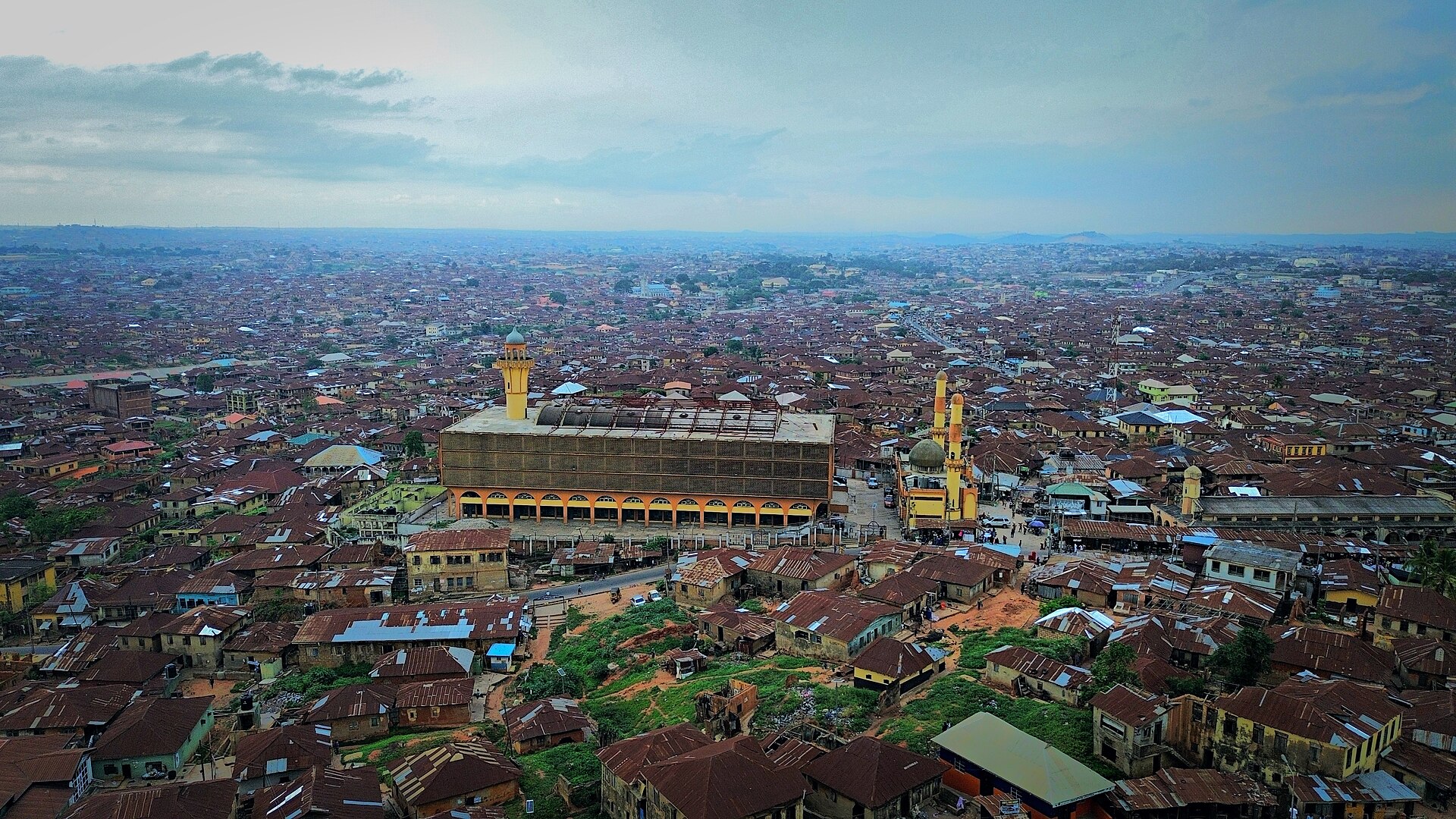
Oja Oba Market in Osogbo is where Nigeria reveals itself in all its unfiltered, vibrant intensity. There’s no room here for tourist performances or staged exoticism—this is a living, breathing organism governed by its own rhythms, steeped in the scents of spices and the hum of negotiation. The market isn’t just a place to buy and sell; it’s the heart of the city, where history, culture, and daily life intertwine in a way that feels both ancient and immediate.
Osogbo has long been a crossroads of trade in southwestern Nigeria, and Oja Oba has always been its pulse. The name translates to "the king’s market," a nod to its proximity to the palace of the traditional ruler, the Ataoja. The market’s origins stretch back centuries, to a time when Osogbo was little more than a Yoruba settlement. It endured colonial rule, economic shifts, and the ebb and flow of local power, yet it never lost its role as a gathering place—not just for commerce, but for conversation, gossip, and the exchange of ideas. Even now, stepping into Oja Oba is like stepping into a story that has been unfolding for generations.
The market’s layout is a maze of narrow alleys, some shaded by corrugated metal roofs, others by woven palm fronds. Stalls spill into every available space, with goods displayed on wooden tables, mats, or even the bare ground. There’s no grand design here, no orderly sections like in a Western shopping mall. Instead, the space organizes itself organically: fabrics cluster in one corner, vegetables and fruits in another, while fish, meat, and spices claim their own territories. The result is a kind of controlled chaos, where everyone knows their place, and the lack of structure somehow makes the experience feel more authentic.
The sensory overload is part of what makes Oja Oba unforgettable. The air is thick with the sharp tang of chili peppers, the smoky aroma of suya grilling over open flames, and the earthy scent of dried fish. There’s the sweetness of ripe mangoes, the pungency of fermented locust beans, and the faint, musky perfume of shea butter. Sounds compete for attention—the rhythmic pounding of pestles grinding spices, the singsong calls of vendors, the laughter of women haggling over prices, the occasional burst of music from a passing phone. English mixes with Yoruba, and the noise never really fades; it’s the soundtrack of a place that refuses to be quiet.
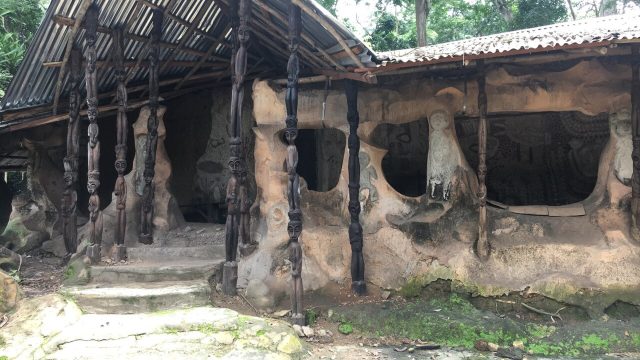
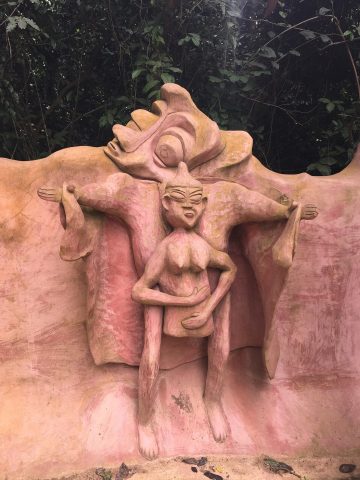
Beyond commerce, Oja Oba is a living museum of Yoruba craftsmanship. The market is famous for adire, the indigo-dyed fabric that’s become a symbol of Yoruba identity. The intricate patterns, created using resist-dyeing techniques, are a point of pride, and the market offers everything from ready-made garments to bolts of cloth for those who want to sew their own. Nearby, wooden masks and statues—once used in rituals, now sold as souvenirs—line the stalls, their carved faces telling silent stories. There are practical goods too: handwoven baskets, clay pots, and metal tools, all crafted by local artisans who often work right in front of you, their hands shaping raw materials into something useful or beautiful.
For Osogbo, the market is more than an economic hub; it’s a social institution. Families negotiate marriages here, business deals are struck over cups of palm wine, and news travels faster than any newspaper could deliver it. Many vendors spend their entire lives in these alleys, passing down stalls from one generation to the next. Children grow up learning the art of the deal, helping their parents weigh goods or count change. The market is a school of sorts, where lessons in math, persuasion, and human nature are taught through experience rather than textbooks.
Despite its deep roots in tradition, Oja Oba isn’t stuck in the past. You’ll find modern goods here too—plastic wares from China, synthetic fabrics, cheap electronics—but they don’t dilute the market’s essence. If anything, they highlight how seamlessly the old and the new coexist. Osogbo has seen new shopping centers rise in recent years, yet Oja Oba remains as vital as ever. Locals still prefer its labyrinthine alleys to the sterile aisles of supermarkets, not just for the prices, but for the atmosphere. Here, shopping is an event, a social ritual that can’t be replicated elsewhere.
Visiting Oja Oba isn’t like visiting a tourist attraction. There are no guided tours, no explanatory plaques, no designated paths for outsiders. It’s a place for those who want to see Nigeria as it is—messy, loud, sometimes overwhelming, but always real. If you find yourself in Osogbo, the market is worth the detour, not because it’s picturesque, but because it offers something rare: an unfiltered glimpse into the life of a city. The key is to let go of expectations, wander without a plan, and let the market reveal itself on its own terms. You might get lost, but that’s part of the experience.