Osogbo doesn’t announce itself. The city sits in southwestern Nigeria, where the Oshun River cuts through dense forest, and the air hums with something older than the roads or buildings. Here, the Osun-Osogbo Sacred Grove remains one of the last places where Yoruba spirituality hasn’t been boxed into museums or diluted for tourists. The grove is a UNESCO World Heritage site, but that title doesn’t capture why people still leave offerings at its altars or why the river’s water is said to heal.
The forest isn’t tamed. Trees crowd the paths, their roots twisting above the soil like veins. The Oshun River winds through it, shallow in some places, deep enough to swallow light in others. Locals say the goddess Oshun lives in these waters—goddess of love, fertility, and fresh water. You’ll see evidence of her presence along the banks: cloth tied to branches, beads scattered in the mud, coins pressed into the earth. Small altars appear without warning, their surfaces covered in clay figures and cowrie shells, the currency of another time. The river doesn’t just flow; it watches.
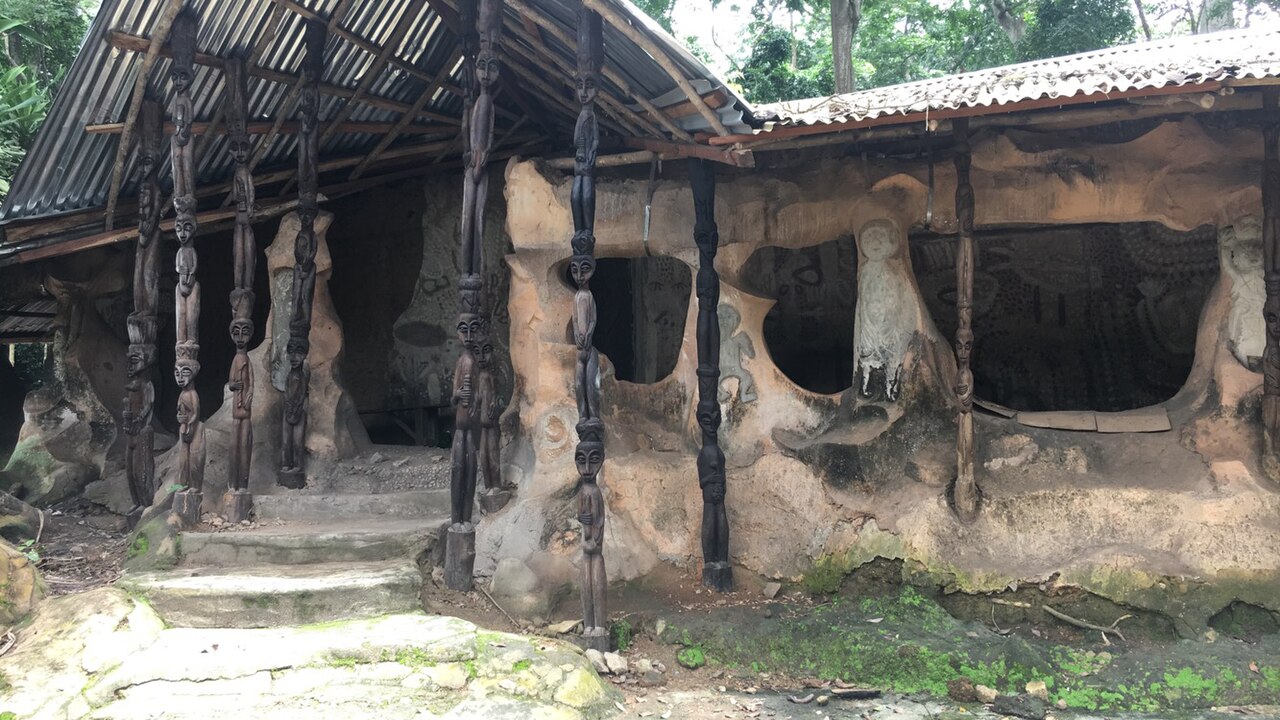
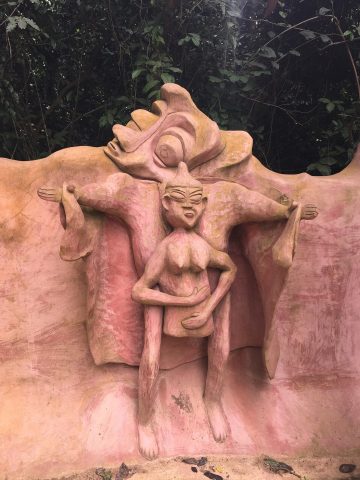
The shrines don’t try to impress. No marble columns or gilded domes—just wood and clay, shaped by hands that knew the stories. Some sculptures are old, their faces worn smooth by rain and touch. Others are newer, but all of them stand where they’ve always stood, silent except for the stories people bring to them. The main shrine of Oshun sits at the grove’s center, its entrance marked by a simple arch. Only the initiated can enter, but even from outside, the weight of it is clear. The air is different there—thicker, quieter.
Oral tradition says the grove became sacred when Oshun appeared in a dream to one of the first settlers. She pointed to the forest and promised protection. The people listened. They still do. Even when colonial rulers tried to erase these beliefs, the rituals didn’t stop. They moved underground, carried on in secret. Today, the grove stands as proof that some things refuse to disappear.
In August, the Osun Festival turns the grove into a different kind of place. Thousands arrive—not as spectators, but as participants. Drummers fill the air with rhythms that don’t follow a set tempo. Dancers wear costumes stitched with mirrors and beads, their movements sharp, deliberate. Offerings pile up: kola nuts, honey, palm wine. For outsiders, it’s easy to call this a spectacle. It’s not. This is worship, and it doesn’t care if you understand.
The grove also protects what’s left of the region’s wildlife. Rare birds nest in the trees. Butterflies land on the altars. The Oshun River, one of the few clean water sources in the area, still runs clear in some stretches. Locals guard the forest fiercely. Visitors are told not to touch the altars, not to leave trash, not to raise their voices. This isn’t a park. It’s a place where rules aren’t posted—they’re felt.
Walking here, you notice how the past doesn’t feel distant. It’s in the way the wind moves through the leaves, in the way people speak of the river as if it’s listening. For those used to cities, the grove might feel too quiet, too slow. That’s the point. This isn’t a place you visit. It’s a place you meet.