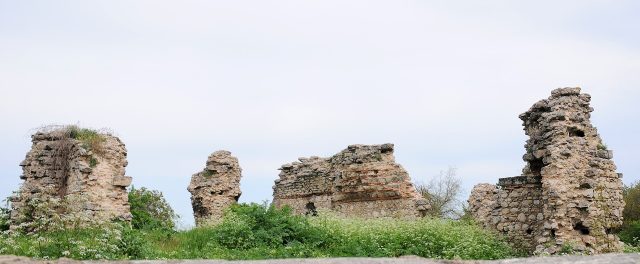
Surb-Nshan is one of those rare places where time seems to have paused, leaving behind a quiet witness to centuries gone by. Tucked away in the foothills near Old Crimea, this Armenian monastery is more than just a historical site—it’s a fragment of a past where cultures, faiths, and human stories intertwined. Today, it stands in solitude, surrounded by wild shrubs and rocky slopes, as if the world beyond moves at a different pace here, slower and deeper, untouched by haste.
The monastery dates back to the 14th century, a time when the Armenian community in Crimea flourished. Back then, the peninsula was part of the Golden Horde, yet it remained a vibrant hub of trade and culture, drawing merchants, artisans, and pilgrims from across the Mediterranean. Armenians, renowned for their craftsmanship, built churches that served not only as places of worship but also as symbols of their presence in the region. Surb-Nshan, meaning Holy Banner, became one such spiritual center, a quiet stronghold of faith in a land of shifting powers.
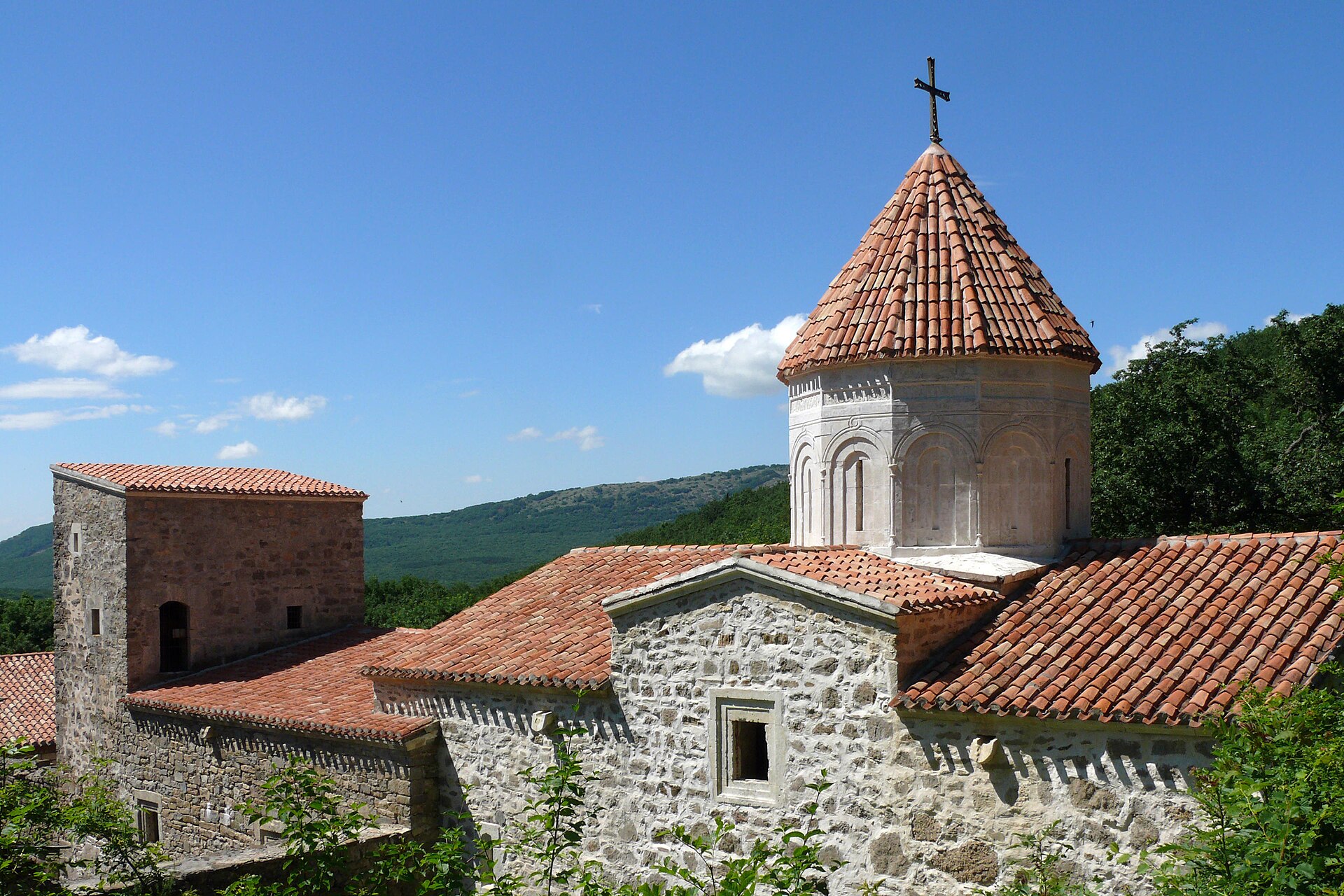
The architecture of the monastery reflects the typical style of medieval Armenian churches, though adapted to the local landscape. The main structure is a modest cross-domed church, built from local stone. Its walls are unadorned, yet the proportions and simplicity give it a sense of balance and endurance. Inside, faint traces of frescoes remain, though time and dampness have faded them almost beyond recognition. Even so, these fragments hint at the skill of medieval artists who sought to capture not just religious scenes but the spirit of their era.
Around the church, the remains of living quarters and utility buildings can still be seen, though little more than foundations and scattered stones survive. In its prime, the monastery was more than a spiritual retreat—it was a self-sustaining community where grain was stored, wine was made, and crafts were practiced. Such monasteries often served as waystations for travelers and traders, offering shelter, food, and safety. Given its location on the route from the coast into the Crimean interior, Surb-Nshan likely played a similar role, a quiet refuge in a landscape of constant movement.
Like many historical sites in Crimea, the monastery’s fate was shaped by the region’s turbulent history. After the fall of the Genoese colonies and the rise of the Ottoman Empire, the Armenian community gradually dwindled. By the 18th century, Surb-Nshan had fallen into disrepair, and in the Soviet era, it was largely forgotten. Only in recent decades have researchers and pilgrims begun to return, drawn by its history and the atmosphere that lingers among its ruins. Though no longer active, the site is carefully preserved, with occasional restoration work to prevent further decay.
Visiting Surb-Nshan feels less like a tour and more like stepping into another time. The journey there winds through hills covered in oak and juniper, past old Tatar villages where life moves at the same unhurried pace it has for centuries. The monastery itself sits on a small rise, offering views of the valley and distant mountains. The silence is broken only by birdsong and the rustle of leaves. It’s easy to imagine the sound of bells echoing across the hills, monks gathering for prayer, or pilgrims sharing news from distant lands.
Despite its modest appearance, Surb-Nshan is an important piece of Crimea’s cultural heritage. It serves as a reminder that the peninsula has always been a crossroads of peoples—Greeks, Genoese, Tatars, Armenians, Russians—each leaving their mark. The monastery is one such mark, surviving wars, changing rulers, and neglect. Today, it attracts not just historians and archaeologists but also those seeking quiet and a connection to something enduring.
If you find yourself in Old Crimea, it’s worth making the trip to Surb-Nshan. This isn’t a place that impresses with grandeur or opulence, but in its simplicity and authenticity lies its charm. Here, you can sit on the weathered stones, listen to the wind, and reflect on the countless lives that have passed through this land, leaving behind only faint echoes. And in moments like these, history feels less like a record of dates and events and more like a living presence, still breathing in the silence.