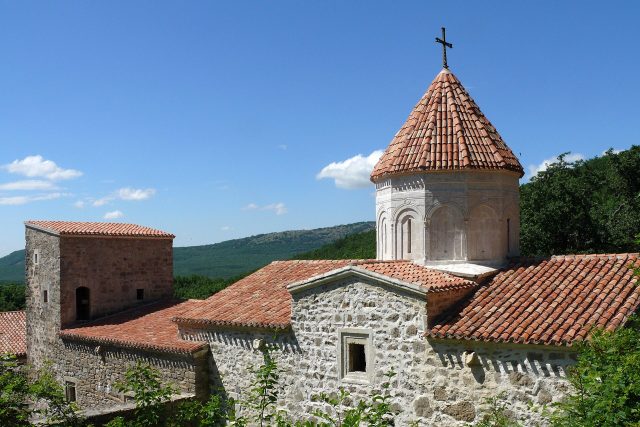
Perched on a quiet street in Old Crimea, Kurshun-Jami is one of those rare places where time seems to have paused, leaving behind a quiet witness to centuries of change. Built in the 14th century during the height of the Golden Horde, when the city was known as Solkhat, this mosque stands as a remnant of an era when the region was a crossroads of trade, culture, and faith. Back then, Solkhat was a bustling hub where merchants from across Eurasia converged, and Kurshun-Jami, like much of the city’s architecture, reflects the blend of Seljuk, Mongol, and local Crimean Tatar influences that shaped its identity.
The name Kurshun-Jami translates to "Lead Mosque," a nod to the lead sheets that once covered its dome. Though the lead is long gone, the building itself remains imposing, constructed from local stone that has weathered into a warm, golden hue. The architecture is simple yet striking—a rectangular structure with a minaret that once towered over the city, guiding travelers and worshippers alike. Over the years, the minaret has lost some of its height, but the mosque still retains a sense of dignity, its walls bearing the marks of time with quiet resilience.
Inside, Kurshun-Jami is far from ornate, and that’s part of its charm. The interior is modest, with geometric patterns typical of Islamic art from the period. The mihrab, which points toward Mecca, is understated but carefully crafted, a reminder of the mosque’s original purpose. Once, the floors would have been covered in carpets, and the walls might have featured calligraphic inscriptions, but those details have faded with time. What remains is a space that feels serene and contemplative, a place where the past lingers in the cool, dim light filtering through the arched windows.
Kurshun-Jami has seen its share of history unfold. After the Ottoman conquest of Crimea, it continued to serve as a place of worship, but its role shifted under Russian rule. Like many religious sites in the Soviet era, it was repurposed, its spiritual significance overshadowed by the demands of a new political order. It wasn’t until the late 20th century that restoration efforts began, and today, while it no longer functions as a mosque, it stands as a monument to the region’s layered past.
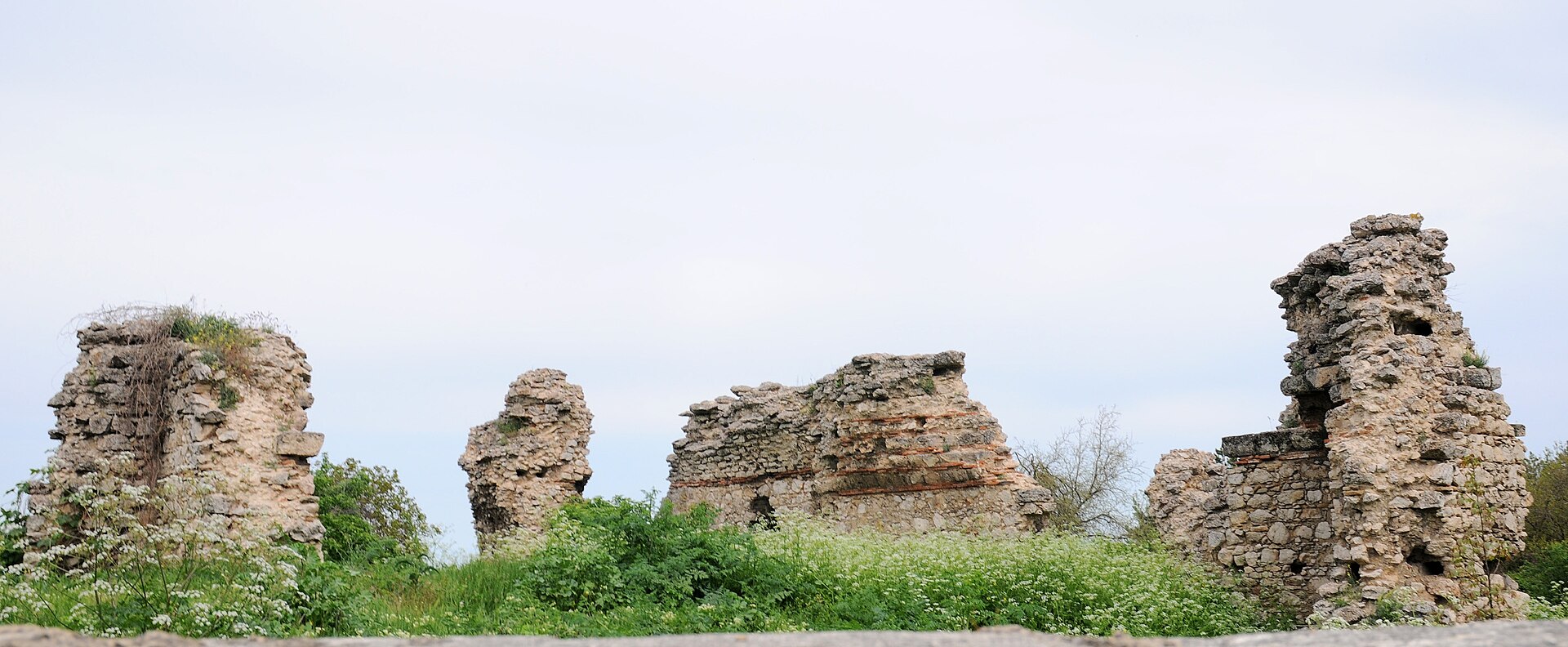
Old Crimea itself is a city steeped in history, older than many of the peninsula’s more famous destinations. Walking its streets, you can still find traces of its medieval heyday—crumbling caravanserais where merchants once rested, remnants of fortifications, and other structures that hint at the city’s former importance. Kurshun-Jami sits at the heart of this historical tapestry, a quiet anchor in a landscape shaped by empires and trade routes. Nearby, the ruins of other buildings tell their own stories, each stone a fragment of a larger narrative.
What makes Kurshun-Jami special is its unassuming presence. Unlike the crowded tourist spots of Crimea, it doesn’t draw large crowds, and that’s part of its appeal. The mosque’s courtyard is a peaceful place to sit, watching the sunlight play across the stonework or listening to the wind rustle through the trees. The atmosphere is one of quiet reflection, a chance to step away from the noise of modern life and consider the lives that have passed through this place over the centuries.
From the mosque’s slight elevation, the view stretches over Old Crimea and the surrounding hills. On clear days, the landscape feels vast, a reminder of how this region once connected distant cultures. It’s a place that invites slow exploration, where the weight of history isn’t just observed but felt. There’s no need to rush here; the real value lies in the moments of stillness, in the way the past seems to breathe through the weathered walls.
Kurshun-Jami is a reminder that Crimea is more than just a destination for sun-seekers. It’s a land where history runs deep, where every street and structure carries echoes of the people who shaped it. Though the mosque no longer serves its original purpose, it hasn’t lost its significance. Instead, it has taken on new meaning, becoming a symbol of resilience and a bridge between eras. For those who seek more than just scenery, it offers a glimpse into the soul of the peninsula—a place where the past isn’t just remembered but lived.