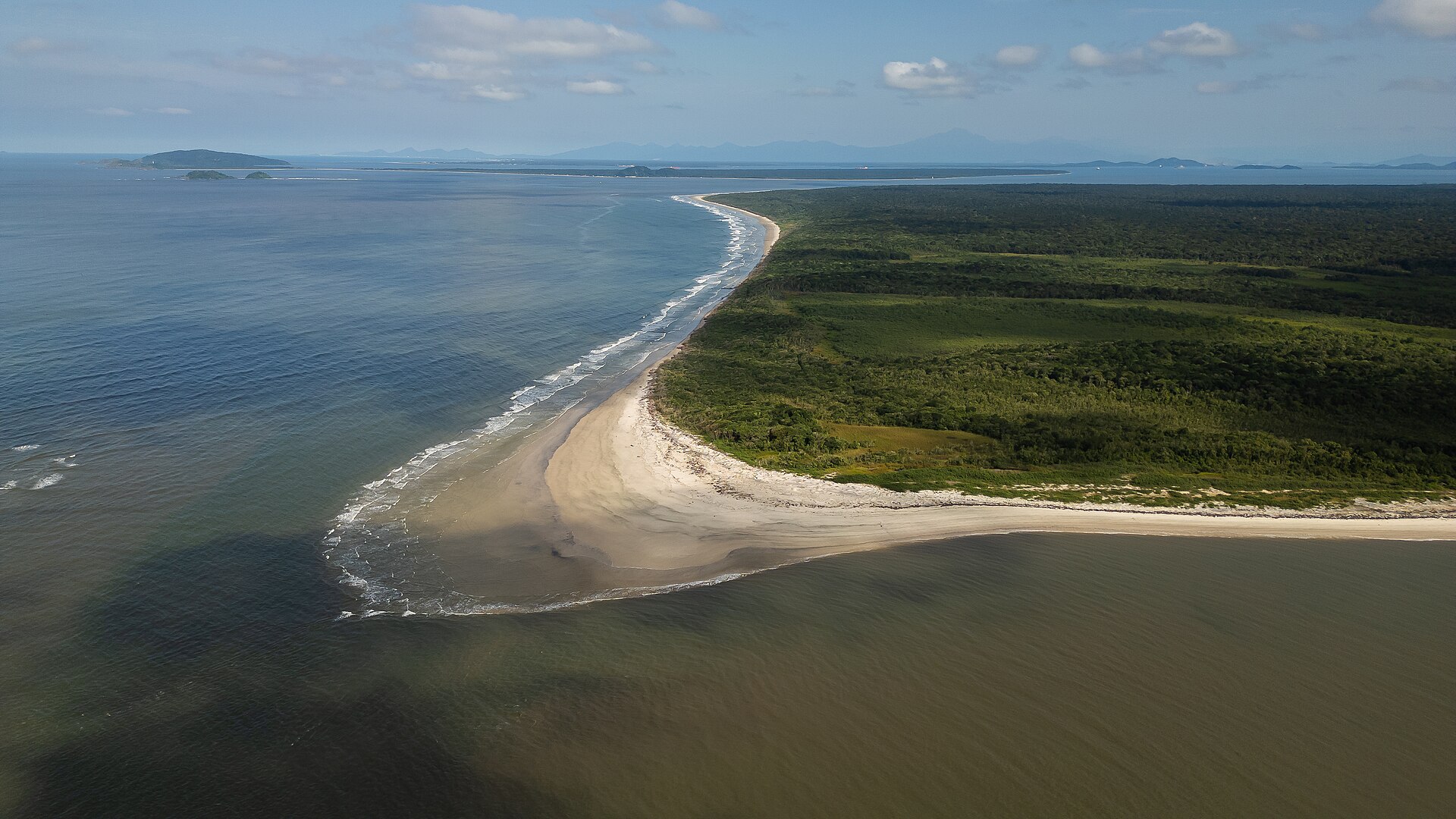
Superagui is an island in Paraná’s coastal archipelago where the land and sea remain largely as they were centuries ago. No crowds, no souvenir stands, no high-rises—just beaches, mangroves, dunes, and forests that meet the ocean. The island’s isolation has kept it wild.
Indigenous communities lived here long before Portuguese settlers arrived, leaving behind pottery shards and stories now woven into the landscape. When colonizers came in the 16th century, they found the island uncooperative—its swamps, forests, and lack of fresh water made settlement difficult. For hundreds of years, Superagui was overlooked. By the 19th century, fishermen and whalers built simple huts and lived off the sea, but the island never became densely populated. It was too remote, too harsh, too exposed to the elements.
A few families and park rangers live on Superagui today. They maintain the land as it has always been. There are no grand structures, no historic monuments—just weathered wooden houses on stilts, their roofs thatched with palm leaves, built in the early 1900s. Some are still inhabited, offering a glimpse of coastal life before mass tourism. The village of Barra do Superagui is the closest thing to a settlement, a quiet place where the past lingers in the salt air.
The national park covers over thirty thousand hectares of dunes, beaches, tropical forests, and mangrove swamps. Howler monkeys, sloths, and jaguars move through the trees. Dolphins ride the waves, sea turtles nest in the sand, and manatees drift in the shallows. The mangroves are alive with parrots, herons, and kingfishers. The ocean is powerful, keeping most swimmers close to shore. The beaches are often empty—places where you can walk for hours without seeing another person.
To reach Superagui, you take a boat from Paranaguá. The trip takes a few hours, but during the rainy season, from December to March, rough seas can delay or cancel departures. There are no hotels, only guesthouses and campsites. Electricity is unreliable, and cell service is spotty. This isn’t a place for those who need constant comfort, but for those who prefer solitude over convenience.
Visitors come for the landscapes. A boat tour through the mangrove channels lets you see birds, crabs, and caimans. The forests have trails, but some areas are swampy, and it’s easy to get lost—hiring a guide is wise. If you’re lucky, you might see sea turtles nesting, though disturbing them is forbidden. The park’s rules are strict: no fires, no littering, no picking plants. Nature dictates the terms here.
There are no restaurants, no nightlife, no shops. Instead, Superagui offers silence—the kind that lets you hear a bird’s call, the crash of waves, the rustle of leaves. At night, the stars are so bright it feels like you could touch them. It’s a place where human presence feels small.
The days stretch out, unhurried. The tides and the wind set the pace. Some people return because of this. Superagui isn’t for everyone, but those who come often leave with a quiet impression—one that changes how they see the world.