Strahov Monastery sits on a hill above Prague’s Lesser Town. Below, the city moves fast; here, stone and silence slow everything down. Founded in the twelfth century, it has seen kings take shelter, church councils debate faith, and wars leave destruction and rebuilding behind. The Premonstratensians still live and work here, their daily routines woven into the same arcades, books, and flagstones that have held them for centuries.
The buildings change with the years
The earliest walls are Romanesque—thick, plain, built to last. Gothic vaults rise above them, and Baroque facades wrap everything in curves and gold. The Church of the Assumption of the Virgin Mary anchors the complex. Its ceilings stretch high, altars gleam, and frescoes catch the light from narrow windows. The organ still plays during services, the same deep notes filling the space as they have for hundreds of years.
But the library is why most people come. Dark wooden cases hold medieval manuscripts and early printed books. Some spines are cracked, others still bright, all of them quiet witnesses to a time when knowledge was rare.
More than prayers happened here
King Wenceslas I stayed in the thirteenth century. Later, Bohemia’s nobility gathered within these walls. The Reformation sparked arguments; Swedish troops looted during the Thirty Years’ War. Each time, the monastery was rebuilt—first in Baroque style, then again after nineteenth-century secularization threatened to close it. Yet the monks stayed, and their routines continue: prayers in the chapel, pages turning in the library, footsteps crossing the courtyards.
Walk through the inner courtyard. Renaissance frescoes cover the walls, and a fountain stands in the center. The terraced gardens look out over Prague, the same view monks have seen for centuries. A Romanesque archway stands beside a Baroque statue; an eighteenth-century observatory hints at the monks’ interest in the stars. Every detail—carved capitals, wrought-iron grilles—holds the memory of the hands that made them.
The library holds two worlds
The Theological Hall is dark wood and Baroque details, filled with religious texts. The Philosophical Hall is brighter, its shelves lined with philosophy, history, and science books. Both have ceiling frescoes showing the pursuit of wisdom. Both still work as they were meant to: books are read, new ones are added, and the air hums with quiet study. Globes and astronomical instruments sit among the shelves, proof that the monks studied more than faith.
Strahov isn’t just history. The monks still live here, holding services and following daily routines. Their brewery makes beer from centuries-old recipes. You can eat traditional Czech food in the restaurant or buy local crafts in the shop. There’s no hurry. The place asks you to sit on a bench, to linger in the courtyard, to let the weight of the past settle around you.
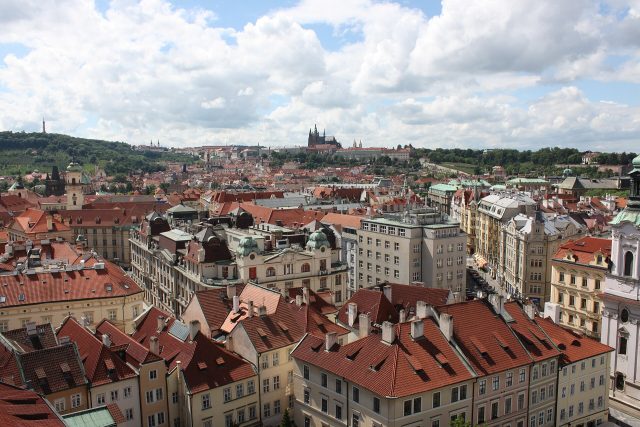
From the terraces, Prague spreads out below. Red roofs, the Vltava River, church spires, bridges—artists and writers have painted and written about this view for centuries. Sunset is the best time to see it. The light softens, the city glows, and for a moment, you can imagine the monks who stood here before you, looking at the same scene.
The monastery stays alive. It hosts concerts, exhibitions, and lectures. The gallery shows Czech and European art. In summer, films play in the courtyard; in winter, Christmas markets light up the dark. The monks have always known that faith and culture belong together, and they’ve kept Strahov a place where both can grow.
A visit here shows Prague differently. No crowds, no souvenir stands—just the quiet hum of a place that has lasted. Strahov doesn’t try to impress. Its power is in its realness. The past isn’t just remembered here; it’s still part of the air in the cloisters, the rustle of pages in the library, the footsteps in the halls. You don’t just see history at Strahov. You feel it.