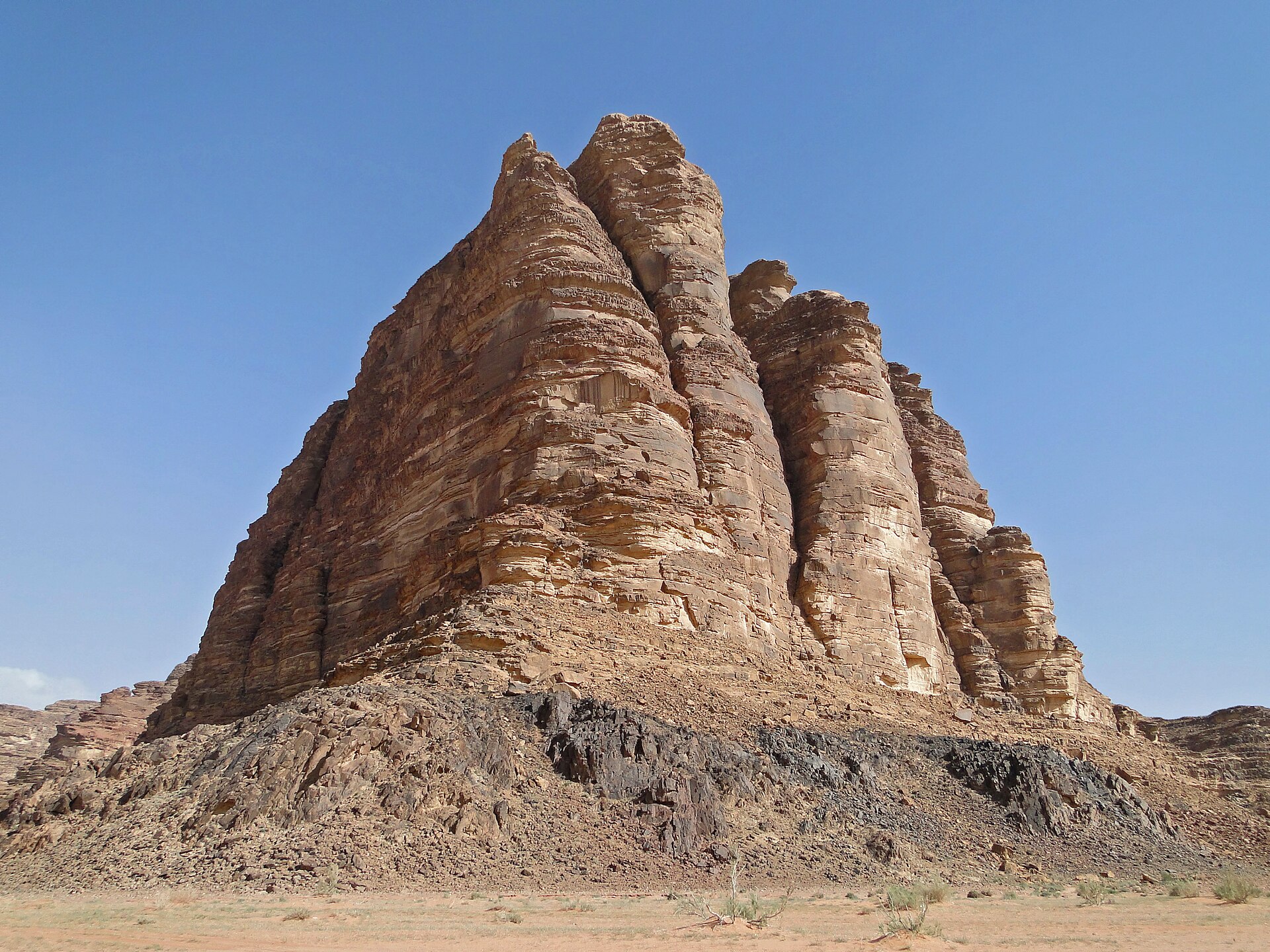
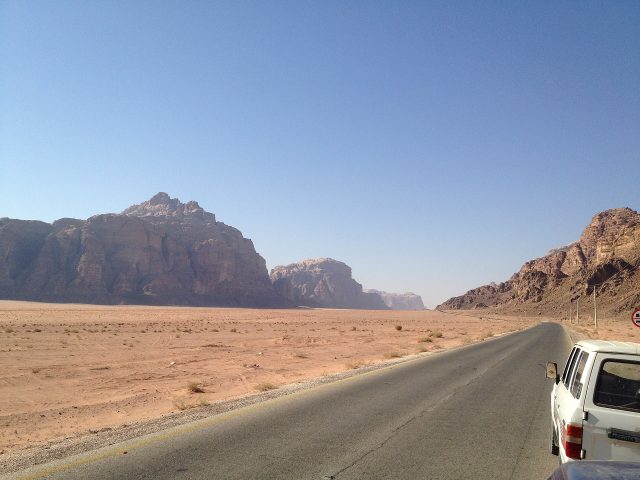
Wadi Rum’s sandstone pillars rise from the desert like the ruins of some forgotten civilization, their smooth surfaces carved by time into shapes that seem almost deliberate. The wind has worked on them for millennia, wearing away the softer layers of rock while leaving behind these towering monoliths, some slender as minarets, others broad and imposing as ancient fortresses. The local Bedouin have named many of them—Seven Pillars of Wisdom, the Bridge of Hope, the Mushroom Rock—each name carrying a story, a fragment of the desert’s long memory.
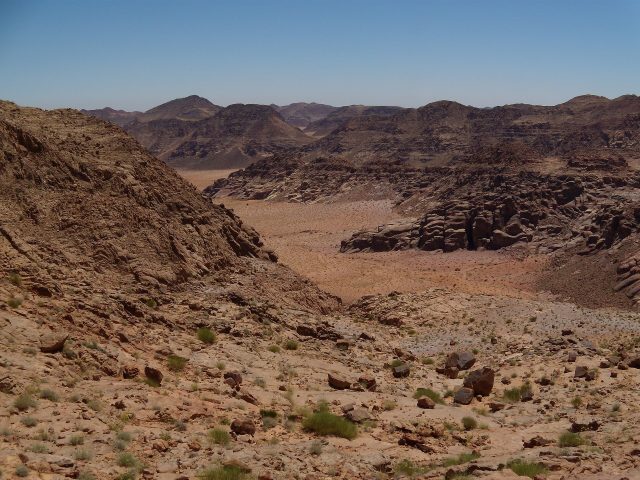
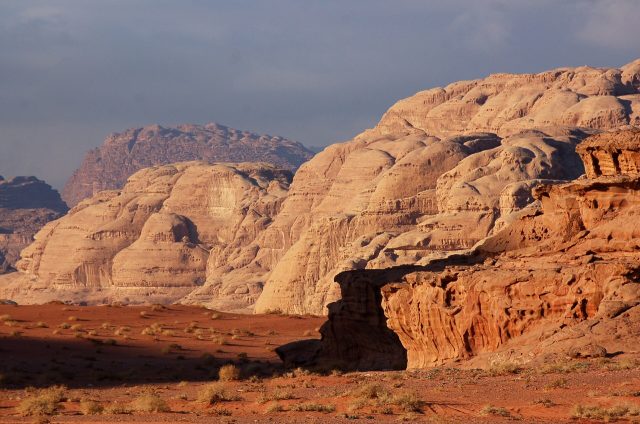
The formation of these pillars is a slow, patient process. Rainwater seeps into cracks, freezing and expanding in the cold desert nights, splitting the rock apart grain by grain. The wind, relentless and dry, scours the surfaces, carrying away the loosened sand until only the hardest stone remains. Over millions of years, what was once a solid plateau has been sculpted into a landscape of spires and arches, their curves softened by the shifting light of dawn and dusk. The red hue of the sandstone deepens at sunset, turning the pillars into glowing embers against the darkening sky.
For the Bedouin, these rocks were never just scenery. They served as landmarks in a land where every dune looks like the last, guiding travelers along routes that have been used for thousands of years. Some pillars bear petroglyphs—carvings of camels, hunters, and long-forgotten rituals—etched into the stone by generations of nomads. These images tell a quiet history of survival: the shift from hunting to herding, the rise of trade caravans laden with frankincense and spices, the slow adaptation to a landscape that gives little but demands much in return.
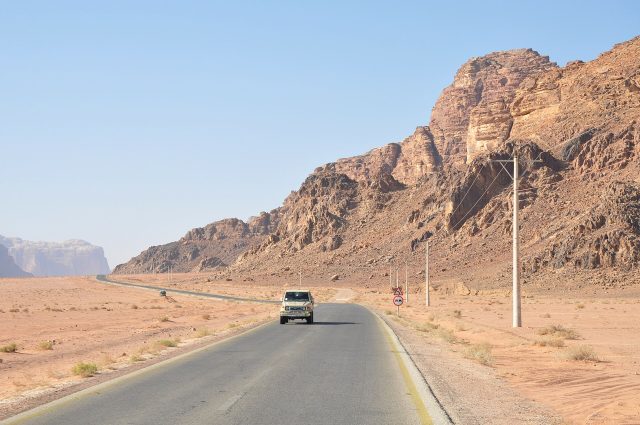
The desert has always been a place of movement. Ancient trade routes once crossed Wadi Rum, connecting the Arabian Peninsula to the Levant, and the echoes of those journeys linger in the names of the rocks and the stories passed down through Bedouin families. Today, the pillars stand as silent witnesses to both the past and the present. Tourists arrive in four-wheel drives, snapping photos of the same formations that once guided camel caravans, while Bedouin guides point out hidden springs and share tales of their ancestors. The contrast is striking, yet the land itself remains unchanged, indifferent to the passage of time.
There is a rhythm to Wadi Rum that resists the hurried pace of modern life. The heat of the day forces stillness, the cool of the evening invites movement, and the night brings a silence so deep it feels like the world has paused. The stars here are brighter than in most places, unobscured by city lights, and on clear nights the Milky Way stretches overhead like a river of light. It’s easy to see why filmmakers have chosen this landscape as a stand-in for Mars or distant moons—there is something otherworldly about the way the rocks catch the light, the way the wind carries the faintest sounds across the empty expanse.
The Bedouin have learned to live with the desert’s extremes, finding water where none seems to exist, navigating by the stars, and reading the subtle signs of the land. Their knowledge is practical, born of necessity, and they share it willingly with visitors who take the time to listen. A walk through the desert with a Bedouin guide is less about sightseeing and more about understanding—a chance to see the landscape through eyes that have known it for generations. They’ll point out the tracks of desert foxes, the rare plants that bloom after rain, the hidden caves where their families once sheltered.
Wadi Rum is not a place to be consumed quickly. It rewards those who linger, who sit quietly on the sand and watch the light change across the rocks, who listen to the wind and the occasional cry of a bird. The pillars, with their strange, almost architectural forms, seem to shift as the sun moves, their shadows stretching and contracting like living things. At night, the desert comes alive in a different way—small creatures emerge from their burrows, the temperature drops, and the vastness of the sky becomes impossible to ignore.
There is a humility in being here, a reminder that this land existed long before humans and will endure long after. The pillars have stood for millions of years, weathering storms and droughts, and they will continue to stand long after the last tourist has left. In a world that often feels overcrowded and overcomplicated, Wadi Rum offers a rare sense of space and simplicity. It doesn’t ask for admiration; it simply is, vast and unyielding, a place where the past and present coexist without effort. To visit is to step briefly into a different kind of time, one measured not in hours but in the slow, patient work of wind and water.