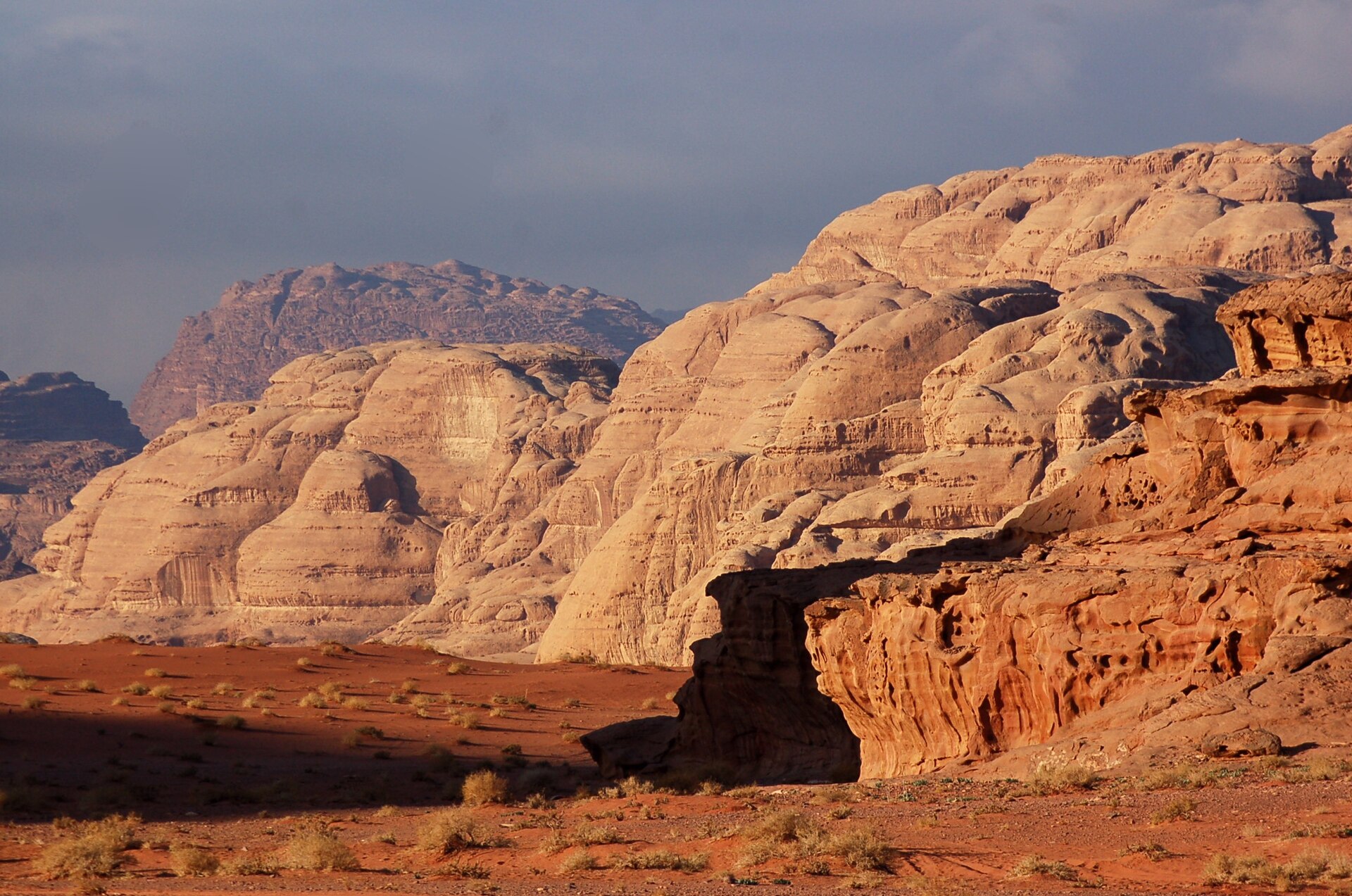
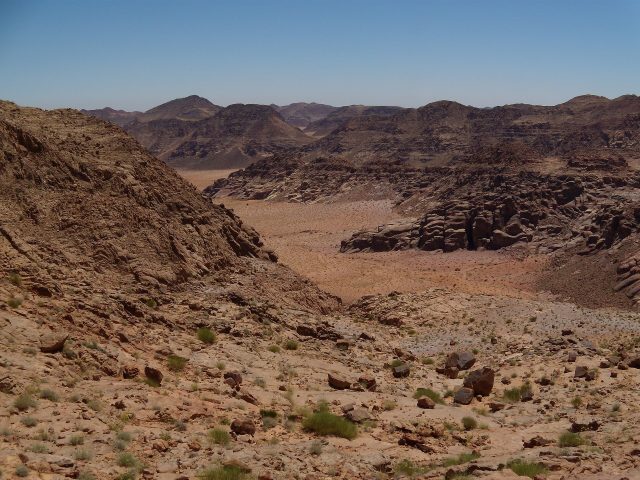
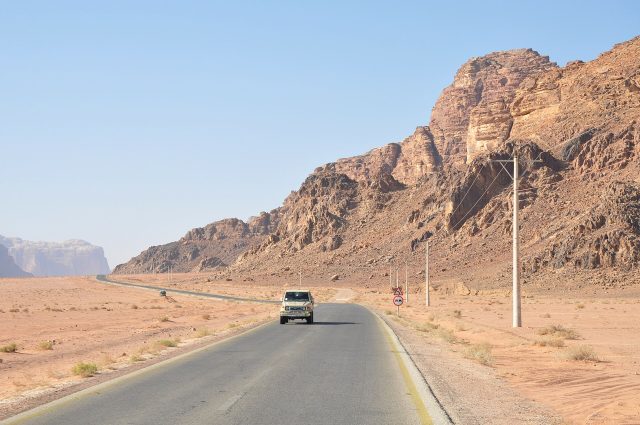
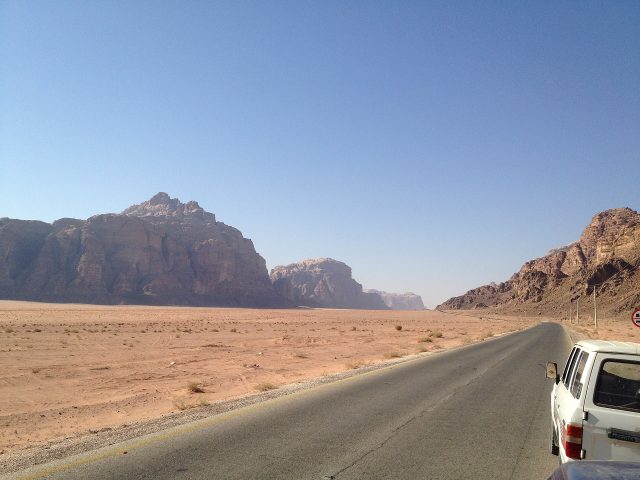
Jebel Rum isn’t just another mountain rising from the sands of Wadi Rum—it’s one of Jordan’s most striking natural landmarks, a place where the desert’s raw beauty feels almost alive. Its towering silhouette, carved from reddish sandstone, dominates the horizon, shifting from deep rust to fiery gold as the sun moves across the sky. At dawn and dusk, the light plays across its surface like a slow-burning flame, making the hours feel suspended in time. For travelers who make the journey here, the reward isn’t just the view, but the sense of standing in a landscape that has remained largely unchanged for millennia.
The history of Jebel Rum is woven into the fabric of the region itself. Long before modern borders were drawn, nomadic tribes roamed these lands, using the mountain as both a navigational landmark and a sacred site. Its slopes still bear the marks of their presence—ancient petroglyphs etched into the rock, depicting scenes of hunting, wildlife, and daily life. These carvings, some dating back to the Neolithic era, serve as a quiet reminder that Wadi Rum was never truly empty. It was a crossroads, a place where cultures intersected, where stories were exchanged, and where the desert’s silence preserved them for future generations.
There’s no grand architecture here, no temples or palaces—just the slow, patient work of wind and time. Jebel Rum is a masterpiece of natural sculpture, its cliffs, canyons, and arches shaped over millions of years. One of its most famous features is Burdah Rock Bridge, a natural arch that seems to defy gravity, suspended high above the desert floor. Reaching it requires a steep climb, but the effort is forgotten the moment you stand beneath it, looking out over an endless sea of sand. The surrounding formations, with their jagged edges and smooth curves, resemble the ruins of some ancient civilization, though they were never built by human hands.
For many, Jebel Rum is inseparable from its cinematic legacy. The mountain and its surroundings have served as the backdrop for films like *Lawrence of Arabia*, *The Martian*, and *Dune*, where the desert’s otherworldly beauty made it the perfect stand-in for distant planets and epic adventures. Yet even without its Hollywood fame, the place holds a magic of its own. Standing on its summit, it’s easy to imagine yourself as an explorer seeing these lands for the first time, or a Bedouin traveler using the mountain as a guide through the vast, shifting sands.
The atmosphere here is one of quiet intensity. By day, the sun beats down relentlessly, but as evening approaches, the air cools, and the shadows stretch long and deep. Nightfall brings a different kind of beauty—the sky overhead becomes a vast, star-strewn canvas, the Milky Way so bright it feels almost within reach. The silence is broken only by the occasional whisper of wind or the distant call of a jackal. Many visitors come not just for the daytime views but to spend a night in the desert, sleeping under the stars in a Bedouin camp, listening to stories told over cups of strong, spiced coffee.
Wadi Rum and Jebel Rum are more than just tourist destinations; they’re a place where nature and culture exist in harmony. The Bedouin people who still live here maintain the traditions of their ancestors, offering visitors a glimpse into a way of life that has endured for centuries. They share their knowledge of the desert, their hospitality, and their stories, making it clear that for them, Jebel Rum is more than a mountain—it’s a part of who they are, a place where every rock and dune holds a memory.
A visit to Jebel Rum isn’t just about seeing something extraordinary; it’s about feeling something deeper. The desert doesn’t rush, and neither should you. Here, time moves differently, measured not in hours but in the shifting light, the changing colors of the sand, the slow arc of the sun. The mountain doesn’t give up its secrets all at once—it rewards those who linger, who watch, who listen. It’s a place that demands patience, but in return, it offers a sense of connection to something far older and vaster than ourselves.
If you find yourself in Jordan, don’t stop at Petra or the Dead Sea. Jebel Rum is the kind of place that stays with you long after you’ve left, a reminder of how vast and varied the world can be. There are no crowds here, no souvenir stands, no scripted tours—just the desert, the mountain, and the endless sky. It’s the kind of place that makes you understand why some landscapes feel sacred, why some views leave a mark on the soul. And once you’ve stood beneath its towering cliffs, you’ll carry a piece of it with you, wherever you go next.