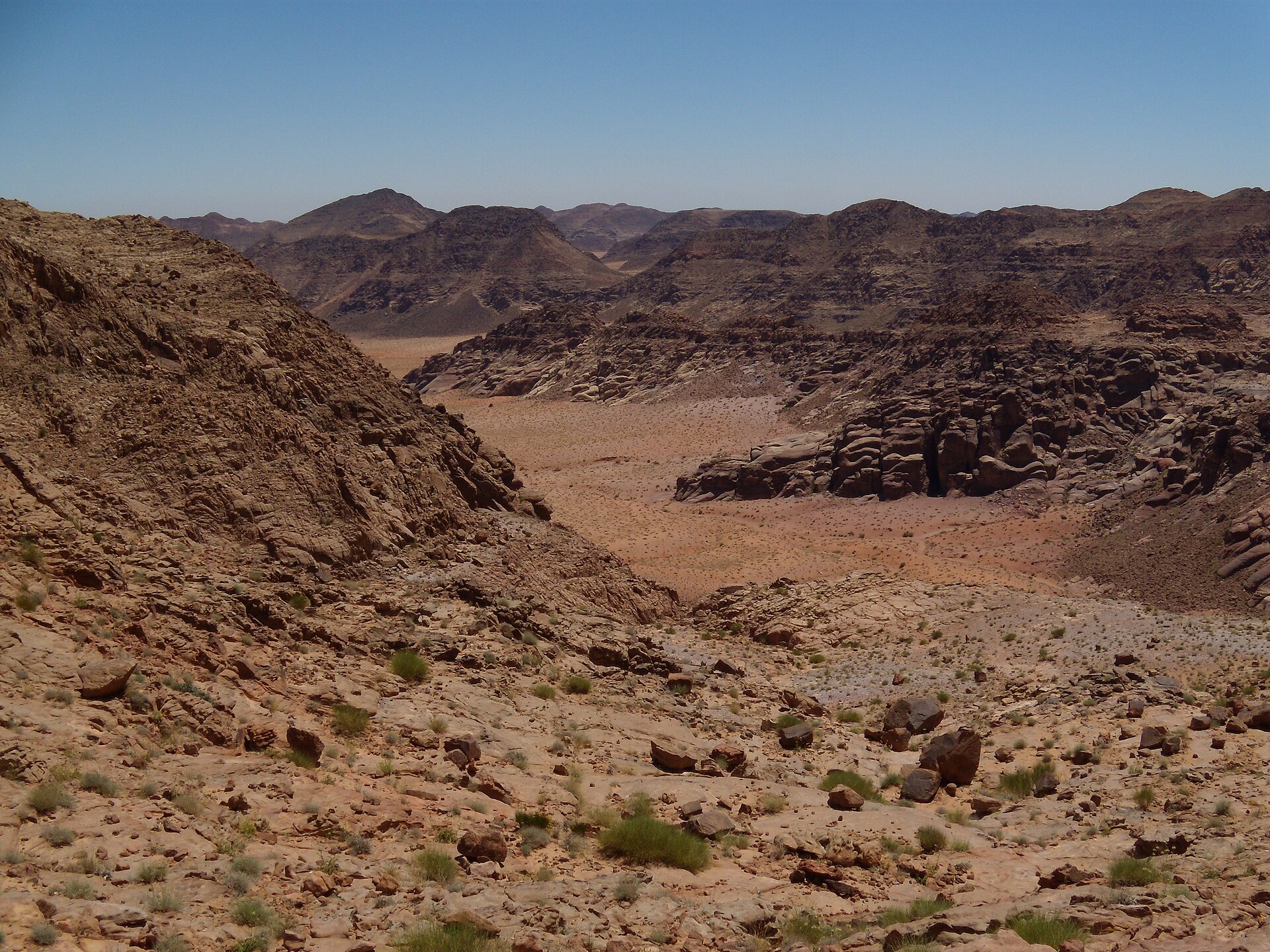
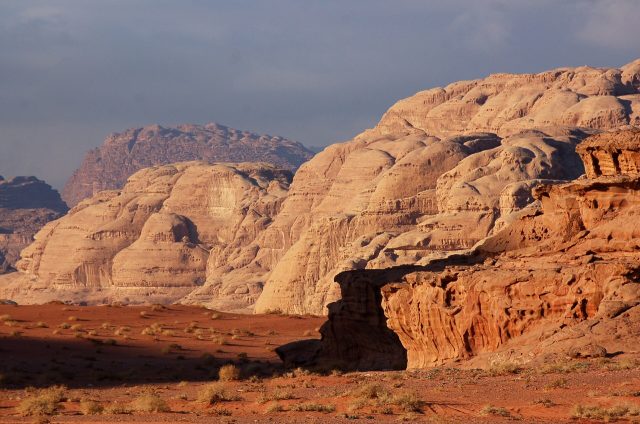
Jebel Umm ad-Dami isn’t just another mountain in Wadi Rum—it’s one of Jordan’s most striking natural landmarks, a place where the desert’s raw beauty feels almost otherworldly. Rising to 1,854 meters, it’s the highest peak in the country, but its real power lies in the way time and the elements have sculpted its sandstone slopes into something surreal. The wind and rain have carved the rock into jagged spires, smooth arches, and deep crevices, creating a landscape that looks like it belongs on another planet. It’s no wonder filmmakers have chosen this place to stand in for Mars or distant alien worlds—its stark, dramatic forms make it feel like a place untouched by human hands.
Reaching the summit is a challenge, though not an extreme one. The climb takes several hours, winding through narrow canyons and across exposed ridges where the wind sweeps unobstructed. There’s no need for technical gear, but the terrain demands respect, and without a guide, it’s easy to lose your way. As you ascend, the view shifts constantly. Below, the vast expanse of Wadi Rum stretches out, its famous dunes and rock formations shrinking into the distance. On clear days, the horizon blurs into the jagged outline of the mountain range that stretches toward Saudi Arabia, and if the light is just right, you might even catch a glimpse of the Gulf of Aqaba, more than a hundred kilometers away.
For centuries, this mountain has been more than just a landmark to the Bedouin tribes who call the desert home. To them, it was a waypoint in an endless sea of sand, a place to find shelter from the midday sun or water in the rare hidden springs. Their stories and traditions are woven into the landscape, and even now, you might encounter Bedouin families grazing camels near the base or sharing tea in a black goat-hair tent. Their presence is a reminder that Wadi Rum isn’t just a tourist destination—it’s a living, breathing place where people have adapted to the harsh beauty of the desert for generations.
The architecture here is entirely natural, but that only makes it more impressive. The rock formations resemble massive sculptures, shaped by forces far older than human history. In some places, the wind and water have hollowed out intricate mazes of stone, where shadows play tricks on the eye and the silence feels absolute. The best time to see it is at sunset, when the fading light turns the cliffs into a blaze of red and gold, and the shadows stretch long and deep. At night, the mountain becomes a perfect stage for stargazing—far from any city lights, the Milky Way hangs overhead like a silver river, bright enough to cast faint shadows on the sand.
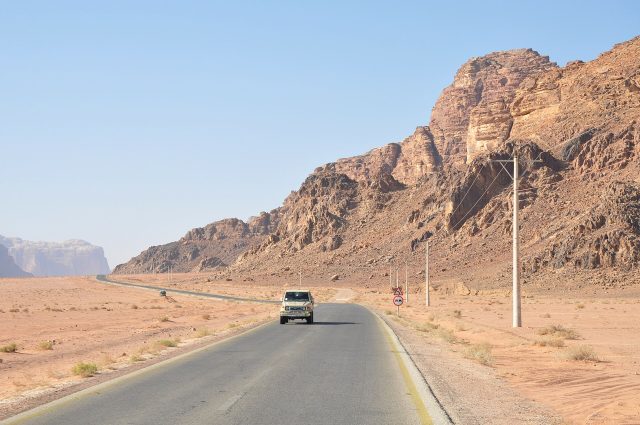
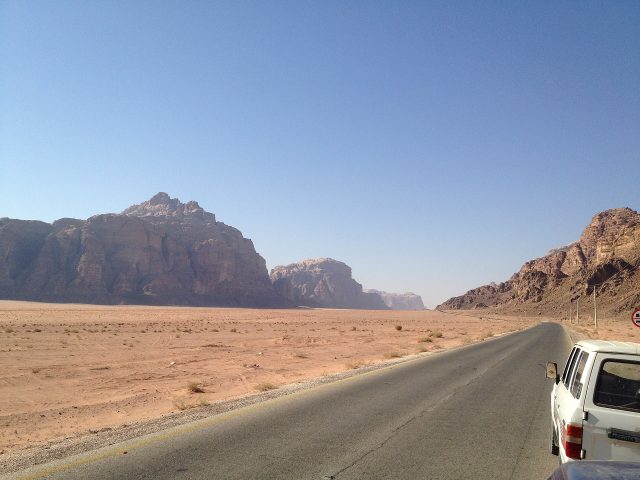
Not everyone will want to make the climb, and that’s fine. There are other ways to experience Jebel Umm ad-Dami. A jeep safari through the surrounding desert offers a different perspective, stopping at viewpoints where the mountain looms like a fortress of stone. Or you could spend a night in a Bedouin camp, listening to stories under the stars while the scent of sage tea and slow-cooked lamb fills the air. Even without setting foot on the summit, it’s impossible not to feel the weight of the place—the way the desert slows time, forcing you to pay attention to the small details, like the way the wind sounds different in the canyons or how the sand shifts underfoot.
Beyond its beauty, the mountain holds a deeper significance. For Jordan, it’s a symbol of the country’s natural heritage, a piece of a landscape that draws travelers from around the world. Wadi Rum is often called the Valley of the Moon, but Jebel Umm ad-Dami feels more like Mars—its alien contours make it easy to forget you’re still on Earth. Yet for all its otherworldly appearance, it remains a living part of the desert, where the balance between people and nature is still visible. The Bedouin who live here know every path, every rock, and their knowledge has been passed down through generations, a quiet testament to how deeply they understand this land.
A visit to Jebel Umm ad-Dami is more than just a hike—it’s a chance to see the desert in a way most travelers never do. There are no crowds here, no souvenir stands or tour buses. Just rock, sand, wind, and silence. That simplicity is what makes the mountain so compelling. It doesn’t try to dazzle with man-made attractions or flashy experiences. Instead, it exists on its own terms, a reminder of how small humans are in the face of nature’s grandeur. Maybe that’s why people who come here often find themselves returning, drawn back by the rare feeling of being completely, utterly present in a place that hasn’t changed in thousands of years.