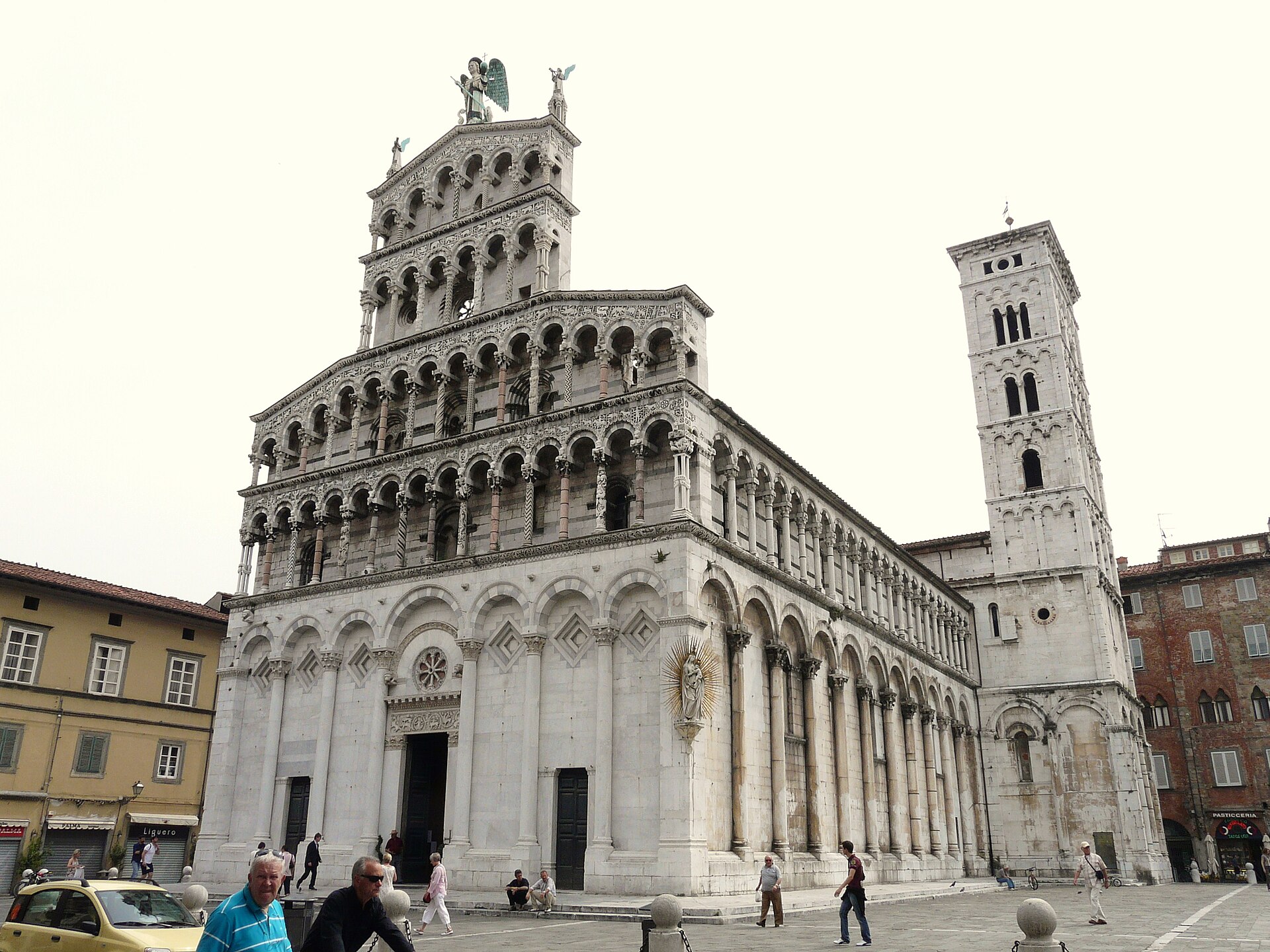
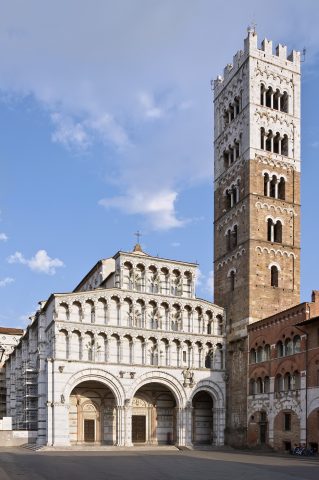
San Michele in Foro stands in the very heart of Lucca, where the hum of the ancient Roman forum once filled the air. Its gleaming white façade, lined with slender columns and intricate arcades, seems to hover above the square, a quiet reminder of the city’s distant past as part of the Roman Empire. The church is one of Lucca’s most recognizable landmarks, yet its story began long before the first stones of the present structure were laid.
The earliest church on this site dates back to the 8th century, though little remains of it today. The current building took shape in the 11th century, when Lucca flourished as an independent commune. Construction stretched over several generations, with each new craftsman leaving their mark on the design. The façade, completed in the 13th century, is a masterpiece of Pisan-Lucchese Romanesque architecture—light, graceful, and alive with the play of light and shadow across its carved capitals and delicate galleries.
The upper portion of the façade draws the eye, where four tiers of columns rise beneath a towering marble statue of the archangel Michael. Each column is unique, some twisted, others smooth or adorned with intricate floral patterns. A few appear to float, supported only by slender arches, creating an almost weightless effect. Above the main portal, ancient bas-reliefs depict saints and mythical creatures—lions, griffins, dragons—standing guard over the entrance.
Inside, the church is far simpler than its ornate exterior suggests. The spacious nave, with its high vaulted ceilings and austere columns, feels airy and bright. The altar is adorned with works by local Renaissance masters, including a terracotta Madonna and Child attributed to Andrea della Robbia. The walls bear faded frescoes from different eras, many worn by time and restoration, hinting at past grandeur rather than displaying it.
San Michele in Foro is deeply woven into Lucca’s history. In the Middle Ages, the city council gathered here, and in 1370, a peace treaty ending decades of conflict between Lucca and Pisa was signed within its walls. Over the centuries, the church became a place where the city celebrated victories, elections, and other milestones. Even now, the square in front hosts festivals and markets, and the building seems to come alive, reclaiming its role as the heart of public life.
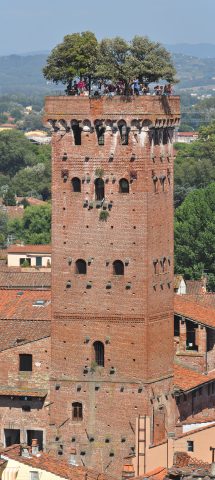
Lucca moves at a slower pace than Florence or Pisa, and San Michele in Foro is one of those places that makes it feel that way. There are no crowds here, no rush for the perfect photo—just the quiet broken by the occasional chime of bells or the footsteps of a visitor. From one of the nearby towers, the church appears almost sculpted from marble, framed by red-tiled roofs, rolling green hills, and the distant Apennines.
Despite its age, the church remains active. On Sundays, services fill the space with the sound of the organ and choir. On weekdays, it welcomes anyone who wishes to sit on the wooden pews, study the frescoes, or simply soak in the peaceful atmosphere. Lucca has many beautiful churches, but San Michele in Foro is different—it isn’t just a monument. It’s a living part of the city, shaped by centuries of history and still very much alive.