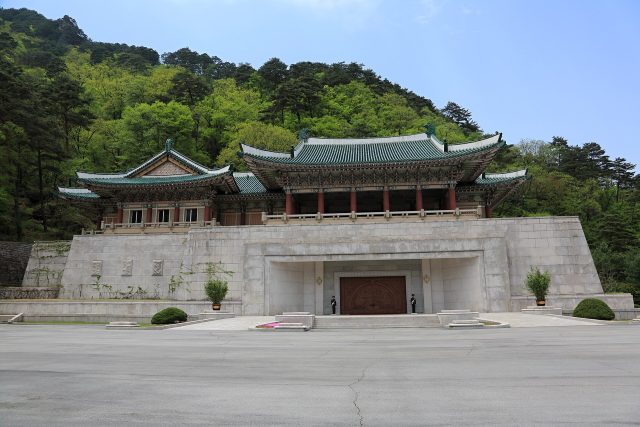
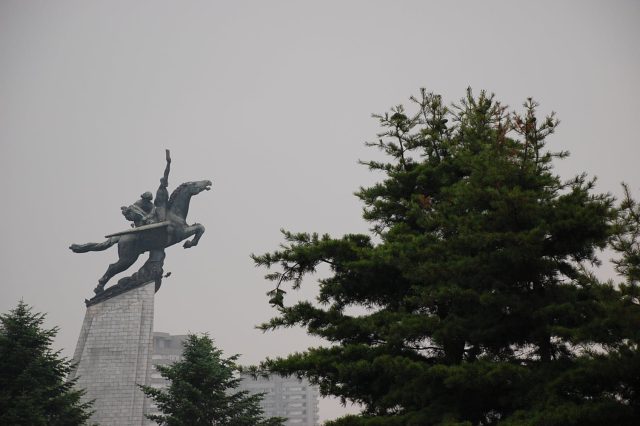
The statue of Kim Il Sung in Hichhŏn is one of those monuments that dot the landscape of North Korea, each carrying its own significance. While not as famous as the grand memorials in Pyongyang, this one holds deep meaning for the people of this small industrial city. Far from the capital, it stands as a symbol of unity and devotion to the ideals proclaimed by the nation’s founder, a reminder of the principles that shape daily life here.
Hichhŏn itself is a city built on labor. During the Soviet era, it was a key center for machinery production, and today its factories and workshops still hum with activity. The statue rises against this backdrop of industry, reinforcing the belief that hard work and loyalty are the highest virtues. It isn’t just a decorative landmark but a living part of the city’s rhythm. Schoolchildren visit on field trips, workers gather on holidays, and locals come to pay their respects, making it a focal point of community life.
The statue follows the familiar style of North Korean monumental sculpture. Kim Il Sung is depicted in his usual pose—dressed in a suit, with a gentle smile, his hand raised in a gesture that could be seen as either a blessing or a call to unity. Such monuments are more than tributes; they are woven into the fabric of state ideology, where the cult of personality and national history merge. The image is carefully crafted to evoke reverence, not just admiration.
What makes this particular statue notable is its placement. Unlike other monuments in Hichhŏn, it stands on an elevation overlooking the city, a deliberate choice that serves two purposes. From below, the figure appears towering and commanding, reinforcing its symbolic weight. At the same time, the location suggests vigilance, as if the leader is forever watching over his people. It’s a subtle but powerful message, one that resonates in a country where public spaces are designed to reinforce collective identity.
For visitors to North Korea, such monuments offer a glimpse into a world where history is presented with little room for interpretation. There are no casual photo ops here—tourists must follow strict protocols, photographing only with permission and approaching the statue with respect. This isn’t just sightseeing; it’s an encounter with a political culture where every detail carries meaning. The experience can feel surreal, especially for those accustomed to more open narratives about the past.
Hichhŏn isn’t a typical tourist destination. There are no luxury hotels or bustling markets, just the quiet hum of a working city. Yet for those curious about North Korea beyond the capital, it offers a rare look at provincial life. The statue of Kim Il Sung isn’t just a monument here; it’s a centerpiece of local identity, a reminder that even in smaller towns, the ideals of the nation’s founder remain deeply embedded in daily existence.
These monuments aren’t static relics. They are maintained with care, their significance reinforced through official ceremonies. On birthdays and anniversaries of the Kim family, flowers are laid at their bases, rallies are held, and performances take place. For locals, these rituals aren’t mere formalities but expressions of loyalty. The statue in Hichhŏn, like others across the country, is a living symbol, its role in public life as much about the present as the past.
If you ever find yourself in Hichhŏn, visiting the statue is worth more than a quick photograph. The atmosphere is quiet, far removed from the energy of tourist hubs. Here, time moves slowly, and the monument stands as a silent witness to the city’s rhythm. It’s a place where history and politics aren’t abstract concepts but tangible forces shaping everyday life. In North Korea, every statue is a piece of a larger ideological puzzle, and this one is no exception.