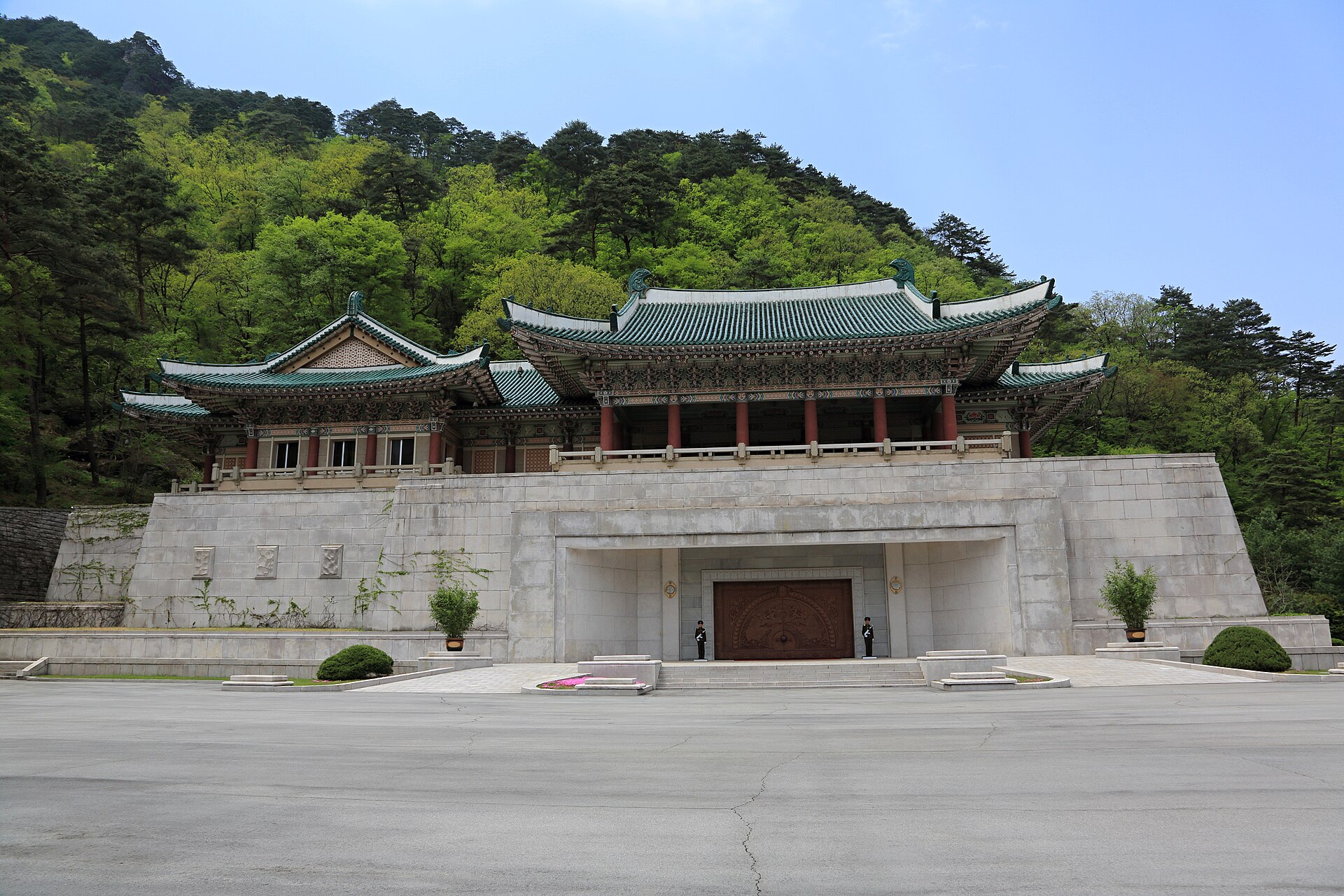
The International Friendship Exhibition sits quietly in the hills outside Hichhŏn, a city tucked between low mountains and dense forests in North Korea. Unlike most museums, it doesn’t draw casual visitors or tourists. Instead, it functions as a carefully curated record of how the country perceives its place in the world—a physical archive of gifts exchanged between North Korea’s leadership and foreign dignitaries, organizations, and even ordinary citizens. Established in 1978 under Kim Il Sung, the exhibition has grown steadily over the decades, each new item a testament to diplomatic gestures, alliances, and the occasional olive branch.
The complex itself is imposing, designed to convey grandeur. Built in the style of a palace, its light stone facade rises above wide staircases, leading to vast halls with towering ceilings and polished marble floors. The architecture is deliberate, meant to evoke a sense of reverence. Massive chandeliers hang overhead, casting a soft glow over the displays, which are arranged by country. One room might hold gifts from Russia, another from China, while others showcase items from Africa, Latin America, or the Middle East. The effect is less like a traditional museum and more like stepping into a monument to international relations as North Korea sees them.
Some of the exhibits are striking in their scale or craftsmanship. A miniature bronze replica of the Soviet *Worker and Kolkhoz Woman* statue, originally sculpted by Vera Mukhina, stands as a nod to Cold War-era ties. Nearby, intricate jade carvings from China gleam under the lights, while Cuban cigars rest in handcrafted wooden boxes inlaid with mother-of-pearl. Not every gift is extravagant—Vietnamese embroidered textiles, Iranian ceramics, and Swiss watches share space with more modest offerings. Each item is labeled with the donor’s name and a brief description, though the full story behind many remains untold. Was the gift a formality, a genuine gesture of goodwill, or something in between? The exhibition leaves that to the imagination.
A few pieces carry particular weight, especially those from heads of state. Fidel Castro’s contribution—a set of Cuban rum—sits alongside a gold-encrusted dagger presented by Egypt’s Hosni Mubarak. There are gifts from African leaders, representatives of international organizations, and even private individuals who sought to express admiration for North Korea’s leadership. Taken together, the collection feels less like a random assortment of objects and more like a chronicle of the country’s diplomatic history, a tangible record of who has reached out, when, and why.
Hichhŏn itself is far from a tourist hub. The city is a typical North Korean urban center—wide, orderly streets lined with monumental buildings, where pedestrians are few and life moves at a quiet pace. The exhibition is set against a backdrop of rolling green hills, with the Ch’ŏnch’ŏn River flowing nearby. For locals, the place likely blends into the landscape of state institutions, another site tied to the country’s leadership rather than a destination in its own right. It’s not somewhere people visit on weekends or discuss over dinner; it exists in a different sphere, one reserved for official narratives and carefully managed impressions.
Visiting the exhibition is less about exploration and more about ritual. Foreign guests are rare, and access is tightly controlled. Guides lead visitors through the halls, reciting prepared explanations about how each gift symbolizes friendship between nations. Their words often sound rehearsed, though occasionally a hint of genuine pride slips through—especially when describing gifts from countries with particularly close ties to North Korea. In those moments, the exhibition’s purpose becomes clearer: it’s not just a collection of objects, but proof that the country has allies, that it is seen, acknowledged, even if only in carefully staged ways.
The collection continues to grow. After Kim Jong Un’s foreign visits or meetings with international leaders, new items appear—recent additions from Russia, China, and African nations, for example. Each new gift is treated with ceremony, sometimes displayed in a dedicated space or unveiled in a formal handover. The process reinforces the idea that the exhibition is alive, evolving alongside the country’s diplomatic efforts. It’s a reminder that even in a place often described as isolated, connections are still being made, however selectively.
For those who do manage to visit, the experience offers a rare glimpse into North Korea’s diplomatic worldview. There are no ordinary museum artifacts here—no ancient pottery or Renaissance paintings. Instead, the halls are filled with objects meant to convey respect, alliance, and mutual recognition. In that sense, the exhibition feels almost like a secular temple, where the relics aren’t religious but diplomatic. Most foreigners will never see it, but for North Koreans, it serves a different purpose: a physical reminder that their country, despite its reputation, is not entirely alone in the world. Whether that message is comforting or simply performative depends on who you ask.