Hichŏn is a city that rarely appears on travel itineraries, tucked away in the heart of North Korea, far from the capital and the usual routes foreign visitors take. It’s an industrial hub, where factories produce machinery and textiles, and the streets are lined with the kind of utilitarian apartment blocks you’d expect in a place built for function rather than form. Yet even here, in a city that thrives on labor rather than tourism, there’s a monument that stands out—not just for its size, but for what it represents.
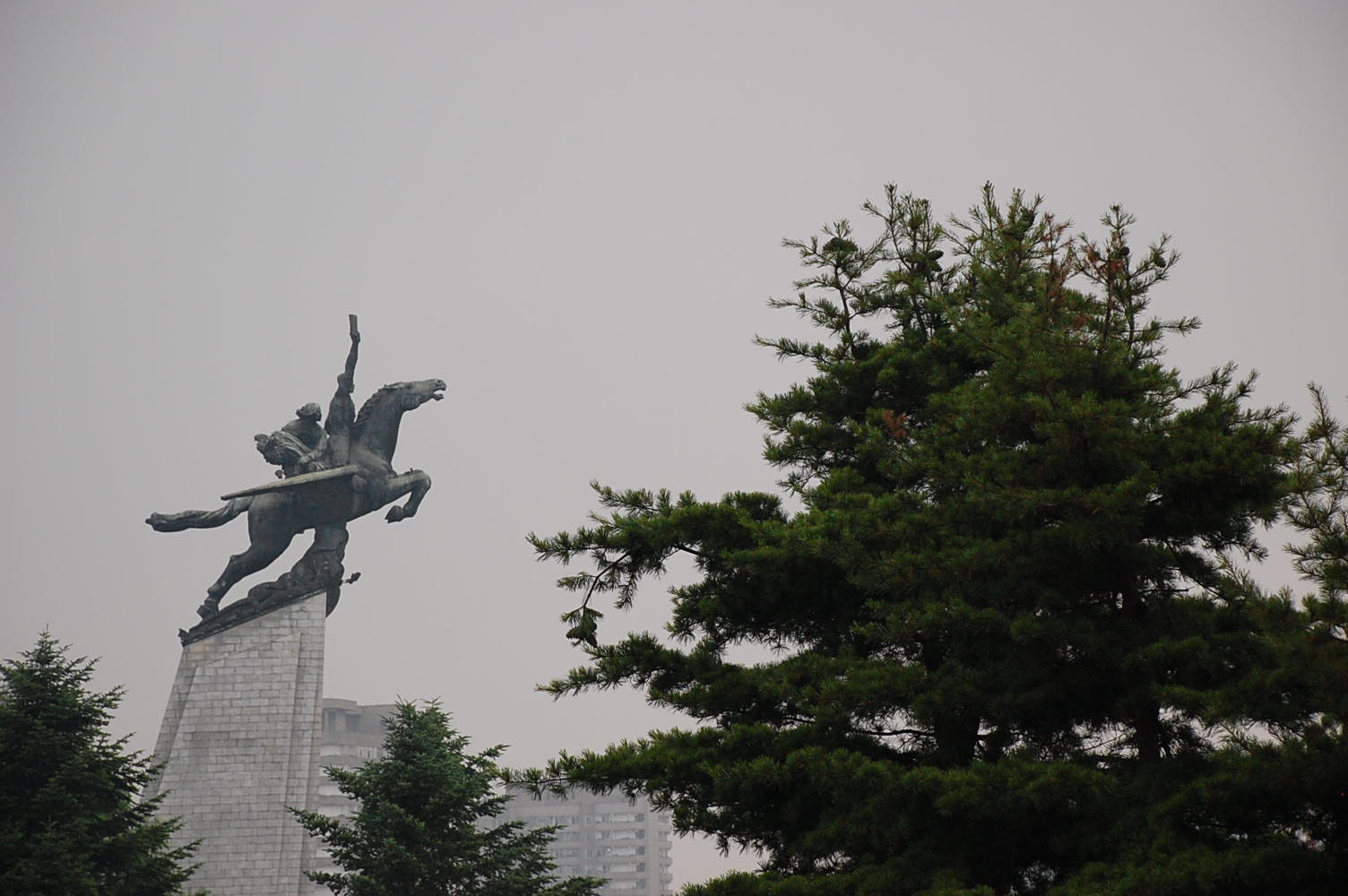
The Chollima Monument dominates one of Hichŏn’s central squares, its towering figure visible from a distance. The mythical winged horse, Chollima, is a symbol deeply embedded in North Korean ideology, embodying speed, progress, and the relentless drive toward a brighter future. The idea of Chollima emerged in the mid-20th century, a time when the country was rebuilding after the devastation of war. The state called on its people to achieve the impossible through sheer effort and determination, and the image of the horse became a rallying cry. The monument in Hichŏn was erected in the 1980s, by which time the city had already established itself as an important industrial center—a testament to what could be accomplished through hard work and unwavering belief in collective ideals.
The sculpture itself is striking. The horse rears up, its wings spread wide, muscles taut as if caught in mid-leap. A rider sits astride, not a warrior or a leader, but an ordinary worker or farmer, representing the everyday people whose labor powers the nation. The style is unmistakably socialist realism, yet there’s something almost fairy-tale-like about it, as if the horse might take flight at any moment. The materials—bronze or some other metal—have weathered over time, giving the surface a patina that adds depth and a sense of permanence. The base is clad in granite or marble, inscribed with words praising the achievements of the people and the party.
For locals, the monument isn’t just a piece of public art; it’s woven into the fabric of daily life. On holidays and during demonstrations, the square becomes a gathering place, a backdrop for speeches and celebrations. The image of Chollima isn’t confined to this one statue—it appears across the country, on posters, in the names of factories, even in sports teams. There’s a larger, more famous Chollima Monument in Pyongyang, but the one in Hichŏn feels different. Here, away from the capital’s grandeur, it takes on a more personal significance. This is a city of workers, and for them, Chollima is a reminder that their efforts matter, that their labor is part of something bigger.
Hichŏn itself is not a place that caters to tourists. There are no luxury hotels, no bustling markets, no ancient temples to explore. What you’ll find instead is a city that reflects the realities of life in North Korea—a place where the focus is on industry, on the collective rather than the individual. The Chollima Monument fits into this landscape seamlessly. It’s not just a symbol of ideology; it’s a marker of identity, a point of pride for a city that has carved out its own place in the country’s narrative.
The monument is always accessible, standing in the open air, its presence unmissable. It’s at its most dramatic on clear days, when the light catches the bronze, or in the evening, when the illumination casts long shadows. On national holidays, the square comes alive with rallies, concerts, and crowds laying flowers at the base. For an outsider, the scene might feel unfamiliar, even jarring. But if you set aside the politics, there’s something universal in it—the human desire to believe in something greater, to carve hope into stone and metal, to create something lasting even in difficult circumstances.
Chollima remains a living part of North Korean culture. For younger generations, it’s a piece of history, a symbol of a time when the future seemed full of possibility. For older residents, it’s a reminder of the era when the country was rebuilding, when every effort felt like a step toward a brighter tomorrow. The monument in Hichŏn may not have the scale of its counterpart in Pyongyang, but its message is no less powerful. It speaks to the idea that progress isn’t just about grand gestures—it’s about the daily work of ordinary people.
Visiting Hichŏn isn’t about seeking out exotic experiences or leisure. It’s about seeing North Korea through a different lens, one that’s less about spectacle and more about the quiet rhythms of life in an industrial city. The Chollima Monument is just one part of that story, but it’s a significant one. It’s a reminder that even in places not designed for outsiders, there are layers of meaning waiting to be uncovered. If you ever find yourself in Hichŏn, take a moment to stand before the monument. Look up at the horse straining toward the sky, and consider the era it represents—the dreams, the struggles, and the enduring belief in what could be.