Hichŏn’s Culture and Recreation Park is one of those places in North Korea where the weight of official ideology meets the quiet rhythms of everyday life. Tucked in the heart of the city, it serves as both a retreat for locals and a subtle showcase of the state’s care for its people. There are no grand fountains or towering monuments like those in Pyongyang, but the park’s wide pathways, shady trees, and neatly trimmed lawns create an atmosphere of order and care. On weekends, families gather here, children play in the open spaces, and elderly residents stroll along the paths, enjoying the quiet and the fresh air.
Hichŏn is an industrial city, known for its factories and workshops, and the park plays a practical role in the lives of its workers. It became a fixture of the urban landscape in the mid-20th century, when the country was rebuilding after the Korean War. The layout followed a standard template for North Korean parks: broad walkways leading to a central square, small pavilions for rest, and a monument to the country’s leaders. These elements are part of a deliberate design, where every public space is meant to carry an educational purpose, reinforcing the values the state wants to promote.
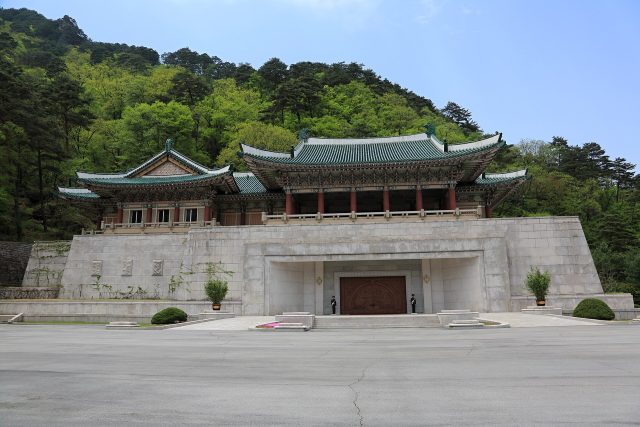
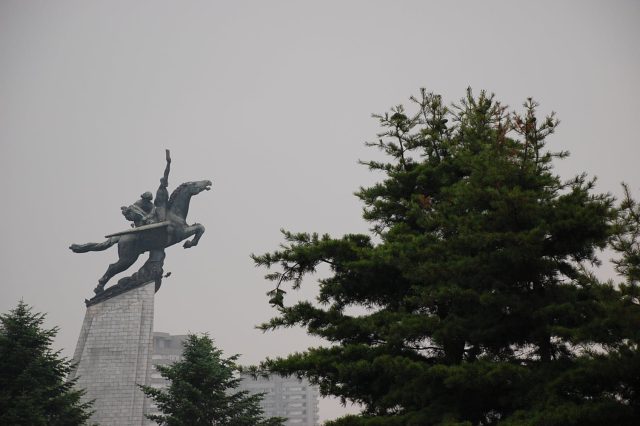
The park’s architecture is simple and functional, reflecting the no-nonsense approach of North Korean urban planning. There are no ornate details, just clean lines and symmetry. The main avenue leads to a modest stage where local performances or concerts occasionally take place. Nearby, a few pavilions with carved wooden accents offer shelter from the sun or rain, their traditional design a quiet nod to national heritage. Sculptures celebrating labor and heroism are scattered throughout, but they don’t dominate the space—they blend into the surroundings, reinforcing the park’s role as a place of reflection rather than spectacle.
A memorial area dedicated to those who fought in the Korean War holds a special place in the park. Here, stone markers and a small obelisk stand as reminders of the lives lost in the conflict. For locals, this is a place of quiet remembrance, especially on national holidays when crowds gather to lay flowers and listen to speeches. On ordinary days, the area is peaceful, the only sound the rustling of leaves in the wind.
Beyond its role as a green space, the park functions as a cultural hub. Mass events—sports competitions, festivals, exhibitions showcasing local industry—are held here regularly. In warmer months, the central square transforms into a dance floor, with live music drawing crowds for communal gatherings. These events aren’t just for entertainment; they’re part of a broader effort to foster unity, where public life and ideology intertwine. For outsiders, the park might feel unusual. There are no flashy attractions or cafes, just a sense of measured calm. People move quietly, children play without the usual chaos of public parks elsewhere, and the atmosphere is one of restraint. Visitors often remark that it feels more like a well-organized civic space than a leisure destination in the Western sense.
Despite its unassuming appearance, the park is deeply woven into the fabric of Hichŏn’s daily life. It’s a place for meetings, relaxation, and even subtle propaganda. Lectures on the country’s achievements, screenings of films about its leaders, and occasional rallies take place here, blending leisure with ideological messaging. Yet, for all its official functions, the park remains a space where people can simply sit on a bench with a book or take a solitary walk, a rare moment of personal quiet in a society where public and private life often overlap.
In recent years, small changes have begun to appear. New benches have been installed, pathways refreshed, and flowerbeds planted. These updates are part of a broader government effort to improve urban spaces, not just in the capital but in provincial cities like Hichŏn. The changes are subtle, but they signal an ongoing commitment to maintaining order and comfort for residents.
Hichŏn’s Culture and Recreation Park is more than just a patch of green in the city center. It’s a microcosm of North Korean life, where state ideology and personal moments coexist. For locals, it’s a familiar place, somewhere they’ve visited since childhood. For outsiders, it offers a glimpse into the rhythms of provincial North Korea—a place where time moves slowly, and the boundaries between public duty and private life are softly blurred. Whether you come to observe or simply to sit, the park leaves an impression of quiet, unhurried existence, a rare thing in today’s world.