The Old Main Bridge in Würzburg has stood here for centuries, as if the city grew up around it. Its story is shaped by time, war, and the steady flow of the river beneath.
The first bridge here was built in the 12th century, a wooden structure that couldn’t withstand the river traffic. By the 13th century, it was replaced with stone, and defensive towers were added to collect tolls from merchants. The Main River was a trade route, and the bridge linked the two halves of the city. Over time, it became part of Würzburg’s fortifications, its towers used as lookout points. Even then, the bridge was more than just a crossing—it was a symbol of the city’s endurance.
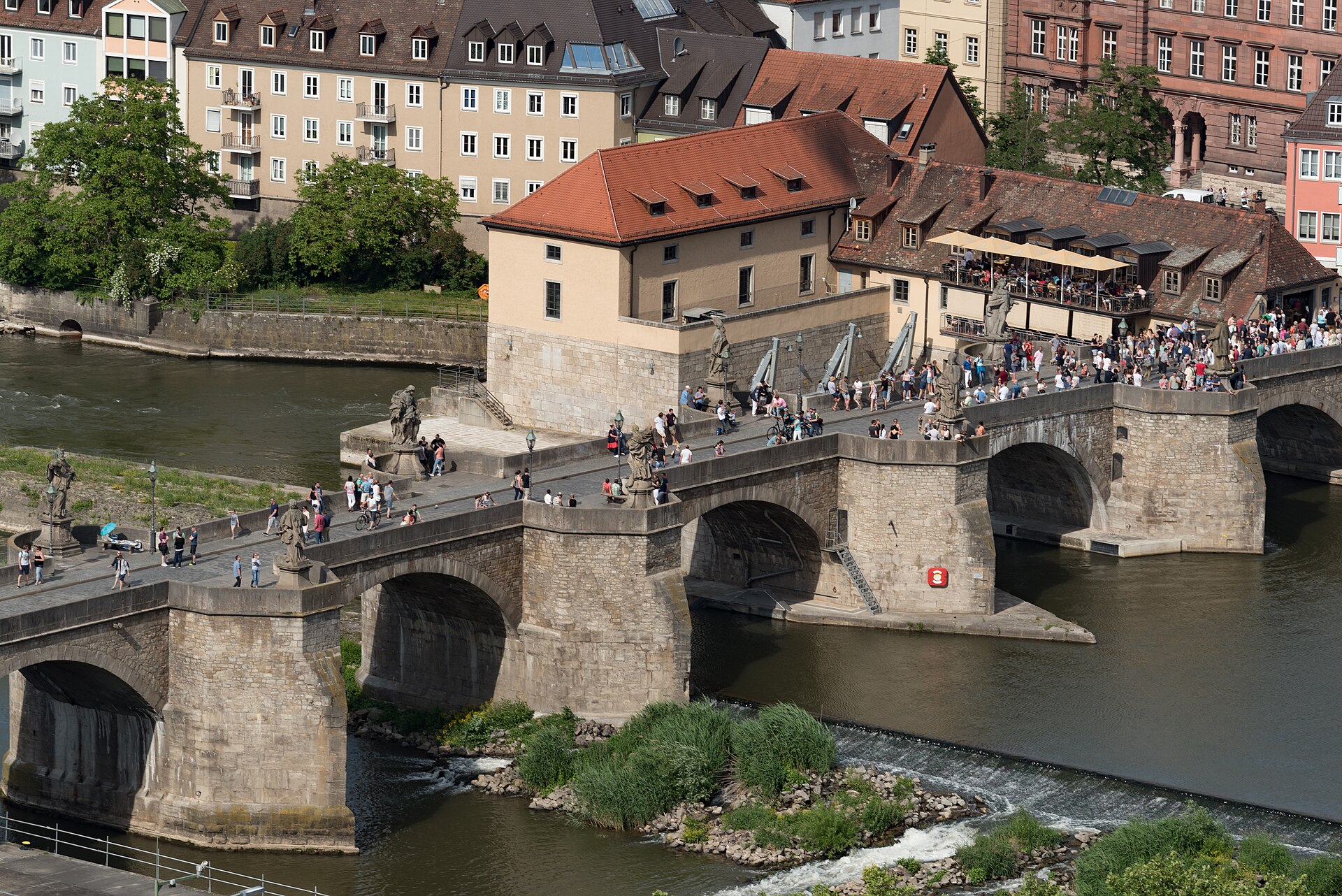
The bridge we see today dates to the 18th century, rebuilt after the Thirty Years’ War. It was adorned with twelve sandstone statues of saints, each representing a patron or bishop from Würzburg’s history. The figures stand along the parapet, weathered but still visible. Among them is Saint Kilian, the Irish missionary who brought Christianity to the region in the 7th century. To locals, these statues are part of the city’s identity.
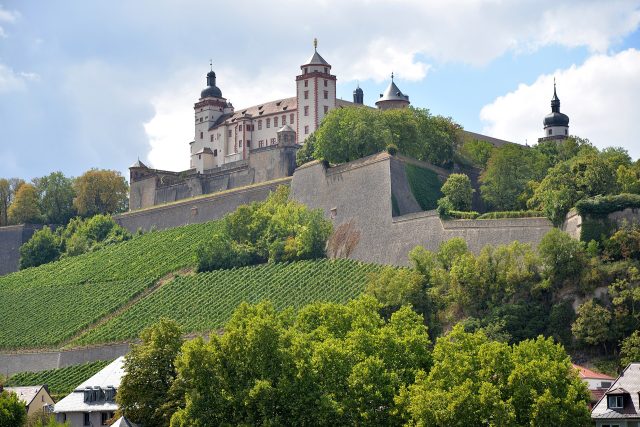
For much of its history, the bridge carried trams, horse-drawn carriages, and processions. Today, it’s for pedestrians only—a place to stop and look around. From here, the Marienberg Fortress rises on one bank, while Baroque buildings slope down to the water on the other. In the evening, the bridge is lit, its reflection in the river below.
It’s a spot where locals gather: students, retirees, families feeding ducks.
The bridge was heavily damaged in World War II but restored soon after. By the 1950s, it had been rebuilt, preserving its historic character while making it safe for modern use. Engineers have reinforced it over the years, but it still looks much as it did three centuries ago.
For visitors, the Old Main Bridge is where history feels close. You can almost see medieval merchants on the riverbanks or guards in the towers. But the bridge isn’t just a relic—it’s still in use. On any day, you might hear a street musician near the statues, see a couple attaching a padlock to the railing, or watch friends picnicking by the water. In winter, when the river freezes, the bridge offers a view of ice drifting downstream.
The bridge is tied to local customs. Newlyweds attach locks to the railing for luck, a practice that fits the bridge’s history. Another tradition says that if you make a wish while looking toward the Marienberg Fortress, it will come true. The setting makes it easy to try.
What makes the Old Main Bridge special is how it connects Würzburg’s past and present. It’s not just a monument—it’s part of daily life. The city has grand palaces, wine cellars, and an ancient university, but the bridge often leaves the strongest impression. It doesn’t demand attention, but once you’ve crossed it, you see why Würzburg wouldn’t be the same without it.