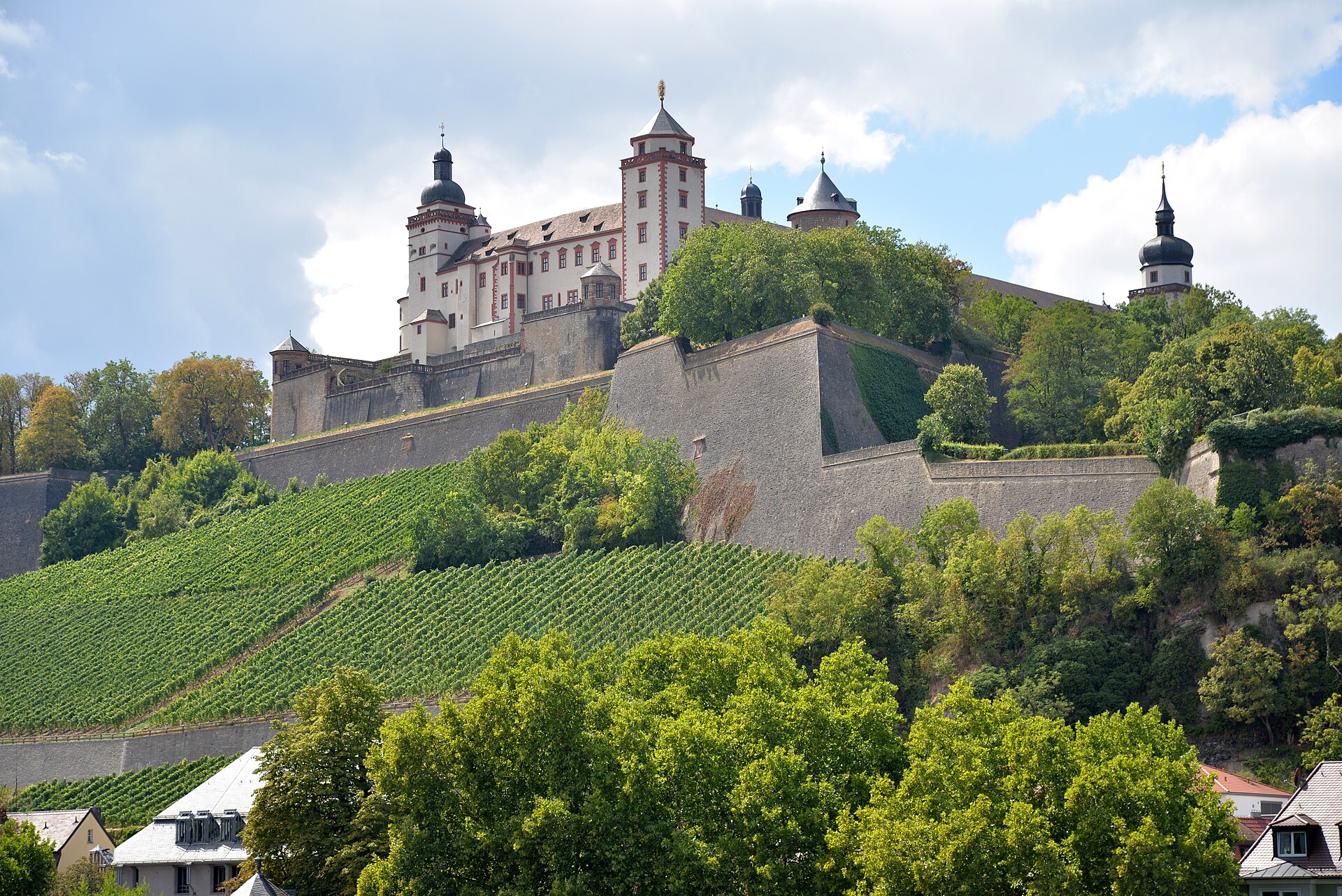
Perched above Würzburg, Marienberg Fortress has watched over the city for over a thousand years. Its walls and towers rise against the sky, visible from afar when sunlight reflects off the Main River winding around the hill.
The hill was first fortified by the Franks in the 8th century. By the Middle Ages, it became the residence of Würzburg’s prince-bishops, who shaped it into a fortress and a palace. Each stone bears traces of sieges, reconstructions, and shifting power. During the Thirty Years’ War, the fortress withstood assaults before being partially destroyed. It was rebuilt not as a military stronghold but as a display of authority.
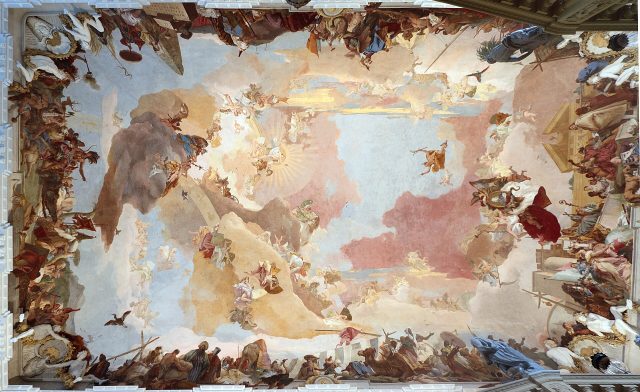
The architecture of Marienberg mixes medieval and Baroque styles. The main gate, marked with the coats of arms of past bishops, opens into an inner courtyard where soldiers once stood guard. The oldest structure is the Chapel of St. Mary, built in the 8th century and later reconstructed in the Romanesque style. Its plain walls contrast with the 17th-century prince’s palace, where halls feature stucco work, frescoes, and antique furnishings.
The slopes of Marienberg have been vineyards for centuries. The prince-bishops promoted winemaking, and the fortress cellars still store barrels of wine. A wine museum inside offers tastings of local varieties. In autumn, the vineyards turn golden, and the air carries the scent of grapes.
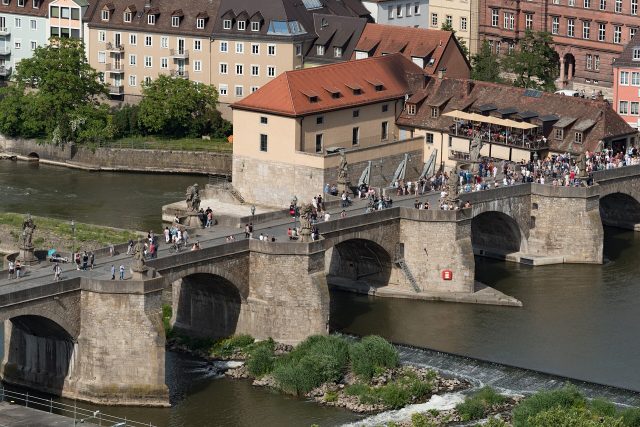
From the fortress walls, Würzburg unfolds below. The old bridge crosses the Main, while red-tiled roofs, church spires, and the Würzburg Residence stretch toward the horizon. On clear days, the hills of Franconia appear, dotted with vineyards and villages. At dusk, the city lights flicker to life.
Marienberg hosts concerts, medieval festivals, exhibitions, and weddings. In summer, the inner courtyard fills with visitors; in winter, frost dusts the walls. The place rarely feels crowded—only the sound of gulls, wind through the vineyards, and footsteps on stone.
Walking through Marienberg feels like moving through time. After the old town’s narrow streets, climbing the hill shifts the atmosphere. There’s no set path—wander courtyards, climb a tower, or sit on a bench overlooking the Main Valley. Knights, monks, and merchants once walked here; trumpets sounded during receptions, and chapel bells rang on quiet evenings.
Marienberg is part of Würzburg’s identity. Its history isn’t just in books—it’s in the stones, the landscape, and the stories of those who live here. Even if medieval architecture or winemaking aren’t your usual interests, the place might surprise you: the smell of fresh bread from a bakery below, an artist sketching the view, or the quiet that settles here.
The fortress stays with you. It makes you want to return.