Mineirão isn’t just a stadium—it’s a place where Brazil’s love for football feels alive in every corner. Built in the mid-20th century, it was once the largest sports arena in the country, holding over a hundred thousand fans. The capacity has since been reduced, but its significance hasn’t faded. This is where Brazilian football history was written, where victories were celebrated and defeats felt deeply, where the roar of the crowd became part of the city’s rhythm.
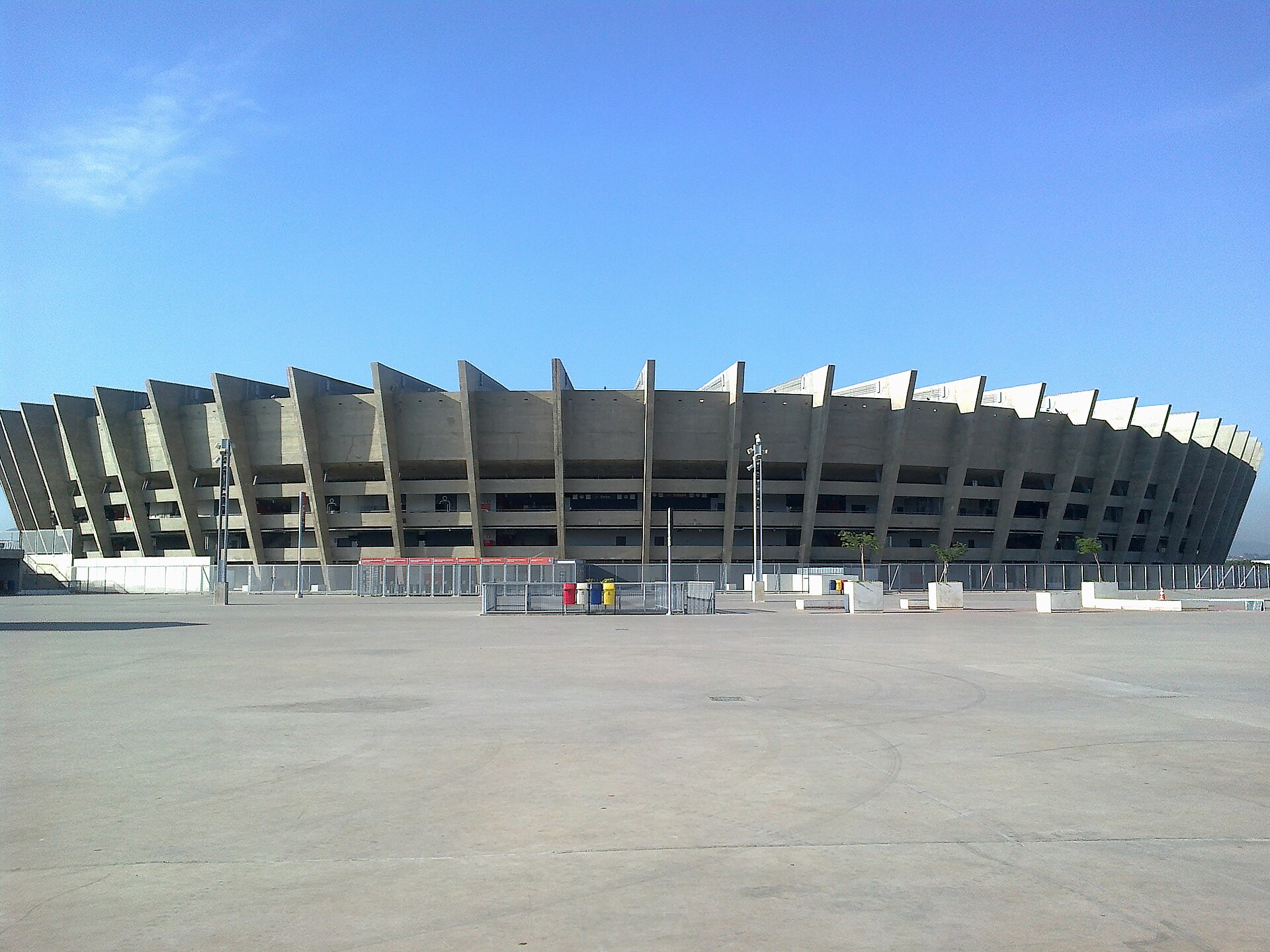
The stadium’s design is striking in its simplicity. The oval stands rise steeply, forming a vast bowl that seems to cradle the field below. The exterior is clad in light stone, giving it a timeless look, while the roof shields spectators from the sun and rain. Inside, even on match days when every seat is taken, the space feels open—wide aisles, comfortable seating, and acoustics that carry every chant and cheer. Recent renovations brought modern screens and better lighting, but the soul of the old stadium remains untouched.
For many, Mineirão is sacred ground. It was here, during the 2014 World Cup, that Germany’s 7-1 victory over Brazil stunned the world—a match still talked about years later. But more often, the stadium echoes with the joy of local fans. Cruzeiro and Atlético Mineiro, the city’s two biggest clubs, call this place home. On game days, thousands fill the stands, singing, shouting, and willing their teams to victory. Even if football isn’t your passion, the energy is infectious. There’s something about the way the crowd moves as one, the way the noise builds and fades, that makes it worth experiencing.
The stadium’s connection to Pampulha runs deeper than sport. In the 1940s, the district was transformed by Oscar Niemeyer’s vision, though no one expected a football arena to become one of its defining landmarks. By the 1950s, Mineirão had grown into more than just a sports venue—it was a cultural hub. Concerts, political rallies, and religious gatherings all found a home here. In the 1980s, international stars performed on its stage, and in the 2000s, it hosted major competitions. Today, it’s where sport, music, and public life intersect, a place that reflects the city’s spirit.
For locals, Mineirão is part of everyday life. Families pass down traditions of attending matches together, but the stadium isn’t just for game days. The surrounding park is a popular spot to relax under the trees, ride bikes, or have a picnic. On weekends, the area buzzes with activity—kids playing football on smaller pitches, groups taking photos in front of the stadium, people simply enjoying the space. The stadium doesn’t just come alive during matches; it’s always there, woven into the fabric of the neighborhood.
Visitors can explore Mineirão beyond the stands. Guided tours take you through the team locker rooms, down the tunnel that leads to the field, and up to the highest rows, where the view stretches across Pampulha. The stadium’s museum holds trophies, photographs of legendary players, and exhibits that tell the story of Brazilian football. It’s a chance to understand how deeply the sport is tied to the country’s identity—how it shapes conversations, memories, and even national pride.
What makes Mineirão special isn’t just its size or history, but the way it feels lived-in. The walls hold decades of stories—of triumphs, heartbreaks, and the quiet moments in between. Younger fans cheer for their heroes with the same passion their grandparents once did. The stadium doesn’t try to be sleek or cutting-edge; it’s a place where time moves differently, where the past and present coexist. There’s no pretense here, just raw emotion, a shared love for the game, and the unspoken understanding that some places aren’t just built—they’re felt.
That’s why people keep coming back. Whether you’re a football fan or not, Mineirão has a way of making you feel part of something bigger. It’s not about perfection; it’s about the imperfect, human moments that happen here—the dreams realized, the hopes dashed, and the simple joy of being in a place where the game isn’t just played, but truly lived.