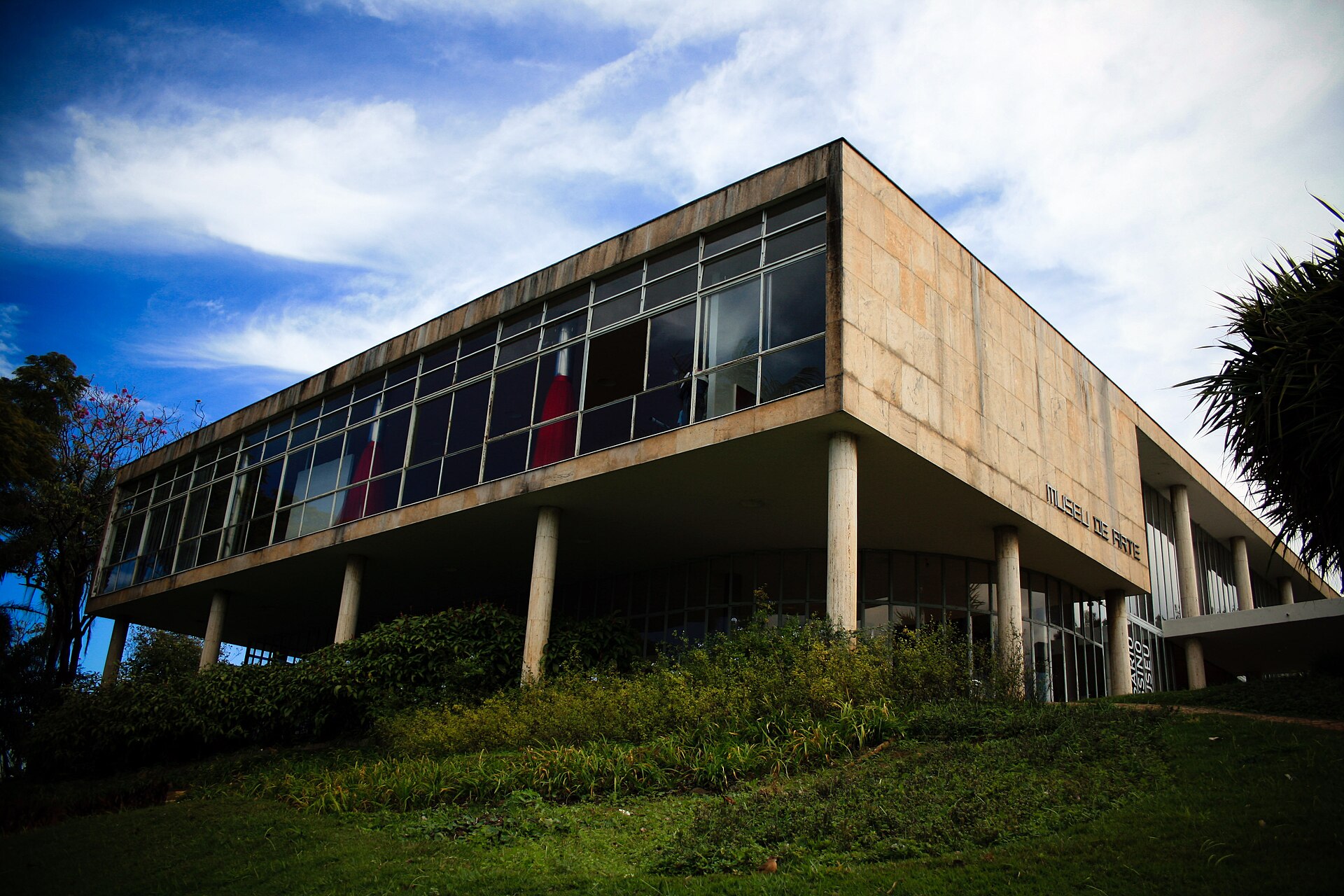
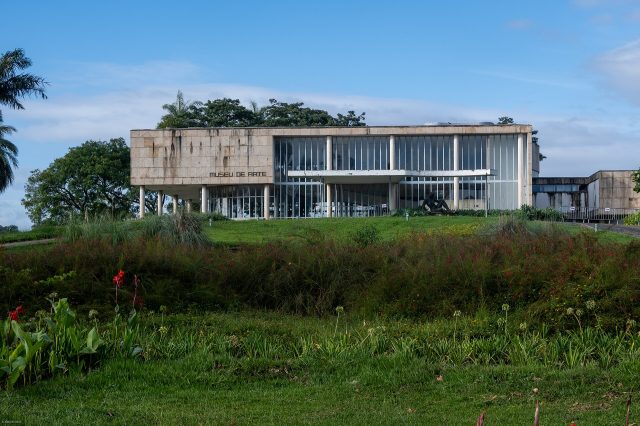
The Pampulha Art Museum is one of those rare places where the building itself feels like a masterpiece, its walls holding not just paintings and sculptures but the very spirit of an era. Nestled in the Pampulha district of Belo Horizonte, it doesn’t just display art—it immerses visitors in the story of Brazilian modernism, a movement that reshaped the country’s cultural identity. The museum stands as a testament to a time when artists and architects dared to reimagine what Brazil could be, blending European avant-garde influences with a distinctly local voice.
Designed by Oscar Niemeyer, the museum is a defining work of one of the 20th century’s most visionary architects. In the 1940s, Pampulha was a blank canvas, an experimental playground where Niemeyer and his contemporaries were given the freedom to push boundaries. The museum was among the first structures in what would become a landmark ensemble around an artificial lake, its sweeping curves and fluid lines a radical departure from the rigid geometries of traditional architecture. At the time, its design was seen as almost rebellious—an audacious leap into the future. Today, those same curves feel timeless, a reminder of how architecture can shape not just spaces, but ideas.
Inside, the museum’s layout is deliberately unhurried, inviting visitors to linger rather than rush. The collection focuses on Brazilian art from the first half of the 20th century, with a strong emphasis on modernism’s quest to redefine national identity. Among the most striking works are those by Candido Portinari, whose paintings capture the raw beauty and struggles of everyday life in Brazil. His bold colors and social themes make his pieces some of the museum’s most recognizable, offering a window into the country’s soul during a period of rapid change.
The collection also includes works by Alberto da Veiga Guignard, an artist whose abstract compositions and formal experiments reflect the restless energy of modernism. Equally compelling are the sculptures of Franz Weissmann, whose metal constructions blur the line between art and engineering, their geometric precision softened by an almost organic fluidity. These pieces feel like a natural extension of Niemeyer’s architecture, as if the building itself inspired the art within its walls.
Beyond paintings and sculptures, the museum offers a broader look at how modernism infiltrated daily life. The exhibits include furniture, decorative arts, and even theatrical set designs from the era, revealing how deeply the movement influenced everything from household objects to public spaces. A chair, a lamp, or a ceramic vase here isn’t just an artifact—it’s part of a larger narrative about how art and design can transform society. This holistic approach makes the museum feel less like a gallery and more like a time capsule, where every object has a story to tell.
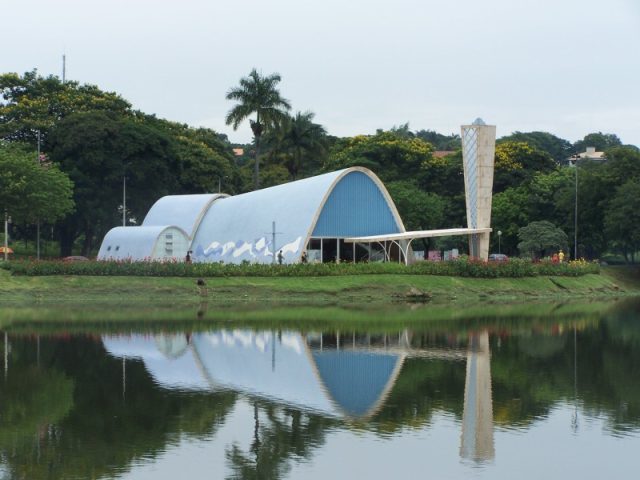
The surrounding area of Pampulha is just as much a part of the experience. Conceived as a harmonious blend of nature and architecture, the district was designed to be a self-contained world, with Niemeyer’s buildings arranged around an artificial lake created in the 1940s. A stroll along the waterfront reveals other iconic structures, like the Church of Saint Francis of Assisi, its blue-tiled façade a striking contrast to the landscape, or the former casino, now repurposed as an exhibition space. Together, they form a cohesive vision, where architecture and nature exist in dialogue.
Visiting the museum is more than an art outing—it’s a chance to step into a pivotal moment in Brazil’s history. The 1940s and 50s were a time of transformation, when the country was forging a new cultural identity. Modernism wasn’t just an artistic style; it was a declaration of ambition, a way to assert Brazil’s place on the world stage. The Pampulha Art Museum preserves that spirit, offering a glimpse into a time when art wasn’t just about aesthetics but about shaping the future.
Decades after its creation, the museum remains a dynamic space. Temporary exhibitions, lectures, and workshops keep the conversation between past and present alive, while the collection continues to grow. The building itself, though over 80 years old, hasn’t lost its relevance. Its design still feels fresh, a reminder that great architecture doesn’t age—it simply becomes more meaningful with time. For anyone curious about Brazil’s cultural evolution, modernism’s legacy, or the way art can redefine a place, the Pampulha Art Museum is a destination that lingers in the mind long after the visit.