Free State Stadium in Mangaung is one of those places where sport isn’t just a spectacle—it’s woven into the fabric of the city. Built in 1995, it was designed as a modern venue for rugby and football, but over the years, it has grown into something more: a gathering point for the community, a stage for shared emotions, and a symbol of local pride. Matches are only part of what happens here. The stadium also hosts concerts, festivals, and even political rallies, making it a hub for the region’s social life.
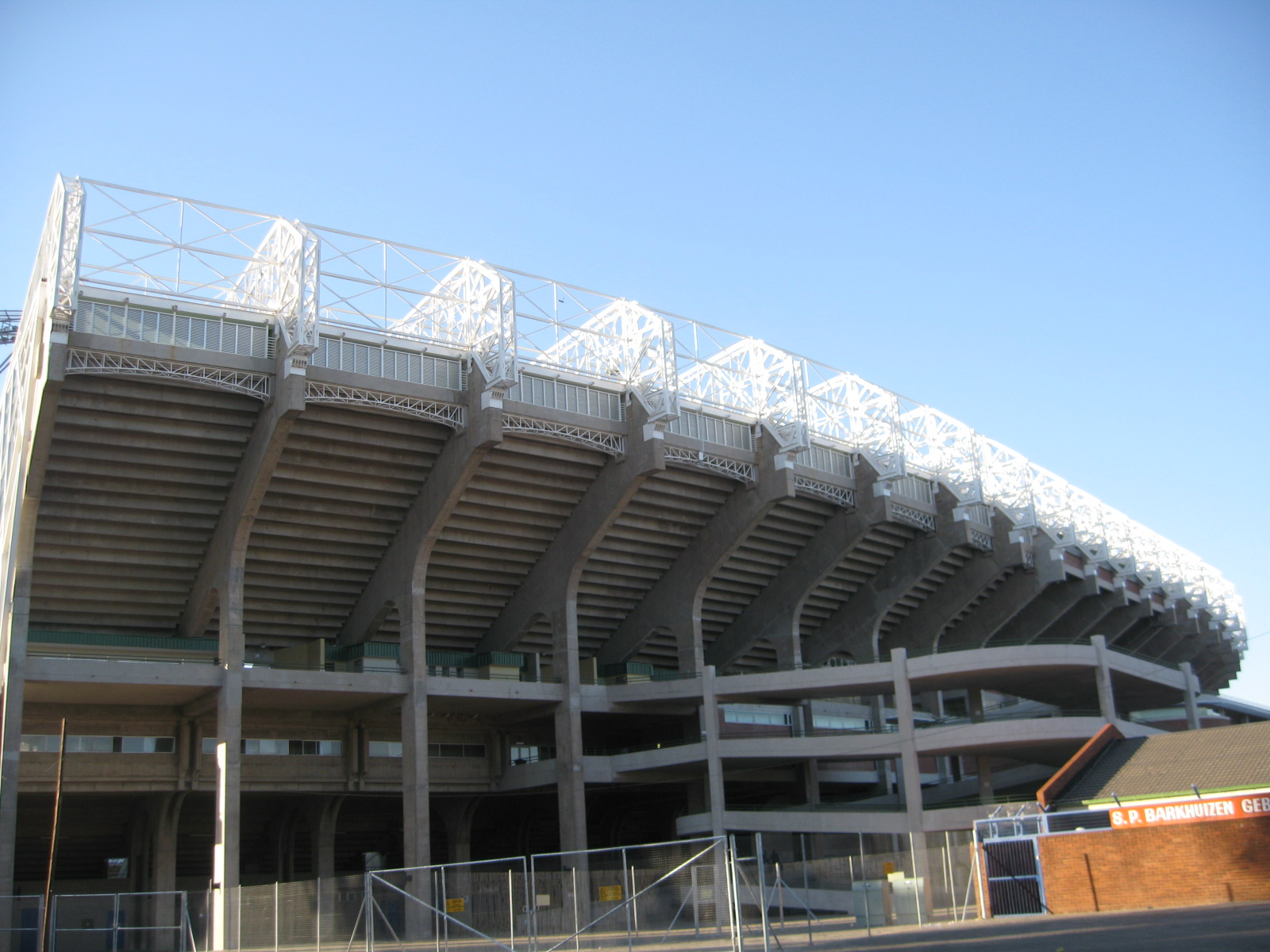
The architecture is straightforward and practical, built to serve its purpose without unnecessary flourishes. The stands hold around forty-six thousand spectators, and the open design allows for airflow—a small but crucial detail in South Africa’s climate, where summer heat can be relentless. The exterior walls are painted in neutral tones, but during major events, they come alive with flags, banners, and lights, transforming the arena into a vibrant space. Inside, the spacious concourses, comfortable seating, and decent acoustics create an atmosphere that feels more like a communal gathering than a sterile sports venue.
Rugby is where the stadium’s legacy runs deepest. It was here, during the 1995 Rugby World Cup, that South Africa’s national team won its first championship title—a moment that transcended sport. For many in Mangaung and the Free State province, that tournament marked a turning point, a time when sport helped bridge divides in a country still healing from its past. Even now, when local teams take the field, the energy of those days lingers in the air: the tension, the excitement, and the unspoken pride of being part of something bigger.
Football has its own place in the stadium’s story. It’s the home ground of Bloemfontein Celtic, one of the country’s oldest and most respected clubs. Matches here draw passionate crowds, with fans filling the stands to sing, drum, and wave scarves in a riot of color. Unlike the more reserved atmosphere of rugby, football at Free State Stadium is loud, chaotic, and full of life. For visitors, attending a match is one of the best ways to experience the city’s pulse—how it celebrates, how it competes, and how it comes together.
Beyond sport, the stadium serves as a cultural venue. Concerts by local and international artists take over the field, spanning genres from pop to traditional African rhythms. In summer, festivals turn the arena into a sprawling marketplace of food, crafts, and music. Families gather on the grass, vendors sell homemade dishes, and the air hums with conversation and laughter. On these days, the stadium sheds its role as a sports ground and becomes something else entirely: a place where the city lets loose and enjoys itself.
For travelers, Free State Stadium offers more than just a glimpse of local sports. Mangaung isn’t a typical tourist destination, and that’s part of its charm. There are no crowds of foreigners here, just the everyday rhythm of a South African city. The stadium sits close to the center, making it an easy walk from nearby cafés, where you can try dishes like bobotie or bunny chow, or from markets selling fresh produce and spices. The area around it feels lived-in and authentic, a far cry from the polished facades of more tourist-heavy spots.
In recent years, the stadium has become part of broader efforts to develop the region. New sports facilities, gyms, and parks have sprung up around it, turning the area into a hub for families and young people. Workshops on everything from football to athletics are held here, along with educational programs for kids. For locals, the stadium is more than just a place to watch a game—it’s a space to learn, connect, and grow.
Despite its importance, Free State Stadium doesn’t try to impress with grandeur. There are no lavish VIP boxes or cutting-edge tech, just a sense of openness and accessibility. It’s a place where people feel at home, whether they’re cheering for their team, dancing at a concert, or simply enjoying a day out with family. That unpretentiousness is part of why it’s so beloved. The stadium doesn’t need to be the biggest or the fanciest—it just needs to be a place where the city can come together.