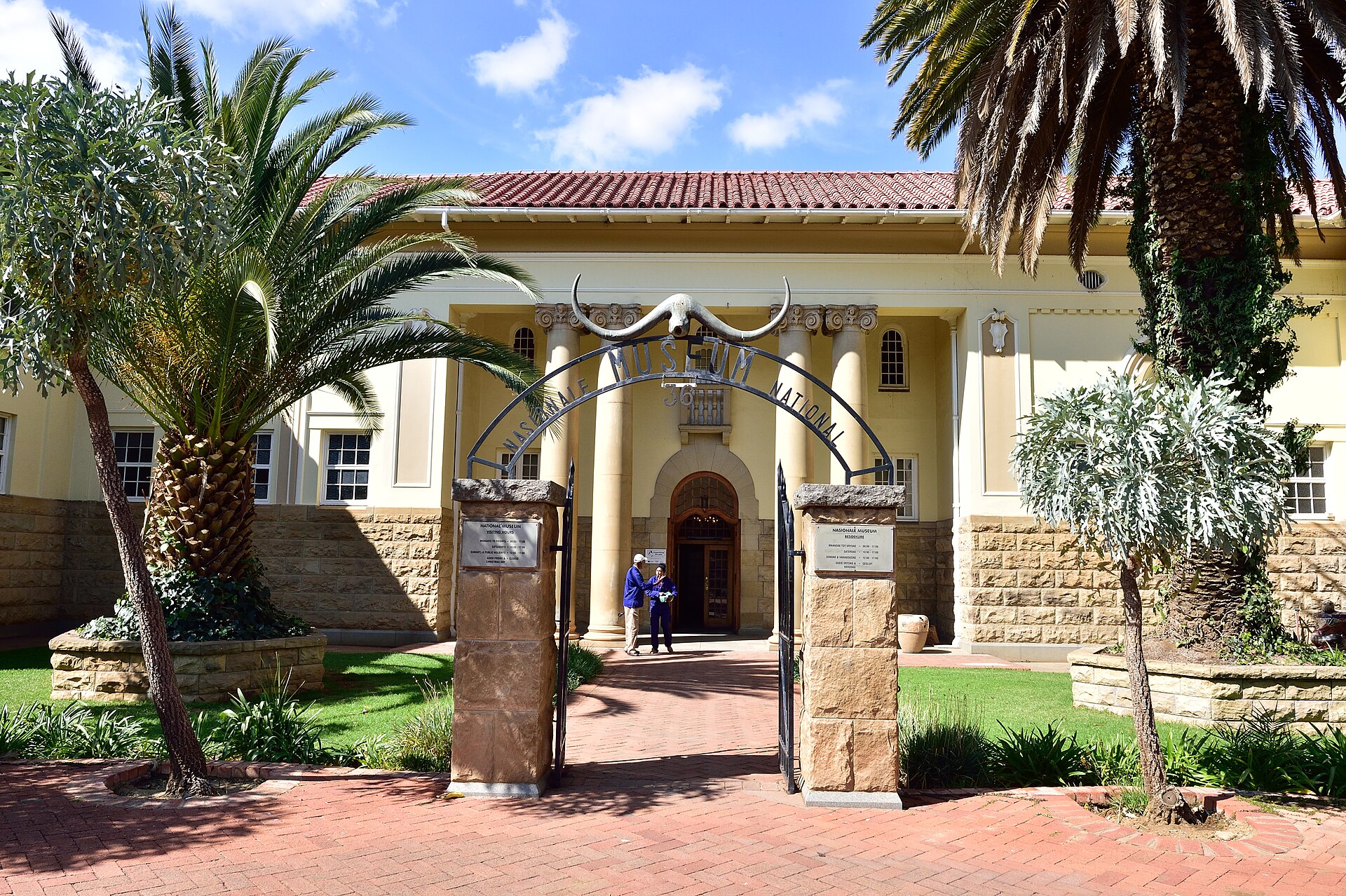
The National Museum in Bloemfontein is one of those rare places where South Africa’s layered past feels tangible, almost within reach. Housed in a stately building at the corner of Aliwal and Church streets, it has stood in the heart of the city since 1877, when Bloemfontein was little more than a dusty outpost of the Orange Free State. Over the decades, its collections have grown alongside the town itself, gathering fragments of time—from ancient rock formations to the echoes of more recent struggles. The museum doesn’t just display history; it preserves the quiet weight of it, the way a family heirloom carries the stories of those who came before.
The building itself is a relic of another era, a fine example of late 19th-century colonial architecture. Inside, the high ceilings and wide corridors give the space an airy, unhurried feel, while the large windows filter in soft, natural light. There’s something reassuringly solid about the place—the thick wooden doors, the polished floors, the way the exhibits seem to breathe in the hush of the galleries. It doesn’t feel like a grand institution, but rather a thoughtful curator of memory, where each object is given room to speak for itself.
One of the museum’s most compelling sections is its paleontology exhibit, where the deep time of the region comes into focus. Here, fossils of prehistoric reptiles and early mammals lie preserved in glass cases, remnants of creatures that roamed these lands millions of years ago. Among them are the bones of *Euskelosaurus*, a massive plant-eating dinosaur that once lumbered across what is now the Free State. The display isn’t just about the distant past, though; it also traces the geological forces that shaped the landscape, from ancient rivers to shifting tectonic plates. For anyone curious about how this part of the world came to be, the exhibit offers a quiet, almost meditative journey through time.
The anthropology galleries shift the focus to the people who have called this land home for millennia. The exhibits here are a testament to the rich cultures of the San and Xhosa peoples, among others, with tools, jewelry, and ceremonial objects that reveal the rhythms of daily life long before European settlement. The most striking pieces are the rock art reproductions—delicate paintings of animals, hunters, and spiritual figures, rendered in ochre and charcoal. These aren’t just artifacts; they’re windows into a worldview where humans and nature existed in a delicate balance. Nearby, displays on early farming communities show how these traditions evolved, blending old ways with new influences over centuries.
A separate wing is dedicated to the history of the Orange Free State, the short-lived Boer republic that once thrived in this region. The exhibits here are a mix of personal and political, with letters, photographs, and military artifacts that tell the story of a nation caught between ambition and conflict. The Anglo-Boer War section is particularly poignant, offering a glimpse into the lives of soldiers and civilians alike through diaries, uniforms, and battlefield maps. There’s no glorification here, just a sobering reminder of how quickly ideals can fracture under the weight of war. The displays don’t shy away from the complexities of the past, making this one of the museum’s most thought-provoking sections.
While the museum’s art collection isn’t as extensive as its historical holdings, it still offers a quiet charm. The works on display span the 19th and 20th centuries, with landscapes, portraits, and scenes of everyday life that capture the changing face of South Africa. Some pieces reflect the European influences of the time, while others carry the unmistakable rhythms of African artistry. Together, they form a visual dialogue between cultures, showing how artists interpreted the world around them across generations. It’s a small but meaningful counterpoint to the larger historical narratives elsewhere in the museum.
Beyond its permanent exhibits, the museum keeps its doors open to the present through rotating displays and events. Temporary exhibitions might explore contemporary South African life, highlight forgotten figures from history, or delve into the work of local artists. Occasionally, the museum hosts lectures and workshops, where visitors can learn about the painstaking work of archaeologists, paleontologists, or conservators. For students, these events turn abstract lessons into something vivid and immediate, bridging the gap between textbooks and real life. The museum isn’t just a repository of the past; it’s a living space where history is constantly being reexamined and reinterpreted.
Walking through the National Museum is like stepping into a slower, more deliberate version of Bloemfontein. The city is often called the "City of Roses," a nod to its lush gardens and quiet streets, but its true character lies in places like this—where the past isn’t just remembered, but felt. There’s no rush here, no crowds jostling for the best view. Instead, there’s time to linger, to read a label twice, to let the weight of a century-old photograph sink in. In a country where history is often contested, the museum offers a rare sense of continuity, a reminder that the present is built on layers of stories, some triumphant, some tragic, but all essential to understanding where South Africa is today.