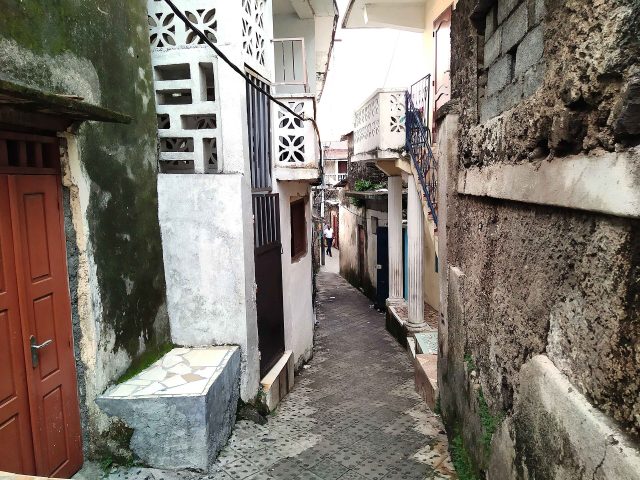
St. Theresa of the Child Jesus Church in Moroni is one of those quiet places where the Comoros’ usual rhythm seems to pause. Tucked away on a narrow street in the capital, it stands unassuming yet comforting—a small Catholic sanctuary in a country where Islam shapes the daily pulse. The whitewashed walls, simple bell tower, and shaded courtyard offer stillness that feels worlds apart from the bustle just beyond its gates.
The church’s story is woven into the islands’ colonial past. For much of the 20th century, the Comoros were under French rule, and a small Catholic community took root here, made up of European settlers and locals who converted. St. Theresa’s was built when Moroni was still finding its footing as the administrative heart of the archipelago. Today, it remains a reminder of an era when different faiths and cultures coexisted more visibly on these islands.
Architecturally, the church is modest and practical, designed for the tropical climate. Its single-story structure features high windows to encourage airflow, while the tiled roof and understated facade reflect the style common in colonial buildings of the time. Inside, the space is bright and airy, with wooden pews and a simple altar. The walls are plain, the details unadorned.
For the small Catholic community in the Comoros, St. Theresa’s is more than a place of worship. Christians make up only a tiny fraction of the population here, so churches like this one serve as gathering points. Sunday masses, baptisms, and weddings bring people together in a place where their faith is a minority experience. The church welcomes visitors of all backgrounds, offering a moment of reflection in a city where most religious life revolves around the call to prayer from nearby mosques.
Moroni is a city of contrasts, where minarets rise beside colonial-era buildings and market stalls sell everything from Arabic spices to French baguettes. St. Theresa’s sits in a neighborhood where the old architecture lingers—low houses with carved wooden balconies, narrow streets shaded by trees. The church fits into this setting, a reminder of how the Comoros have absorbed different influences over time.
Visiting the church isn’t about grand sights or tourist crowds. You might step into a quieter side of life on these islands. If you arrive when the congregation gathers for prayer, you’ll hear hymns in the courtyard. It’s an unusual sound in a country where Islam is the dominant faith.
St. Theresa of the Child Jesus Church won’t overwhelm you with size or spectacle. It offers a place to pause, to breathe, to consider the layers of history that have shaped the Comoros. For those curious about the islands’ past, it’s a small piece of the puzzle. For everyone else, it’s a peaceful corner of Moroni, where the heat and noise of the city fade into the background.