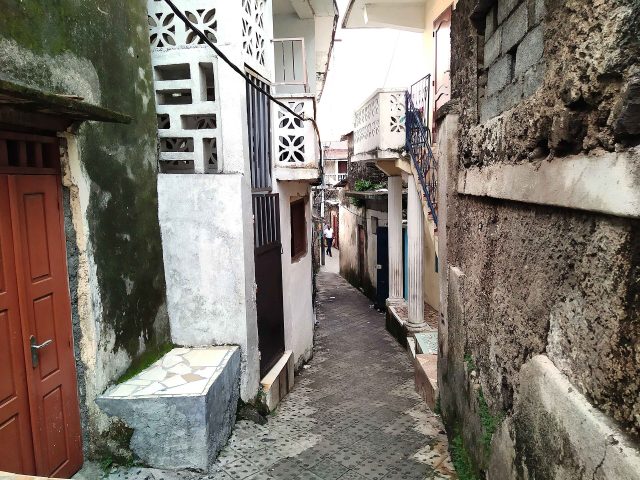
The Vouni Mosque in Moroni is one of those places that doesn’t immediately demand attention, yet lingers in memory long after you’ve left. Tucked away on a narrow street in the capital, it feels like part of the city’s rhythm—less a grand monument and more a quiet presence that has grown with the community. Unlike mosques in the Middle East or North Africa, Vouni doesn’t overwhelm with scale. Its understated architecture carries a sense of authenticity, as if it emerged from the earth rather than being imposed upon it.
Moroni’s history is tied to the mosque’s own. The city began as a trading hub where African, Arabian, and Indian Ocean routes met, and Islam arrived with merchants centuries ago. While the earliest mosques on the Comoros date to the medieval period, Vouni likely took shape later, during the Ngazidja Sultanate in the 18th and 19th centuries. This was when Moroni flourished as a center of commerce and culture, and the mosque became more than a place of worship—it was a symbol of the sultanate’s influence, woven into daily life.
The building reflects the practical style of Comorian religious architecture from that era. Made of coral stone and clay, it sits low to the ground, its flat roof and squat minaret resembling a watchtower. The facade has carved wooden panels and arched windows. Inside, a spacious hall is supported by simple columns. The floor is covered in woven mats, and the walls bear Arabic calligraphic inscriptions. Every element serves a function, creating an atmosphere of quiet focus.
Vouni isn’t a tourist attraction. You won’t find crowds snapping photos or guides reciting facts. For Moroni’s people, the mosque is a living space. Locals come for morning prayers, elders gather in the shade, and children sometimes dart in after school. On Fridays, when worshippers fill the mosque, the street outside becomes a market—women sell fruit and spices, men sip coffee from stalls, and the air smells of cloves and vanilla.
The mosque plays a central role in social life. During Ramadan, its courtyard glows with lanterns, and iftar meals are shared with those in need. On Eid al-Adha or Mawlid, the area comes alive with music, drumming, and children flying kites. These celebrations aren’t staged for outsiders; they unfold naturally around the mosque’s walls.
Visit on a weekday, when the mosque is quiet. Sit in the courtyard and watch elders read the Quran under a mango tree. Listen to the wind in the palm fronds. The locals are welcoming but unobtrusive—if you approach with respect, no one will mind your presence.
Remember: Vouni is an active place of worship. Women should dress modestly, covering shoulders and knees. Men must remove their shoes before entering. Photography inside isn’t customary—the atmosphere is too intimate for snapshots.
What makes Vouni special isn’t grandeur. It doesn’t seek to impress. It simply exists, as much a part of Moroni as the streets and the sea. Here, you sense history not in stone, but in the people who shape it every day.