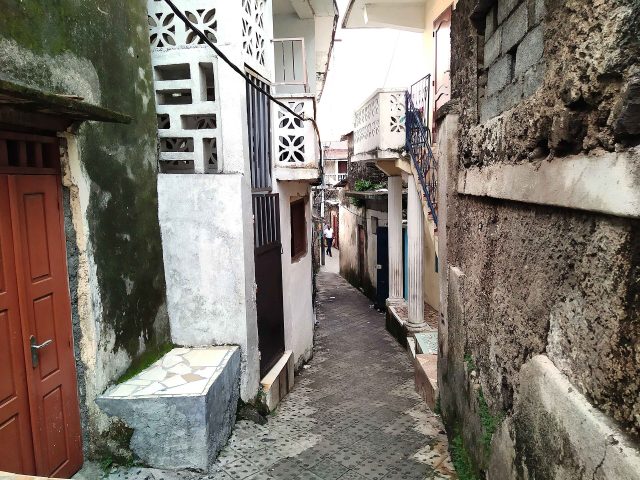
Moroni’s Voloini Market is where the city reveals itself without filters. No tourist stalls, no staged displays—just the daily life of Comorians, unchanged for generations. Narrow alleys wind between baskets of spices, fresh fish, and tropical fruit. Voices blend in Swahili and French. The air smells of vanilla, cloves, and tuna.
Moroni moves at its own pace. Crumbling colonial buildings stand beside narrow streets. The market sits near the waterfront and the Vouni Mosque. It’s not just a place to buy and sell. People from different neighborhoods gather here to talk, trade, and share news. Women in sarongs haggle over bananas. Fishermen unload their morning catch, saltwater still dripping from their nets.
The market’s history is tied to Moroni’s past. The city was once a key port on trade routes linking Africa, the Arabian Peninsula, and the Indian Ocean. Ships from Persia, India, and China passed through, carrying spices and textiles. Later, Moroni became a center for the slave trade before turning into a colonial outpost. The market likely existed even then, though smaller. Today, it’s where tradition and modernity meet.
The architecture is simple. Wooden stalls, makeshift awnings, open-air spaces. No grand structures, just a maze built for trade. During the rainy season, the paths get crowded, but the market never closes. For locals, it’s as much about socializing as shopping. You might see women sorting beans by hand or old men arguing over the price of copra. The call to prayer drifts from nearby mosques. Seagulls circle overhead.
What brings people here are the goods. The Comoros are known for ylang-ylang, the essential oil used in perfumes. Small bottles sit beside vanilla, cinnamon, cloves, and nutmeg. Comorian vanilla is prized, though Madagascar’s crop is more famous. The fish section is a sight—sardines, tuna, everything fresh from the Indian Ocean. Stalls overflow with mangoes, papayas, lychees, and breadfruit.
But the market is also about food. Small stalls serve traditional dishes. Try m’tsambou, a stew of chicken or fish with vegetables and coconut milk. Or langouiri, flatbreads with a spicy dipping sauce. Fresh juices and kava, a drink made from pounded roots, are sold nearby.
The market wakes early, when the air is cool. By midday, it’s at its busiest. By evening, the crowds thin, and shoppers head home with full baskets.
For travelers, the market shows the Comoros beyond beaches. No tourist traps, no scripted performances. Just people selling what they grow or catch. It’s where you feel the islands’ spirit—not through monuments, but through small moments. If you’re lucky, you’ll leave with more than souvenirs. You’ll leave with stories.