San Ignacio de Velasco sits quietly in the eastern lowlands of Bolivia, a place where the pace of life slows to match the rhythm of the surrounding savannas. The town feels far removed from the bustle of the country’s highland cities, its streets lined with low-slung houses and shaded by the occasional palm. At its heart stands St. Ignatius Cathedral, a building that carries the weight of history not through grand gestures, but through the quiet persistence of its presence. Unlike the towering cathedrals of Europe or the ornate churches of Bolivia’s colonial cities, this one feels grounded in its surroundings—less a monument to power, more a testament to the blending of cultures that shaped this corner of the world.
The cathedral’s origins trace back to the mid-18th century, when Jesuit missionaries arrived in the Chiquitania region with a mission that was as much about coexistence as conversion. They sought to establish self-sustaining communities where the indigenous Chiquitano people could retain their traditions while adopting Christianity. St. Ignatius became the spiritual and social center of one such mission, and its architecture reflects this delicate balance. From a distance, the building might resemble a typical colonial church, but closer inspection reveals the hand of local craftsmen. The walls, made of adobe and wood, bear the marks of indigenous techniques, while the facade’s simple yet striking details hint at the fusion of European and Chiquitano aesthetics.
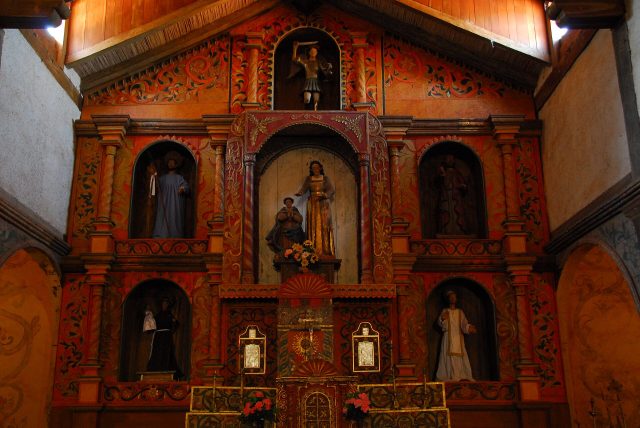
Inside, the cathedral feels like a living archive. The high ceilings, supported by thick wooden beams, create an airy space that contrasts with the solidity of the structure. Light filters through small windows, casting a soft glow over the worn altars and faded murals. The main altar, a relic of the Baroque era, stands out not for its gilded opulence but for its understated craftsmanship. Here, the influence of Chiquitano artistry is unmistakable—wooden saints carved with care, painted panels that tell stories of faith and resilience, and an old organ that still echoes with the music of centuries past. There’s a sense of continuity in these details, as if the hands that shaped them are still present in the way the light falls across the pews.
St. Ignatius Cathedral is more than a religious site; it’s a cornerstone of the Chiquitania’s cultural revival. In the late 20th century, UNESCO recognized six of the region’s Jesuit missions as World Heritage sites, bringing renewed attention to their historical and artistic value. The cathedral in San Ignacio de Velasco became a focal point for this revival, drawing scholars, musicians, and travelers curious about the legacy of the missions. Even today, the cathedral resonates with the sound of Baroque music composed during the colonial era, performed on instruments crafted in the 18th-century style. Festivals held here celebrate this heritage, blending sacred traditions with the vibrant culture of the Chiquitano people.
The town itself moves at a leisurely pace, its narrow streets and tiled roofs giving it a timeless quality. The main square, just steps from the cathedral, serves as the town’s social hub. In the evenings, locals gather to chat on benches or stroll under the trees, while weekend markets offer a glimpse into Chiquitano craftsmanship—woven baskets, wooden carvings, and textiles dyed in bold, natural hues. The cathedral stands as a silent observer of these daily rhythms, its presence a reminder that history here isn’t confined to the past. It’s woven into the fabric of the town, as much a part of life now as it was centuries ago.
Visiting St. Ignatius Cathedral is less about ticking off a landmark and more about stepping into a different kind of time. There are no crowds here, no hurried tours, just the quiet hum of a place that has endured. You can sit on one of the wooden pews, listening to the creak of the floorboards, or linger in the square as the sun sets, painting the cathedral’s walls in warm, golden tones. The absence of tourist hordes makes the experience feel intimate, as if the building is sharing its stories only with those who take the time to listen.
The cathedral remains an active place of worship, and the local community holds it in deep reverence. On Sundays, the pews fill with parishioners, their voices rising in song alongside the strains of the old organ. For many, the cathedral is more than a building—it’s a link to their ancestors, a place of solace and reflection. The sense of devotion is palpable, not just in the rituals but in the way people move through the space, as if they’re walking the same paths as those who came before them.
A trip to San Ignacio de Velasco and its cathedral offers a rare chance to engage with a history that often goes unnoticed. There’s no grandeur here, no over-the-top spectacle, just the quiet dignity of a place that has seen generations come and go. It’s a reminder of how people adapt, how cultures merge, and how faith can take root in the most unexpected of ways. The cathedral doesn’t demand attention; it simply exists, as much a part of the town’s identity as the people who call it home. In its unassuming way, it tells a story that’s as much about the present as it is about the past.