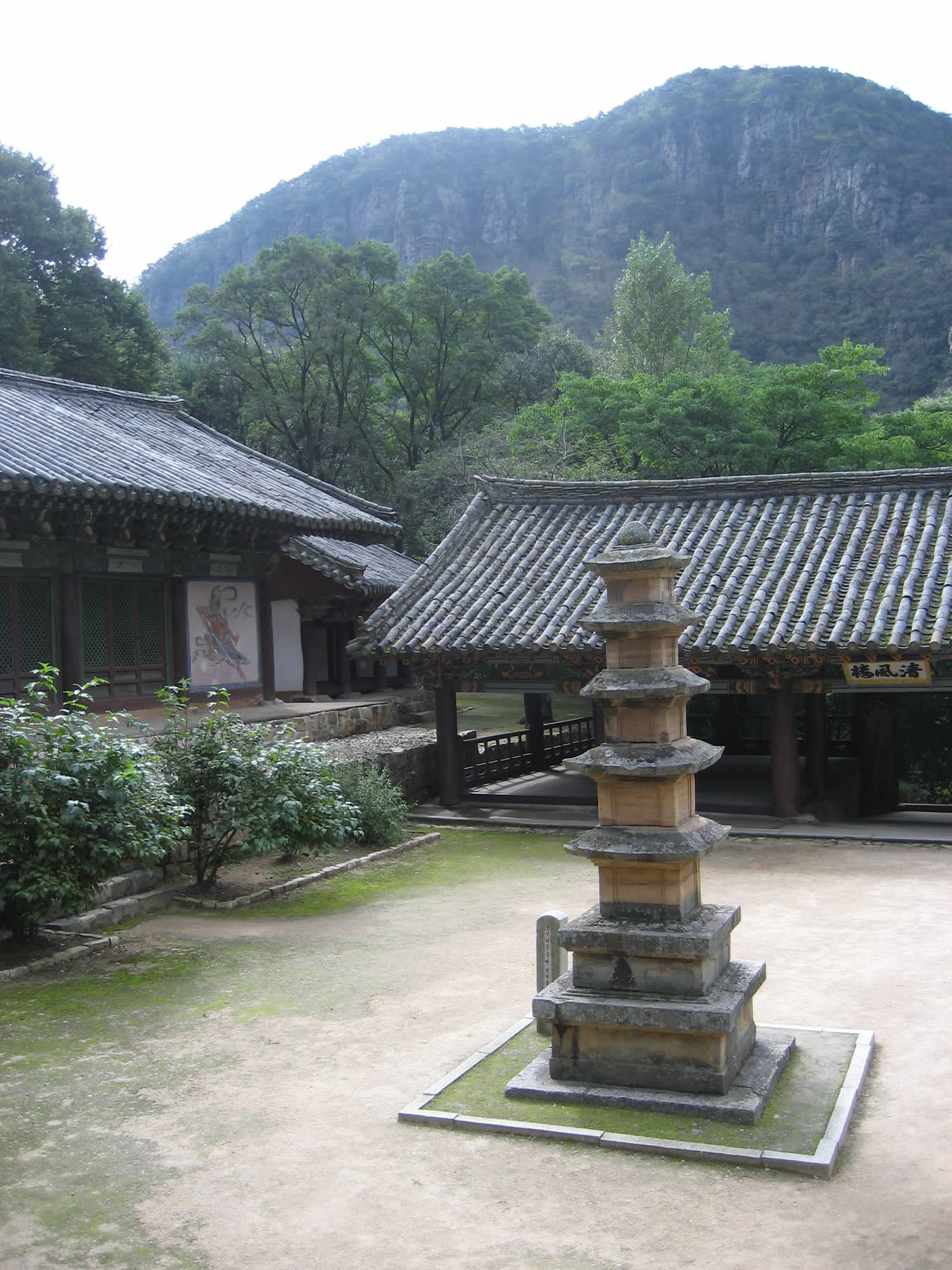
Perched on the slopes of Mount Jongbansan near Sariwon, Songbulsa feels like a place untouched by modern life. This Buddhist monastery, founded in the late sixth century during the Goguryeo kingdom, has seen centuries pass while keeping its quiet resilience. It sits away from tourist paths, letting its ancient walls speak for themselves.
The main hall, dedicated to Shakyamuni Buddha, is a wooden structure with a heavy tiled roof. Its beams fit together without nails, showing the skill of its builders. Inside, faded murals depict scenes from the Buddha’s life, their edges worn by time. A stone pagoda nearby is one of the few remaining examples of early Korean stonework, its simple lines holding a quiet strength.
Songbulsa has survived much. The Japanese occupation damaged it, and the Korean War brought more destruction. Yet parts were restored, and the monastery kept its spiritual core. Locals still respect it, and ceremonies continue as they have for generations.
The landscape around Songbulsa draws you in. Forests cover the mountains, and trails wind through rocky outcrops and narrow valleys. On clear days, the view stretches over Sariwon, a city with its own layers of history. Rare plants and birds live here, and the only sounds are leaves rustling and a distant bell.
Songbulsa is more than old walls. It’s a living piece of Korea’s past, where Buddhism once shaped the country. Dynasties rose and fell, wars came and went, but the monastery stayed—a place of stillness. Even if you don’t practice Buddhism, you might feel the slower rhythm here.
Researchers now study Songbulsa, and restoration work preserves its murals and structures. But it hasn’t become a polished attraction. Time moves differently here. Each stone, each tree, carries centuries of weight. That’s what makes it compelling, especially if you’re tired of the modern world’s noise.
Getting to Songbulsa takes effort. You start in Sariwon and hike a mountain trail. But the reward is worth it—no crowds, no stalls, just the quiet mountains and ancient walls. It’s a chance to see Korea as it once was.
Songbulsa isn’t a museum. It’s an active spiritual site where life moves at its own pace. You can wander the grounds, sit on a bench, or let the atmosphere settle over you. However you experience it, the monastery stays with you—a reminder of what endures.