Anak Tomb No. 3 is one of those rare places that quietly challenges what we think we know about Korea’s distant past. Tucked away near the city of Sariwon in North Korea, this ancient burial site dates back to the Koguryo Kingdom, one of the three early Korean states that flourished over fifteen hundred years ago. Unlike the grand narratives of empires and dynasties, this tomb offers something more intimate—a glimpse into the beliefs, artistry, and daily life of a civilization that shaped the northern reaches of the Korean Peninsula and beyond.
Built between the 3rd and 4th centuries, when Koguryo was at its height, Anak Tomb No. 3 stands out not just for its age but for its remarkable preservation. While many tombs from this era have been reduced to ruins or stripped of their original features, this one retains much of its character, particularly its vivid wall paintings. These frescoes are among the few surviving examples of Koguryo art, offering a rare window into a culture that thrived long before the modern divisions of the Korean Peninsula.
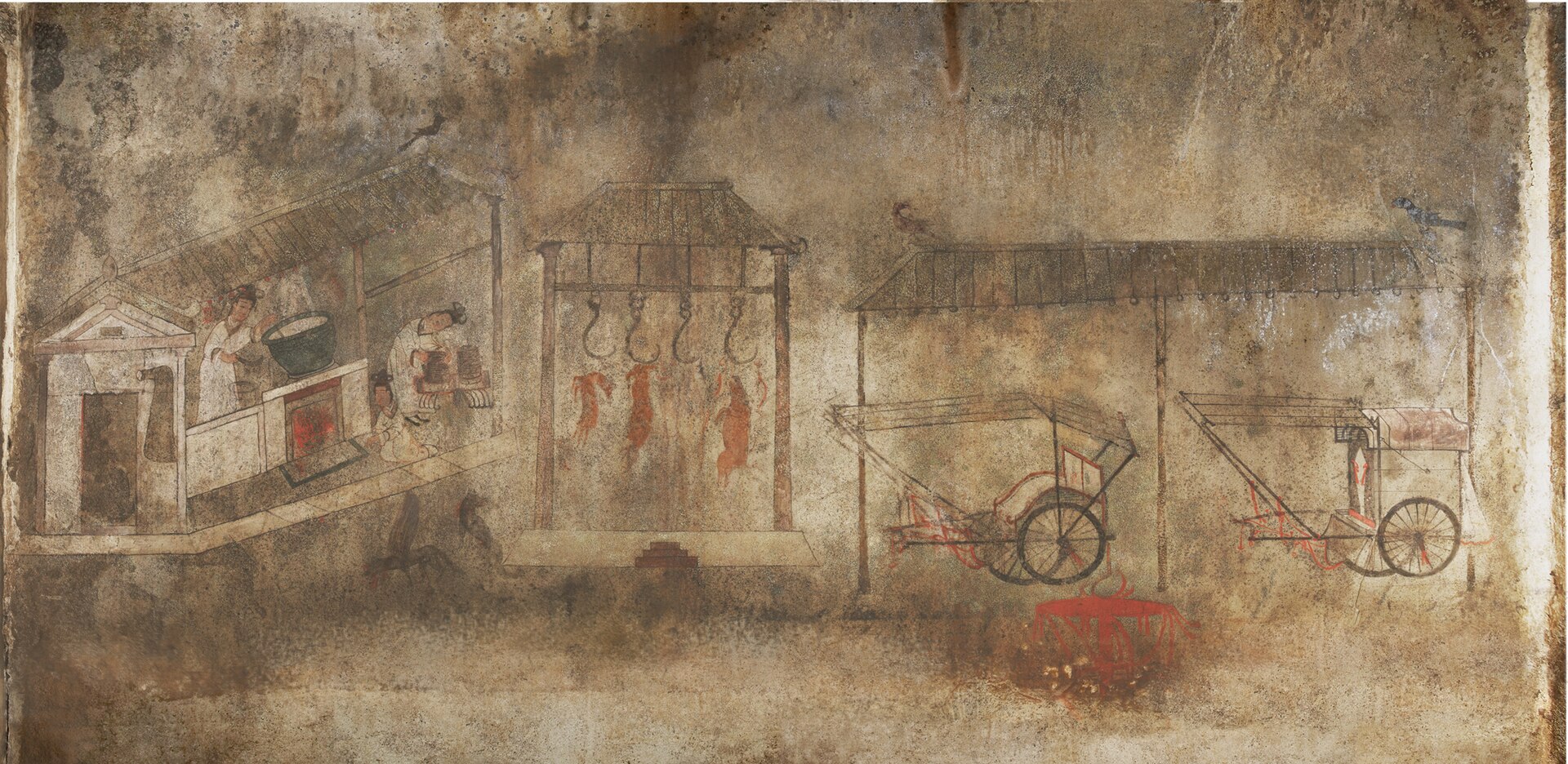
The tomb itself is a masterpiece of early engineering—a subterranean chamber carved directly into rock, topped with a heavy stone vault. A narrow passage, once sealed to protect the deceased, leads into the interior, where the space unfolds in a series of sections, each likely holding its own symbolic meaning. The main chamber, where the sarcophagus would have rested, is surrounded by walls covered in intricate murals. These aren’t mere decorations; they’re a carefully constructed visual language, reflecting Koguryo’s understanding of the afterlife, the cosmos, and humanity’s place within it.
What makes these paintings so striking is their energy. Unlike the stiff, formal art often associated with ancient tombs, the scenes here are full of movement—hunts, feasts, dances, and mythological figures like dragons and phoenixes. The human figures are particularly expressive, their postures dynamic and faces rendered with a surprising sense of life. The artists worked with a limited palette—reds, blacks, yellows, and whites—but the skill in their execution makes the images feel anything but simple. There’s a sense of immediacy, as if the scenes might spring to life at any moment, pulling the viewer into the world of Koguryo’s elite.
One of the most intriguing aspects of Anak Tomb No. 3 is that it wasn’t built for a king. While royal tombs often glorify power and divine lineage, this one seems to belong to a noble or high-ranking official, which may explain why its art feels more personal. The frescoes here aren’t just about grandeur; they depict everyday life, rituals, and myths in a way that feels relatable. There’s a warmth to them, a sense of humanity that’s often missing in more grandiose monuments.
Visiting the tomb today is a quiet experience. Unlike the crowded tourist sites of Pyongyang or the well-trodden paths of other historical landmarks, Anak Tomb No. 3 remains largely untouched by mass tourism. There are no souvenir stalls or guided tours here—just the stillness of the past and the faint echo of a civilization long gone. Access isn’t always straightforward, given Sariwon’s distance from major travel routes and the logistical challenges of visiting North Korea, but those who make the journey are rewarded with something rare: a direct connection to a history that remains largely unexplored.
It’s worth noting that Anak Tomb No. 3 is just one of many ancient sites scattered across North Korea. Near Pyongyang, for instance, lie the more famous tombs of Taesong-dong and the early Koguryo complexes, which draw more attention for their scale and historical significance. But there’s something special about Anak No. 3—its relative obscurity, its authenticity, and the way it offers a more unfiltered look at Koguryo culture. Without the pomp of royal burials, it feels closer to the people who created it, their beliefs, and their way of life.
For anyone fascinated by Korea’s past, this tomb is more than just an ancient relic. It’s a key to understanding an entire era. Koguryo was a warrior state, but it was also a society where art, religion, and daily life intertwined in complex ways. The frescoes aren’t just paintings; they’re a kind of visual encyclopedia, capturing how the people of Koguryo saw the world—their fears, their hopes, and what they considered worth preserving for future generations.
In a time when so many ancient sites have been lost or damaged, Anak Tomb No. 3 endures as one of the few places where Koguryo art can still be seen in its full context. It’s a reminder that Korea’s history didn’t begin with the Joseon Dynasty or the modern era but stretches back into a deep and mysterious past. And perhaps, in places like this, some of the answers to that past still wait to be discovered.