Sariwon’s Culture and Recreation Park is one of those quiet places where the rhythm of daily life in a North Korean city slows just enough to allow for a moment of rest. Tucked in the heart of this provincial town, it serves as a rare public space where locals can step away from work and routine, even if only briefly. Unlike parks in other parts of the world, there are no flashy rides or neon lights here—just a steady, unhurried atmosphere that feels both old-fashioned and strangely comforting.
The park’s history is woven into the story of Sariwon itself, a city that has long been an industrial and transport hub. After the Korean War, as the country rebuilt from ruins, the government didn’t just focus on factories and infrastructure; it also set aside spaces for workers to unwind. The park emerged in the mid-20th century as part of that effort, and its basic layout has changed little since. There are no grand fountains or towering monuments, just trees planted decades ago and pathways where families and schoolchildren stroll at their own pace.
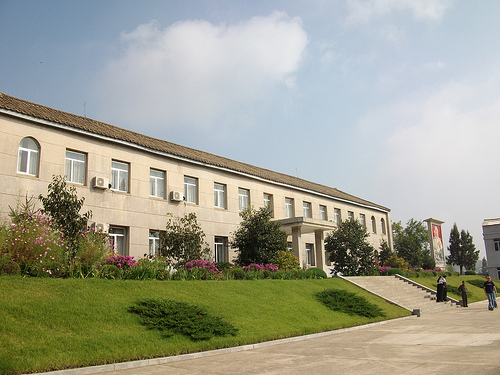
The architecture is simple and practical, much like the rest of North Korea. A central walkway leads to a modest pavilion, where occasional concerts or amateur performances take place. Nearby, benches offer a place to sit with a flask of tea or simply watch the world go by. In warmer months, flowerbeds add a touch of color, while in winter, a small ice rink becomes a gathering spot for children and teenagers. Nothing here is extravagant, but everything is designed with a quiet thoughtfulness, ensuring the space remains welcoming.
The park plays a subtle but important role in the city’s social life. On national holidays—like the Day of the Foundation of the Workers’ Party or Liberation Day—it transforms into a stage for patriotic celebrations. Flags and banners appear, and performers take to a makeshift platform to sing and dance in honor of the occasion. For locals, these events are more than just entertainment; they’re rituals that reinforce a shared sense of identity. Even on ordinary days, groups of schoolchildren often visit, listening to stories about labor heroes or the history of their hometown.
Despite its modest appearance, the park holds real significance for Sariwon’s residents. It’s one of the few places where people can spend time outdoors without spending money. There are no ticketed attractions or cafes, and that’s not the point—visitors come for the chance to be together, to talk, or simply to take a break from the demands of daily life. The park isn’t crowded or noisy; it’s a place where the rustle of leaves and the occasional murmur of conversation are the only sounds.
In recent years, North Korea’s capital, Pyongyang, has seen the development of newer, more modern parks and leisure spaces, reflecting the government’s efforts to present a polished image. But provincial cities like Sariwon remain unchanged, holding onto their own traditions. There’s no push for luxury or innovation here—just a focus on creating a space that’s practical and accessible to everyone. The park isn’t a tourist attraction; it’s a reflection of how life unfolds away from the capital, where simplicity and community matter more than spectacle.
For an outsider, the park might feel unfamiliar. There are no bright signs, no advertisements, no crowds of visitors. Instead, there’s a sense of order, where every element has its place and purpose. But that’s where its charm lies. The park doesn’t try to impress; it simply exists as part of the city, a place where people have long gathered to relax, connect, and live. That quiet reliability is why it matters so much to those who call Sariwon home.