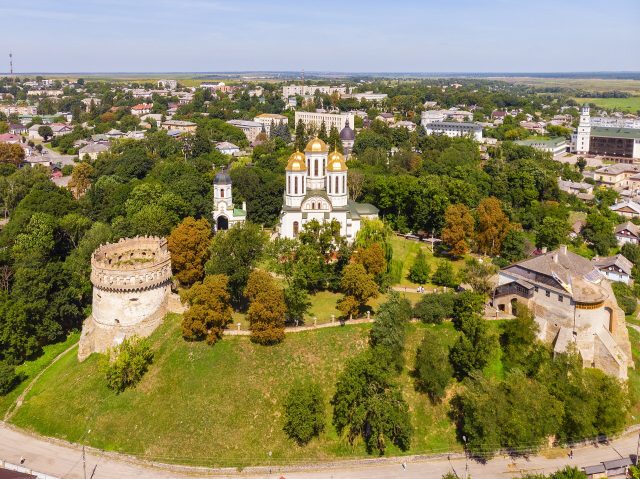
Ostroh feels like a place where time has gently paused, leaving behind the quiet rhythms of ancient Volhynia. The town sits among low hills and winding streets, its past still visible in the weathered stones and the slow pace of daily life. Rising above it all is the Dormition Cathedral, a building that has witnessed centuries of change yet remains a cornerstone of Ukraine’s spiritual and cultural heritage. It isn’t just a church—it’s a living piece of history, one that carries the weight of faith, power, and the enduring identity of a region.
The cathedral’s origins trace back to the late 15th century, when Prince Konstanty Ostrozky, one of the most influential figures of the time, sought to strengthen his domain not only through military might but through faith. The prince envisioned Ostroh as a center of Orthodox Christianity, and the cathedral was meant to embody that vision. Initially built of wood, it was soon reconstructed in stone, blending the sharp lines of late Gothic architecture with the softer, more refined touches of the Renaissance. By the 16th century, Ostroh had become a hub for scholars, theologians, and scribes, and the cathedral stood at the heart of this intellectual and religious revival.
What makes the cathedral’s architecture striking is its balance between austerity and grace. The tall, pointed windows and sturdy buttresses are unmistakably Gothic, yet the rounded arches and delicate decorative details hint at the Renaissance influence that was beginning to spread across Europe. The exterior is understated, with brickwork that speaks of durability rather than ornamentation. Inside, the space feels vast and airy, light streaming through the high windows to create a sense of quiet reverence. The iconostasis, a masterpiece of Ukrainian icon painting, draws the eye with its vivid colors and layered symbolism, each figure telling a story of devotion and tradition.
The cathedral has endured its share of hardships. In the 17th century, wars and invasions left their mark, and the building suffered damage more than once. Yet each time, it was restored, its original form carefully preserved. In the 19th century, it briefly became a Uniate church before returning to Orthodox hands. During the Soviet era, the cathedral was repurposed as a warehouse, its sacred purpose forgotten. But even then, the walls held onto their history. It wasn’t until the late 20th century that restoration work began, slowly bringing the cathedral back to its former glory.
Today, the Dormition Cathedral is both an active place of worship and a museum, where visitors can step into the past. Inside, fragments of frescoes remain, alongside ancient icons and manuscripts that offer a glimpse into the spiritual life of earlier centuries. The tombs of the Ostrozky princes lie within its walls, a reminder of the dynasty that shaped the region. Among the most revered treasures is the Ostroh Icon of the Mother of God, believed by many to possess miraculous powers. Every year on the Feast of the Dormition, pilgrims gather here to pay their respects, their presence a continuation of a tradition that has lasted for generations.
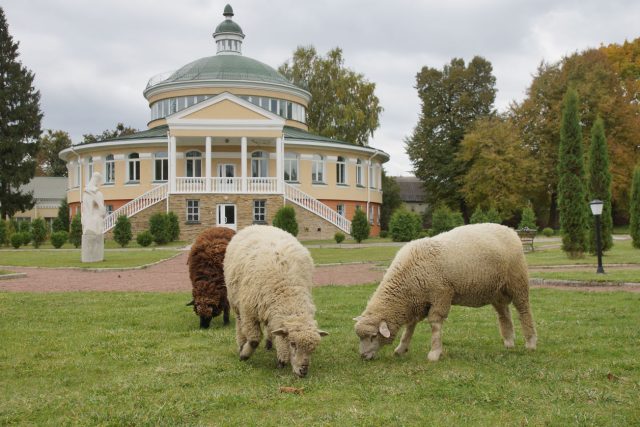
Ostroh itself is a town that feels like an open-air museum. The cathedral is just one piece of a larger story, one that includes the ruins of the Ostrozky Castle, where the princes once ruled, and the Ostroh Academy, the first institution of higher learning in Ukraine, founded in the 16th century. Walking through the town, you pass narrow streets lined with old houses, their facades worn by time but still holding onto the character of a bygone era. Each site adds another layer to the narrative, revealing how faith, education, and power intertwined in this corner of the world.
What makes the Dormition Cathedral special is its unassuming presence. There are no crowds here, no grand performances for tourists—just the quiet hum of history. It doesn’t demand attention; it simply exists, as it has for centuries, a silent witness to the lives of those who built it, prayed within it, and walked its halls. In a world that often feels rushed, the cathedral offers a rare stillness, a chance to step away from the noise and reflect on the enduring power of faith and tradition.
Visiting the cathedral is an invitation to slow down, to look closely at the details—the way the light falls through the windows, the texture of the old stone, the quiet dignity of the icons. It’s a place where the past doesn’t feel distant, where the stories of princes, scholars, and ordinary believers are still tangible. And perhaps that’s the real magic of Ostroh: it doesn’t just preserve history, it lets you feel it.