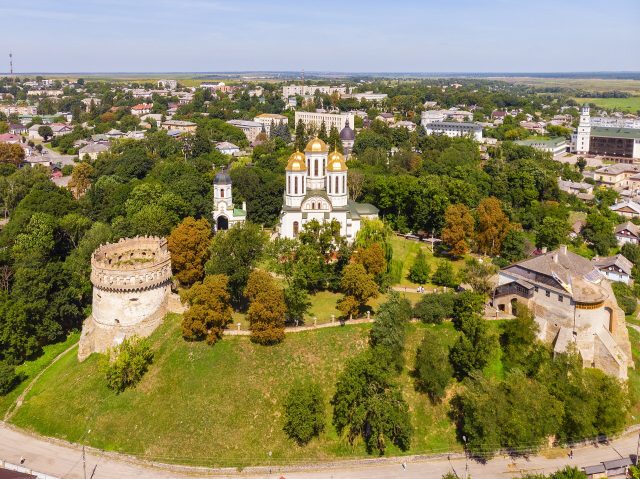
Ostroh feels like a place where time has paused, a quiet town in western Ukraine where the spirit of medieval Volhynia lingers in its narrow streets and old churches. Among them stands a building that carries weight far beyond its walls—the National University of Ostroh Academy. More than just an educational institution, it’s a living symbol of intellectual and cultural revival, one that stretches back to the late 16th century. Even now, the academy remains a bridge between past and present, where tradition and modernity coexist in a way that feels both natural and rare.
The story of Ostroh Academy begins in 1576, when Prince Konstantin-Vasyl Ostrozky founded the first higher education institution in Ukraine and one of the earliest in Eastern Europe. At the time, Ostroh was a thriving cultural hub, and the prince—a man known for his learning and patronage of scholarship—wanted to create a place where Western and Eastern educational traditions could meet. The academy became the first school in the region to teach secular subjects alongside theology and classical languages. Philosophy, mathematics, astronomy, and medicine were all part of the curriculum, attracting scholars and students who would later shape the political and cultural life of the Polish-Lithuanian Commonwealth.
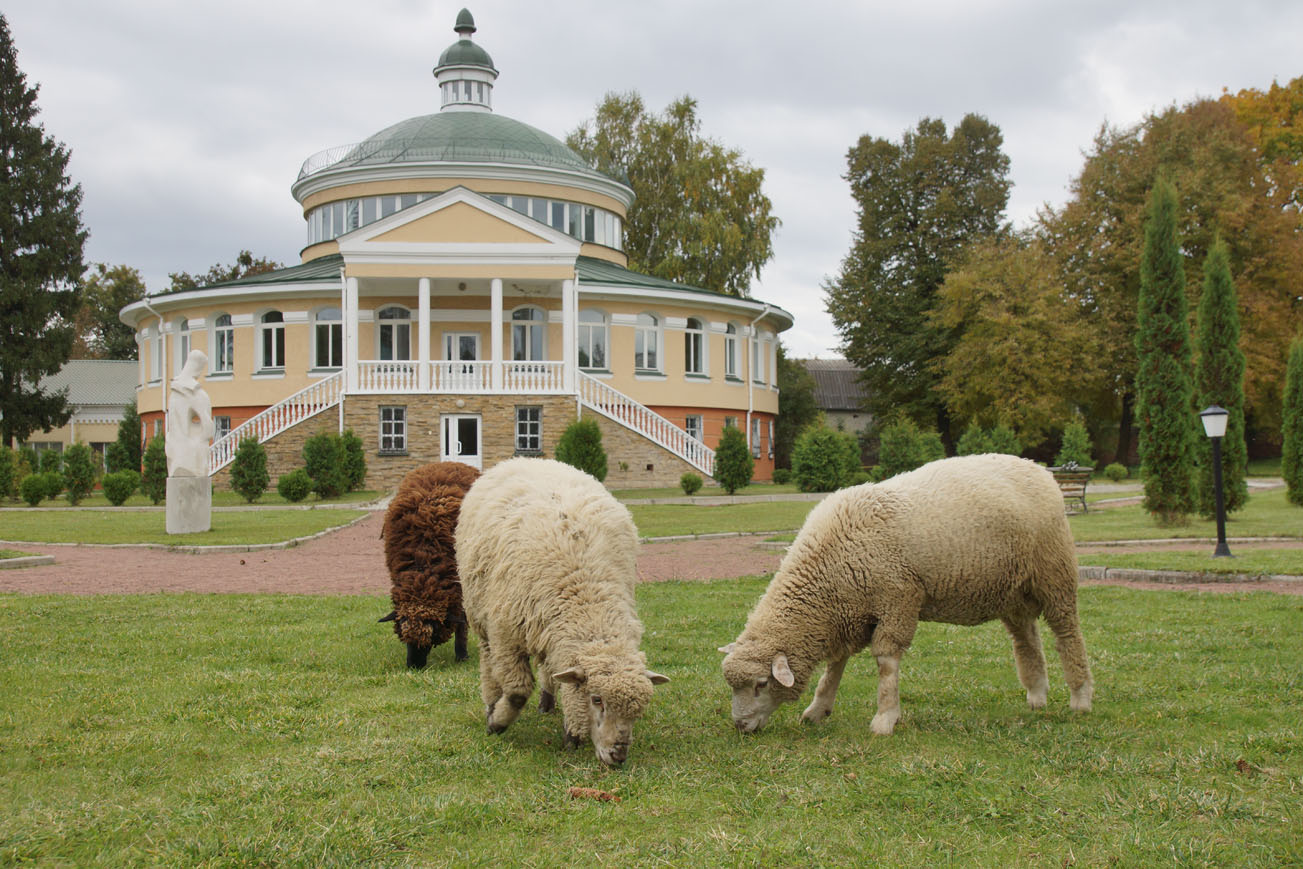
The academy’s buildings, still standing today, are a testament to the architectural styles that have passed through the centuries. Originally designed in the Renaissance style, the complex later absorbed elements of Baroque and neoclassicism. The main building, constructed in the 17th century, carries a sense of solidity and restraint, its facade marked by tall windows and understated details typical of academic institutions of the time. Inside, the atmosphere of the past is palpable—vaulted ceilings, heavy wooden doors, and dark paneling make it easy to imagine the voices of early professors echoing through the halls. One of the most remarkable spaces is the library, one of the oldest in Ukraine, where rare manuscripts and early printed books are preserved.
Ostroh Academy played a pivotal role in the development of Ukrainian culture and education. In the late 16th and early 17th centuries, it became the birthplace of the Ostroh Bible, the first complete edition of the Scriptures in Church Slavonic. This was a landmark achievement in Eastern European publishing, one that influenced religious and literary traditions for generations. The academy also served as a center of enlightenment, shaping the intellectual elite of Ukraine. Philosophers, poets, theologians, and public figures studied and taught here, leaving a lasting mark on history. Even after the academy closed in the 19th century, its legacy endured in the cultural memory of the region, and in the late 20th century, it was revived as a modern university.
Today, the National University of Ostroh Academy is both a tribute to its past and a forward-looking educational institution. Students from across Ukraine and abroad come here to study, drawn by programs that blend classical traditions with contemporary approaches. The university offers a wide range of disciplines, from the humanities to the sciences, though its focus on history, philosophy, and cultural studies feels particularly fitting given its heritage. Academic conferences, seminars, and cultural events are regularly held within its walls, attracting researchers and students from around the world.
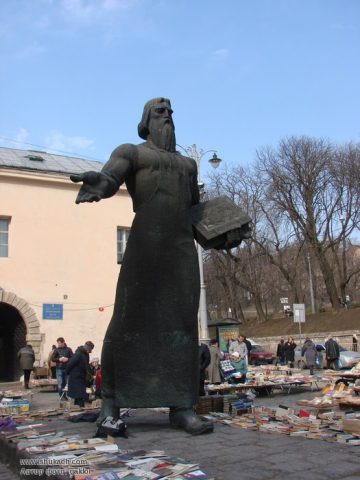
Walking through the university grounds feels like stepping through different eras. Historic buildings stand alongside modern facilities, and the courtyard is dotted with monuments to figures connected to the academy’s legacy. One of the most striking sights is the bell tower of the Epiphany Cathedral, part of the university complex. Built in the 17th century, the cathedral is another architectural gem, where religious and educational traditions intertwine. Inside, frescoes and an ornate iconostasis serve as reminders of the academy’s deep roots in Orthodox culture.
The atmosphere at Ostroh Academy is unlike anywhere else. There’s no rush here, no city noise—just the quiet of old corridors that invites reflection and study. Students and faculty often gather in the inner courtyard, where conversations about ideas or simple moments of quiet are equally at home. In summer, the space is especially beautiful, with blooming chestnut and linden trees casting dappled shade. When evening falls and the old-fashioned lanterns flicker to life, the place feels suspended in time. Visitors are welcome to explore the academy’s history through its museum exhibits, where the past is not just preserved but brought to life.
Ostroh Academy is a place where history isn’t just remembered—it’s still being written. It serves as a reminder of how important it is to safeguard cultural heritage and pass it on to future generations. In a world that changes so quickly, such places become anchors, grounding us in the past while helping us navigate the present. A visit to Ostroh and its academy offers more than just a lesson in Ukrainian history. It’s a chance to step into a space where the weight of centuries feels tangible, where the quiet hum of learning and tradition creates something truly unique.