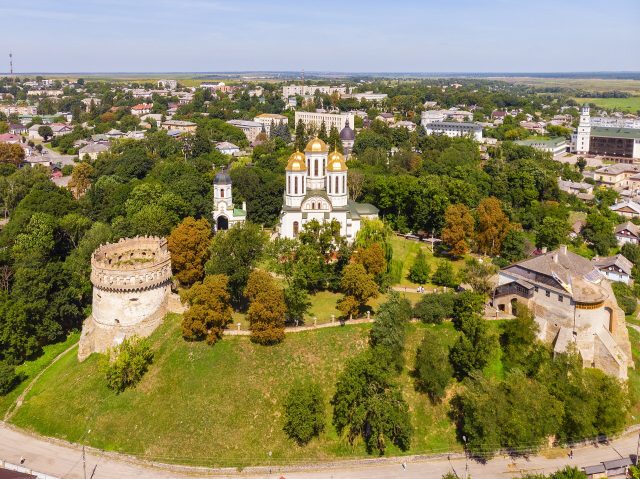
Ostroh is a quiet town in western Ukraine, but its past hums with the energy of a place that once shaped the written word. The Museum of Books and Book Printing sits within the walls of the old Ostroh Castle, a building that has witnessed centuries of intellectual and cultural life. Here, the story of how books came to be in this part of Europe unfolds not through dry exhibits, but through objects that still carry the weight of their own history. The museum doesn’t just display artifacts—it lets them speak, revealing how a small town became a cornerstone of Eastern European literacy.
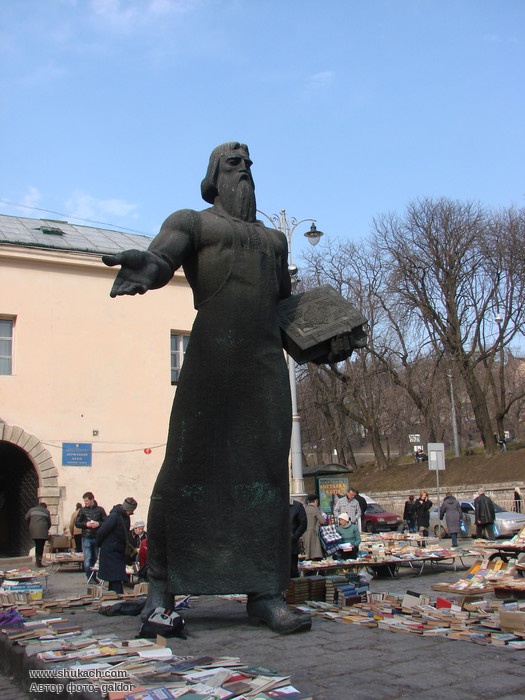
The significance of Ostroh in the history of printing is no accident. In the 16th century, it was a vibrant center of learning under the Grand Duchy of Lithuania and later the Polish-Lithuanian Commonwealth. The Ostroh Academy, the first institution of higher education in what is now Ukraine, drew scholars, theologians, and thinkers who turned the town into a hub of intellectual exchange. It was here, in 1581, that Ivan Fedorov—the pioneering printer—produced the Ostroh Bible, the first complete printed edition of the Scriptures in Church Slavonic. This wasn’t just a religious milestone; it was a cultural revolution, spreading literacy and shaping the written language of the region.
The museum occupies part of the castle once owned by the Ostrozky family, one of the most powerful dynasties of the time. The building itself is a blend of Gothic and Renaissance styles, its thick stone walls and arched ceilings hinting at its dual role as both a fortress and a center of learning. Walking through its halls, you can almost hear the echoes of debates that once filled these rooms—discussions that shaped not just books, but the fate of nations. The interior has been preserved to reflect its original character, with wooden beams, flagstone floors, and antique chandeliers that transport visitors back to an era when every book was a labor of love and skill.
The exhibits trace the evolution of bookmaking, from handwritten manuscripts to the first printed works. Among the most prized items is a copy of the Ostroh Bible, its pages still crisp despite the centuries. Other works by Fedorov and his successors are displayed alongside, showing how printing techniques developed over time. The handwritten books are particularly striking, their pages adorned with intricate miniatures and ornate initials that showcase the artistry of medieval scribes. Later editions from the 18th and 19th centuries illustrate how printing technology advanced, reflecting broader changes in society and culture.
One of the most fascinating sections of the museum is dedicated to the tools of the trade. Here, you can see the actual printing presses, type cases, and engraving tools that brought books to life. These machines weren’t just functional—they were revolutionary, democratizing knowledge in a way that had never been possible before. The process was painstaking: each letter had to be cast in metal, arranged by hand, and pressed onto paper one sheet at a time. Seeing these tools up close makes it easier to appreciate the effort behind every book produced in those early days.
Beyond printing, the museum also explores the broader intellectual life of Ostroh. Exhibits on the Ostroh Academy highlight its role in education, featuring maps, globes, and scientific texts that reveal how scholars of the time understood the world. The academy wasn’t just a school—it was a meeting place for ideas, where students and teachers from different backgrounds came together to debate philosophy, theology, and science. The artifacts on display offer a glimpse into the minds of people who lived during the Renaissance, a time when knowledge was expanding at an unprecedented pace.
Ostroh’s contribution to Ukrainian culture is another key theme. During periods of foreign rule, the town became a refuge for national identity, preserving the Ukrainian language and traditions through its books. Works printed here circulated across Ukraine and beyond, bridging cultures and generations. The museum doesn’t shy away from this political dimension, showing how books became a form of resistance and a way to keep a shared heritage alive.
Visiting the museum is like stepping into a different era. The air feels heavier here, not just because of the old stone walls, but because of the stories they hold. You can spend hours poring over the pages of ancient tomes, listening to guides explain the craftsmanship behind each one, or simply imagining the hands that once turned these same pages. It’s a place where the past isn’t just remembered—it’s felt. For anyone interested in how books shaped history, or how a small town once stood at the heart of a literary revolution, this museum offers a rare and tangible connection to that legacy.