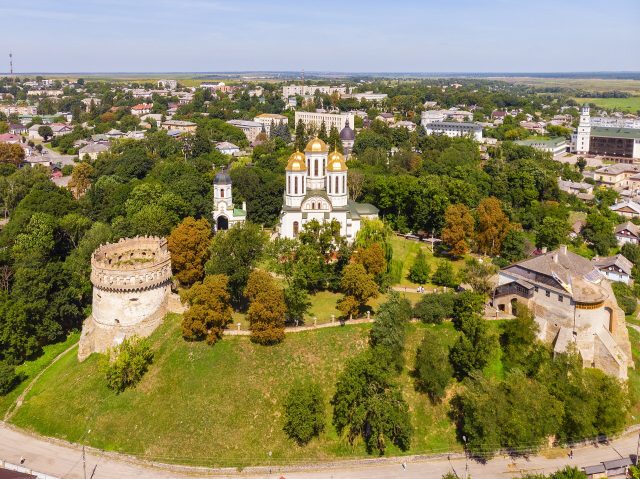
Perched on a hill overlooking the quiet town of Ostroh, the castle feels like a place where time has settled into a slower rhythm. Its walls, worn by centuries, stand as silent witnesses to the events that shaped not just this corner of Ukraine, but much of Eastern Europe. The fortress isn’t merely an architectural relic—it’s a living fragment of history, one that carries the weight of battles, ideas, and the lives of those who once walked its courtyards.
The origins of Ostroh trace back to the mid-12th century, when the land was part of Kyivan Rus. Back then, it was already a fortified settlement, though its true significance came later, when it became a key stronghold of the Volhynian Principality. The castle as it appears today took shape between the 14th and 15th centuries, under the rule of the powerful Ostrozky family. They transformed it from a simple fortress into a symbol of both military might and cultural resistance, particularly in defense of Orthodox traditions during a time of religious upheaval.
The architecture of the castle reflects its layered past. The most striking feature is the Lutsk Tower, a massive structure that dominates the skyline. Its thick walls and narrow arrow slits speak of a time when the fortress had to withstand sieges and raids. Nearby stands the Church of the Epiphany, built in the 16th century, which served not only as a place of worship but also as a repository of knowledge. Within its walls, the first higher education institution in modern-day Ukraine—the Ostroh Academy—was established, where scholars taught Greek, Latin, and Slavic languages. The academy became a beacon of learning in a region where education was often a privilege of the few.
The castle’s inner courtyard, now open and peaceful, was once a bustling hub of activity. Over the centuries, it housed princely chambers, armories, storerooms, and even a prison. Little remains of its former grandeur, but the fragments that do survive offer glimpses into life during its heyday. Climbing to the top of the Lutsk Tower rewards visitors with a view that has changed little over the centuries—a sweeping panorama of the town and the surrounding countryside, where the past and present seem to meet.
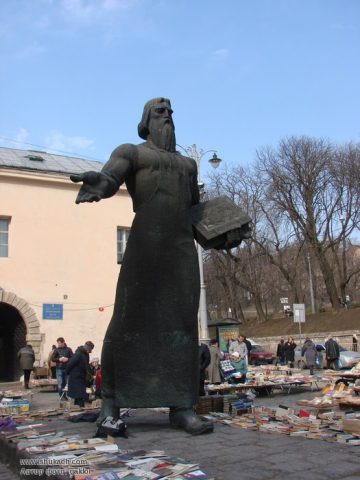
No discussion of Ostroh Castle would be complete without mentioning Prince Konstanty Ostrozky, one of the most influential figures of his time. More than just a military leader, he turned the fortress into a center of Orthodox culture at a moment when the region was under pressure from Catholic expansion. Under his patronage, a printing press was founded here, producing books in Church Slavonic, including the famous Ostroh Bible—the first complete edition of the Scriptures in a Slavic language. This work was a landmark not just for Ukrainian culture, but for all Slavic peoples, cementing the castle’s place in history as a guardian of knowledge and faith.
Today, the castle functions as a museum, its halls filled with artifacts that tell the story of its past. Visitors can see ancient icons, weapons, household items, and documents that paint a picture of life in different eras. Archaeological finds reveal that this hill has been a place of human activity for centuries, with each layer of earth holding traces of those who came before. The stones themselves seem to carry the memories of the people who built, defended, and lived within these walls.
Ostroh may be a small town, but its historical importance is immense. The castle was never just a military stronghold—it was a crossroads of ideas, a place where education, religion, and politics intersected. Generations of scholars, soldiers, and clergy passed through its gates, leaving behind a legacy that still resonates. Even now, as modern life hums around it, the fortress remains a quiet monument to the past, a reminder that history isn’t just a record of events but a living connection between those who came before and those who come after.
A visit to Ostroh Castle is less about ticking off a tourist attraction and more about stepping into another time. There’s no crowd here, no rush—just the stillness of centuries-old walls and the faint echoes of the past. Walking through the courtyard, peering into the tower, or examining the museum’s exhibits, it’s impossible not to wonder about the people who once stood in the same spots. The castle doesn’t narrate its history in words; it lets the stones, the silence, and the sweeping views speak for themselves. And in that quiet, the past doesn’t feel so distant after all.