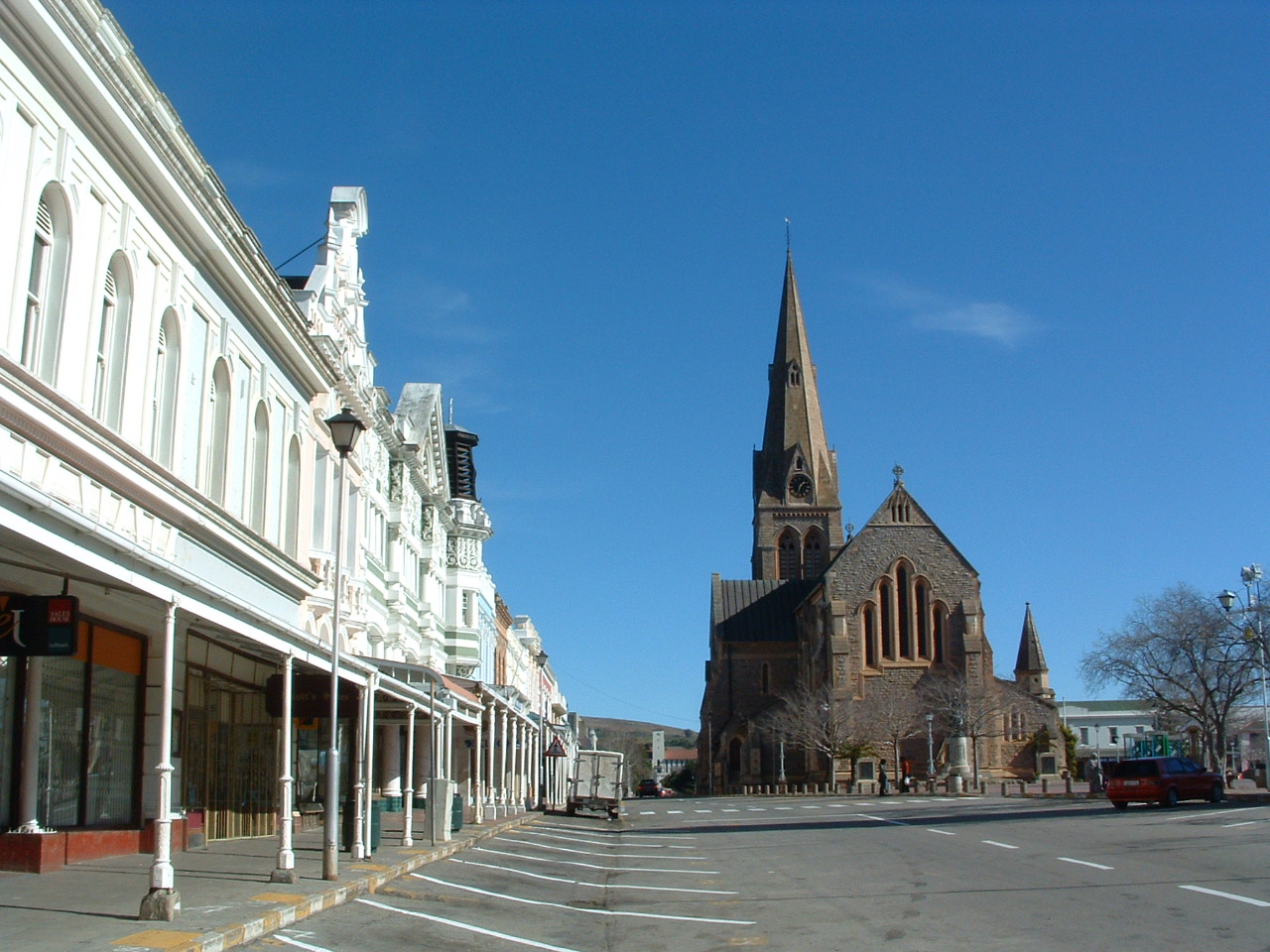
Perched on a hill overlooking Grahamstown, the Cathedral of St Michael and St George stands as a quiet witness to the layered history of South Africa’s Eastern Cape. Built in the early 1800s, when British settlers were carving out a foothold in the region, the cathedral was more than just a place of worship—it was a statement of permanence in a landscape still shaped by conflict and uncertainty. Grahamstown itself began as a military outpost, a buffer between the expanding Cape Colony and the Xhosa chiefdoms to the east. As the town grew into an administrative and religious hub, the cathedral became its most visible landmark, a stone-and-mortar embodiment of the values and ambitions of the colonial era.
The building’s architecture tells a story of evolution, mirroring the shifting tastes and needs of its congregation. The first church on the site, completed in 1824, was a modest structure, soon outgrown as Grahamstown’s population swelled. By the 1830s, plans were underway for a grander replacement, one that would reflect the confidence of a community no longer on the defensive. The result was a blend of styles: the early Georgian simplicity of the original gave way to the more ornate Victorian sensibilities of the mid-19th century. Tall, pointed windows let in streams of light, while the sturdy tower—added later—anchored the building to the earth. Inside, the altar, crafted from local stone and wood, stands as a testament to the skill of early craftsmen, while the stained-glass windows, imported from England, add a splash of color to the otherwise muted palette.
For much of the 19th century, the cathedral was the heart of Grahamstown’s social and spiritual life. In a town where British influence was strong, the church played a dual role: it was both a sanctuary and a gathering place, where sermons shared space with civic announcements and community debates. The cathedral’s walls bore witness to the tensions of the time—the Frontier Wars, the struggles between settlers and indigenous peoples, the slow but inexorable push of colonial rule. Remarkably, the building survived several earthquakes, a reminder of the region’s seismic activity, though none were severe enough to cause lasting damage.
What makes the cathedral’s design particularly interesting is how it balances European traditions with local practicalities. The thick sandstone walls, a common feature in Cape colonial architecture, were well-suited to the Eastern Cape’s climate, keeping the interior cool during scorching summers. Yet the high ceilings and expansive windows also speak to a Victorian ideal of grandeur, a desire to create spaces that felt both uplifting and orderly. The wooden pews, the carved pulpit, and the organ—installed in the 1800s and still in use—all contribute to an atmosphere that feels both timeless and distinctly of its era.
Today, the cathedral remains an active place of worship, but its doors are open to visitors as well. Stepping inside, one is struck by the stillness, a quiet contrast to the bustle of Grahamstown’s streets. On Sundays, the sound of the organ and the voices of the choir fill the space, while on weekdays, the building is often empty, save for the occasional tourist or a lone parishioner seeking a moment of reflection. The cathedral’s location on the hill offers a sweeping view of the town below, where the grid of colonial-era streets and the spires of other historic buildings hint at the layers of history beneath the surface.
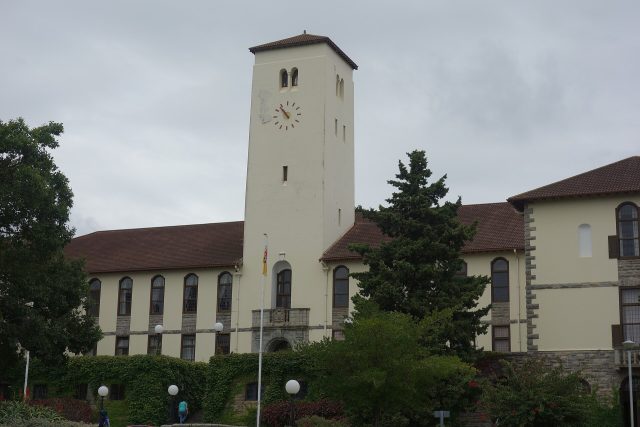
Grahamstown itself is a place where different narratives intersect. Once a bastion of British culture, it later became a center of education and resistance during the apartheid era, home to Rhodes University and a hub of intellectual and political activity. The cathedral, though rooted in the colonial past, has adapted to these changes. It now hosts concerts, art exhibitions, and lectures, serving as a bridge between the town’s history and its present. For many locals, the building holds personal significance—baptisms, weddings, and funerals have taken place within its walls, making it a repository of collective memory.
Despite the passage of time, the cathedral has aged gracefully. Its tower still dominates the skyline, a reminder of an era when religion and power were closely intertwined. Yet today, it feels less like a relic and more like a living part of the community. Visitors who wander its aisles or sit in its pews can sense the weight of history, but also the quiet resilience of a place that has endured. In a town where the past is never far from the surface, the Cathedral of St Michael and St George offers a chance to pause, to look back, and to consider the forces that have shaped this corner of South Africa.