Grahamstown sits quietly in the Eastern Cape, a place where the past lingers in the air like the scent of old books. The town feels suspended in time, its streets lined with colonial-era buildings that whisper stories of another era. Among its most poignant landmarks is the 1820 Settlers Monument, a tribute to the British colonists who arrived here over two centuries ago, reshaping the region in ways that still echo today.
In the early 1800s, the British Empire sought to consolidate its hold on southern Africa. After taking control of the Cape Colony from the Dutch in 1806, authorities faced a pressing need for labor and security along the frontier. The solution came in the form of a settlement scheme: in 1820, around four thousand Britons—mostly from England and Scotland—sailed to South Africa, lured by promises of land and a fresh start. Many settled in the Grahamstown area, then a remote outpost on the edge of the expanding colony. They brought with them their language, customs, and skills, leaving an indelible mark on the region’s development.
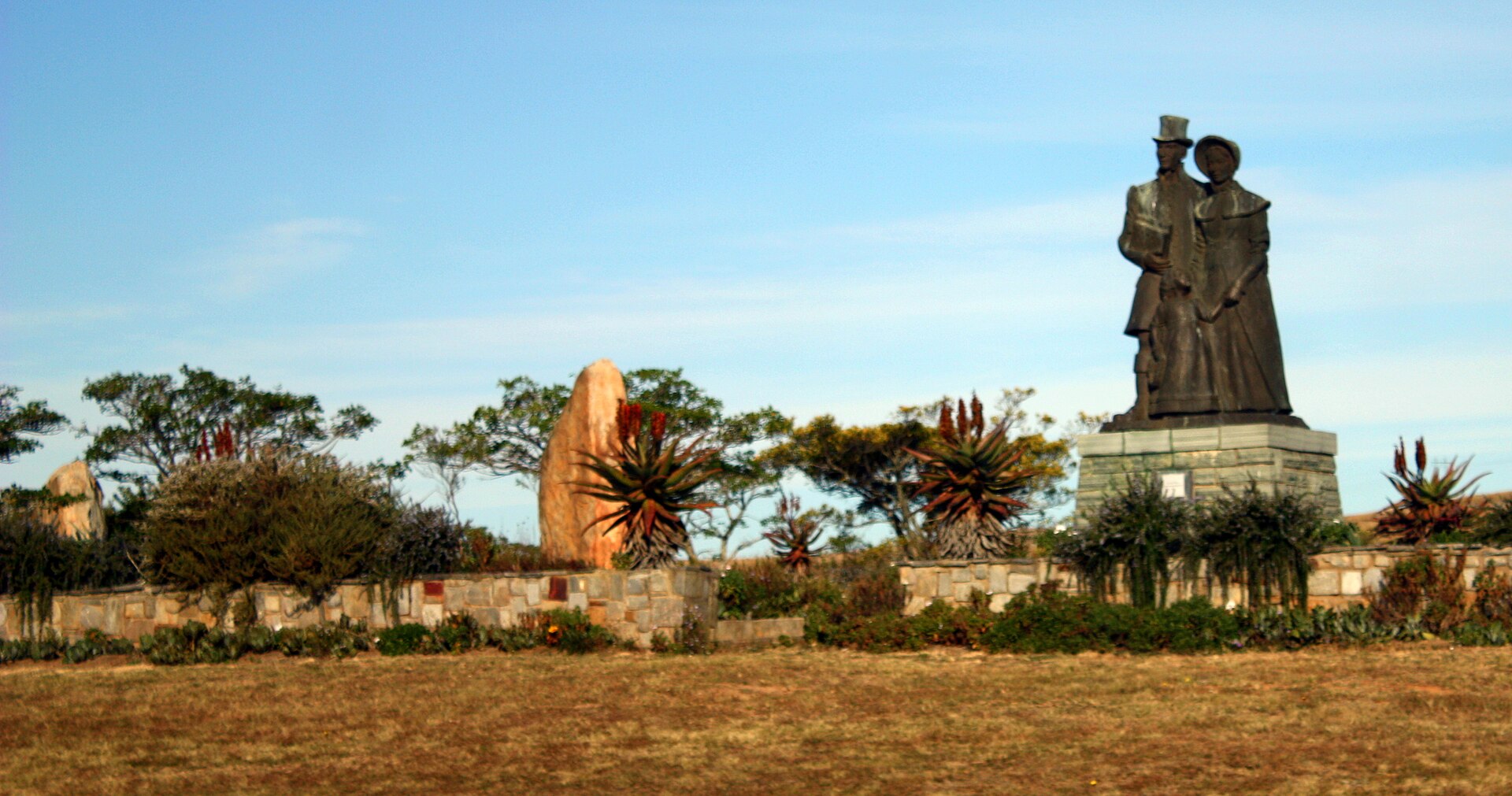
The monument itself was unveiled in 1974, a century and a half after the settlers’ arrival. It stands as a simple yet striking granite obelisk, crowned with a bronze sculpture of a family—a man, woman, and child—gazing into the distance. The figures embody resilience and hope, their quiet dignity reflecting the challenges of building a new life in an unfamiliar land. There’s no grandeur in the design, just a sense of quiet determination. A small park surrounds the monument, offering a place to sit and reflect on the lives of those who came before.
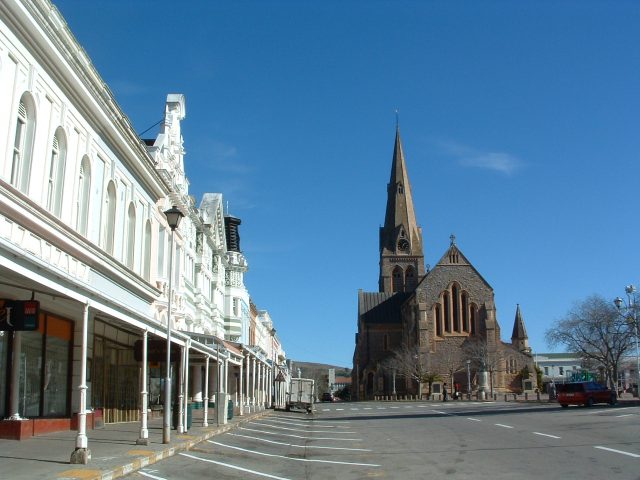
Grahamstown is a living museum, its streets preserving the character of 19th-century British colonial life. The monument fits naturally into this setting, a reminder that the town began as a military post in 1812, originally named Graaff-Reinet after the Cape Colony’s governor at the time. Later, it was renamed in honor of Colonel John Graham, who commanded the local garrison. The 1820 settlers played a crucial role in transforming Grahamstown from a fortified outpost into a thriving community, laying the foundations for the town it would become.
Yet the monument is more than a celebration of the settlers’ legacy. It also invites reflection on the complexities of South Africa’s history. The arrival of British colonists accelerated tensions with the Xhosa people, who had long inhabited the region. The 19th century saw a series of conflicts known as the Cape Frontier Wars, as competing claims to land and resources clashed. The monument doesn’t explicitly address these struggles, but its presence serves as a quiet prompt to consider how different cultures and histories intersected on this land.
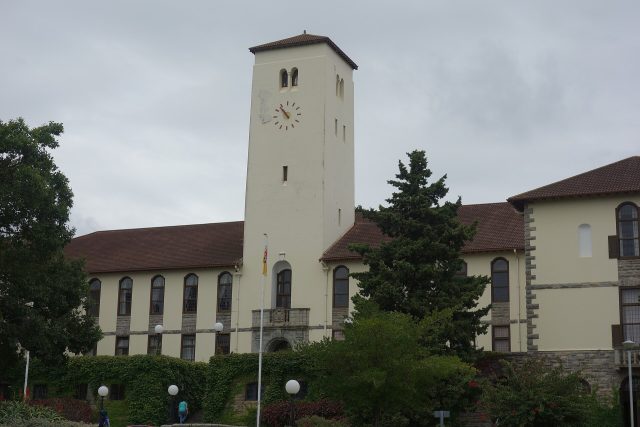
Today, the monument draws both locals and visitors. Some come to honor ancestors, others to enjoy the peaceful surroundings. Grahamstown has grown into a cultural hub, known for its annual National Arts Festival, one of the largest in the country, and Rhodes University, which carries a reputation for academic excellence. The monument is just one of many historical sites here, but it holds a unique place in the town’s identity, offering a tangible connection to the past.
There are no exhibits or informational plaques at the monument—none are needed. The site speaks for itself through its understated design: the clean lines of the granite, the bronze figures frozen in time, the quiet park, and the sweeping views of the town below. On clear days, the surrounding hills stretch into the distance, a landscape that once welcomed thousands of newcomers. This isn’t a place for hurried tours; it’s a space for contemplation, where the weight of history feels almost tangible.
Grahamstown’s monuments remind us that South Africa’s story isn’t just one of apartheid or liberation struggles. It’s also the story of ordinary people who crossed oceans in search of a better life. The 1820 settlers weren’t heroes or villains—they were people shaped by their time, and their influence persists in the town’s architecture, culture, and even its accent. The English spoken here carries traces of 19th-century Scottish and English dialects, a subtle legacy of those early arrivals.
The monument isn’t just a relic; it’s part of Grahamstown’s living fabric. Perched on a hill, it overlooks the town like a silent guardian, a reminder of how deeply the past is woven into the present. Visitors can spend an hour wandering the park, studying the sculpture’s details, or simply sitting on the grass, watching the town go about its day. There’s no rush here, no crowds—just a sense of time moving slowly, much as it did two hundred years ago.