Santa María Cathedral in Vitoria-Gasteiz is the kind of place that doesn’t announce itself with fanfare but lingers in memory long after you’ve left. Tucked into the heart of the old town, it sits quietly on a small square, surrounded by narrow streets where time seems to move at its own unhurried pace. Unlike some of Spain’s more imposing cathedrals, this one doesn’t dominate the skyline or demand attention. Instead, it feels like a natural part of the city’s fabric, woven into the daily rhythm of Vitoria. There are no crowds jostling for the perfect photograph, no sense of being on a checklist of must-see sights. What you find here is something rarer: a place where history isn’t just preserved but still alive, breathing in the quiet corners and worn stone.
Construction began in the late 13th century, when Vitoria was just beginning to establish itself as a key trading and strategic hub in northern Spain. Originally built as a Gothic church, it evolved over the centuries, shaped by changing tastes and the needs of the city. Today, the cathedral is a layered record of time, with Gothic arches standing alongside Renaissance flourishes and Baroque details blending into later additions. The main façade, for instance, features a Plateresque portal added in the 16th century, long after the Gothic era had given way to new styles. Each era left its mark, not by erasing what came before, but by building upon it, creating a structure that feels both cohesive and endlessly fascinating.
Inside, the cathedral is surprisingly bright and airy, a departure from the dim, cavernous interiors often associated with Gothic churches. Tall columns rise to support the vaulted ceilings, while the stained glass—though not as vivid as in some other cathedrals—casts a soft, diffused light that fills the space without overwhelming it. The high altar, crafted by local artisans in the 17th century, is a masterpiece of understated elegance. There’s no ostentatious gold leaf or dramatic flourishes, just meticulous craftsmanship in the carvings, the delicate woodwork, and the subtle gilding. It’s the kind of detail that rewards close looking, revealing stories of devotion and artistry that span generations.
One of the cathedral’s most intriguing features lies beneath its floors. The crypts, originally used for burials of the city’s elite during the Middle Ages, later served other purposes as the needs of the community changed. Today, the underground spaces offer a glimpse into Vitoria’s distant past, with remnants of old foundations, fragments of walls, and even sections of an ancient road that once led to the city gates. These archaeological layers are like a time capsule, offering clues about what life was like centuries ago. Excavations continue sporadically, and new discoveries occasionally surface, adding another piece to the puzzle of the city’s history.
For centuries, Santa María Cathedral wasn’t just a place of worship—it was the heart of civic life in Vitoria. In the Middle Ages, it served as a gathering spot for merchants, a venue for public debates, and even a makeshift courthouse where disputes were settled. During times of war, its thick walls provided shelter for the townspeople, while in peacetime, its steps bore witness to festivals, processions, and the quiet routines of daily life. That dual role—both sacred and secular—has left an indelible mark on the building. Even now, the cathedral remains a living space, hosting services, concerts, and visitors who come simply to sit in silence, away from the noise of the modern world.
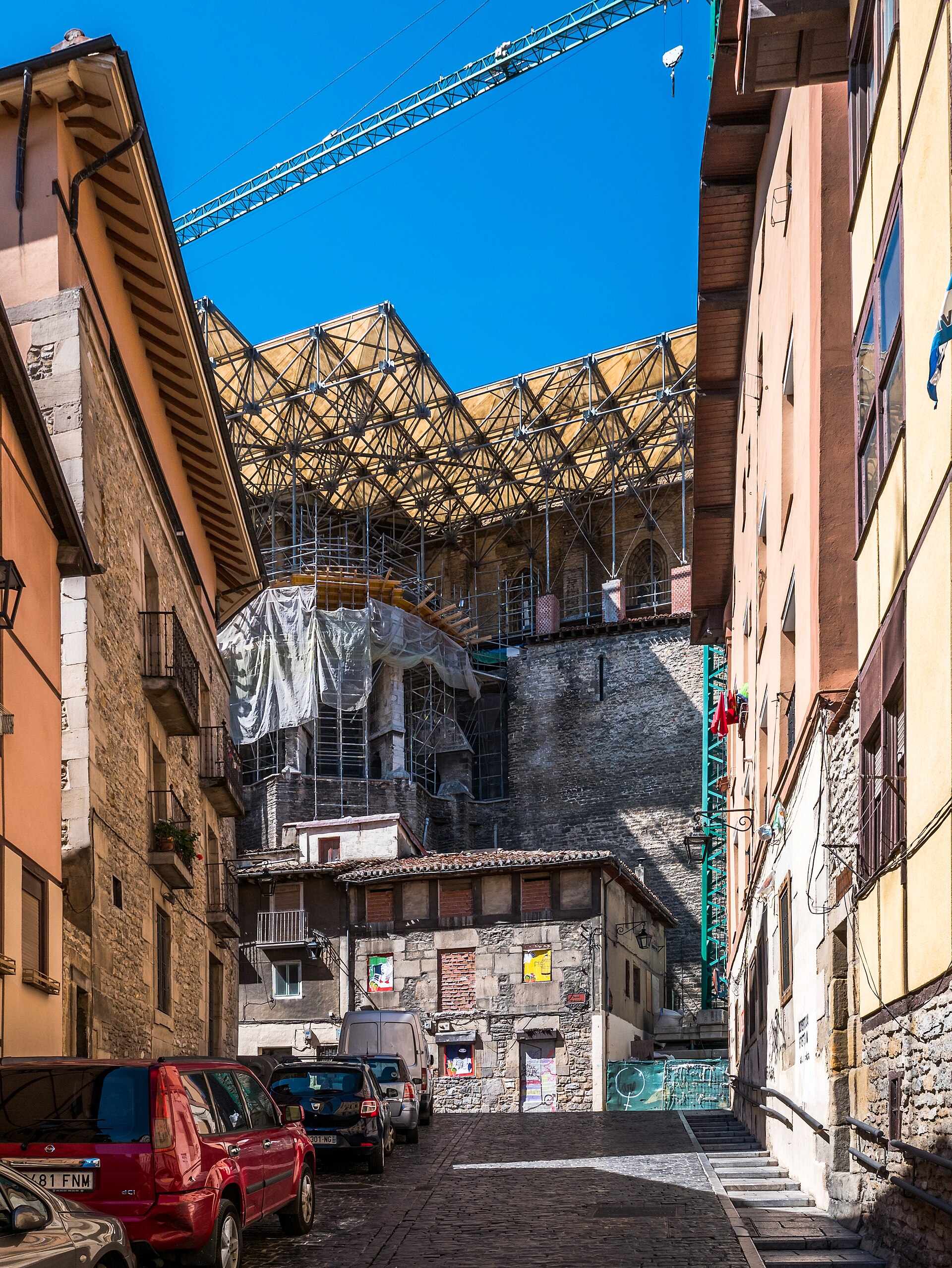
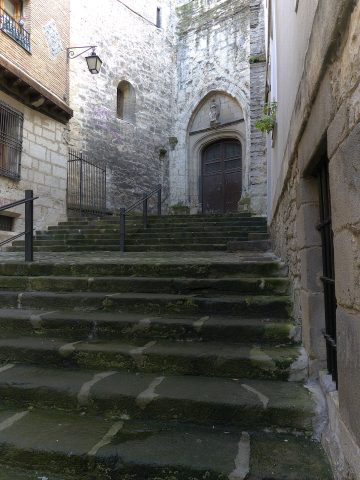
The cathedral is surrounded by Vitoria’s old quarter, a labyrinth of narrow streets and stone buildings that feel untouched by time. Walking here, it’s easy to imagine the city as it once was: merchants haggling over wine and wool, artisans bent over their workbenches, monks hurrying to prayer. The cathedral stands as a quiet sentinel over this atmosphere, a reminder that the city hasn’t always looked the way it does today. Yet even now, Vitoria hasn’t rushed to shed its past. The old quarter retains a sense of timelessness, where the weight of history isn’t a burden but a presence, felt in the uneven cobblestones and the way the light slants across the facades in the late afternoon.
On a weekday, when the cathedral is nearly empty, the experience is especially striking. The stillness, the faint scent of aged wood and stone, the way the light filters through the windows—it all creates a sense of peace that’s hard to find elsewhere. Occasionally, the space comes alive with the sound of organ music during concerts. The cathedral’s organ isn’t grand by some standards, but its tones are perfectly suited to the space: deep and resonant without being overpowering, wrapping around you like a quiet conversation with the past. It’s the kind of sound that makes you pause, close your eyes, and let the moment settle.
Santa María Cathedral isn’t a monument frozen in time. It’s a place that has grown and adapted alongside the city, absorbing its changes while remaining steadfast. There’s nothing flashy about it, no attempt to dazzle or impress. Instead, it offers something more enduring: authenticity. In a world where so much feels staged or designed for effect, the cathedral’s quiet dignity is its greatest strength. That’s why those who visit often find themselves returning—not for the grandeur, but for the sense of stillness, the feeling of stepping into a space where time moves differently. It’s a rare thing, and perhaps that’s why it stays with you.