St. Michael the Archangel Basilica in Vitoria-Gasteiz is the kind of place that doesn’t demand attention at first glance. Instead, it quietly reveals itself over time, standing in the heart of the old town on Plaza de España, surrounded by low-rise buildings with wrought-iron balconies and cafés where locals linger over morning coffee. Unlike the grand cathedrals of Madrid or Barcelona, this basilica carries a different kind of presence—unassuming yet deeply rooted in the city’s history, as if it has always been here, watching over Vitoria as it grew from a small but significant northern town into what it is today.
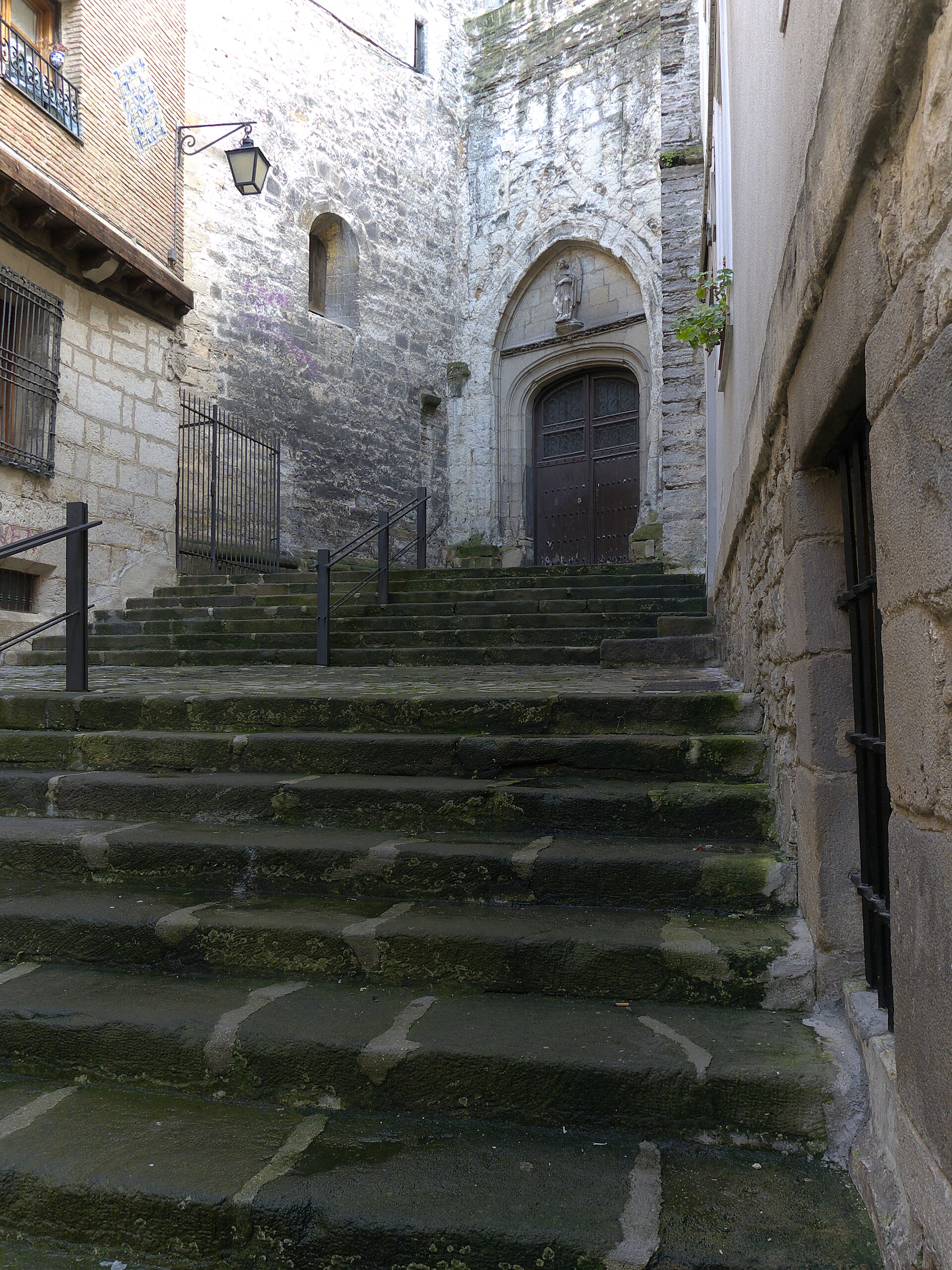
The building is primarily Gothic in style, though centuries of renovations and additions have left their mark. The oldest part is the nave, constructed in the 14th century when Vitoria was beginning to assert its importance in the region. Later, in the 16th century, a Renaissance portal was added, adorned with intricate carvings and statues of saints that still catch the light in unexpected ways. Inside, the basilica feels surprisingly airy despite its massive columns and vaulted ceilings. The contrast is striking—the Baroque altarpiece, gilded and elaborate, dominates the space with its angels and saints, their figures almost floating in the soft, filtered light.
One of the basilica’s most enduring stories is tied to the White Virgin, the patroness of Vitoria. According to legend, the statue was discovered hidden in the wall of an older church in the 13th century, and since then, it has been revered as a symbol of the city’s protection. Every August, the basilica becomes the center of celebrations in her honor, drawing both locals and pilgrims. The statue itself is small, but its presence is felt everywhere—from the frescoes depicting her story to the candles flickering at her feet. Even those who don’t consider themselves religious can sense the quiet reverence that lingers in the air, a place where time seems to slow down.
St. Michael’s has always been more than just a place of worship. In the Middle Ages, it served as a hub for the city’s civic life, where documents were stored, deals were struck, and important decisions were made. During times of conflict, its thick walls offered refuge. The 19th century brought political upheaval to Spain, and the basilica bore witness to it all—revolutionary gatherings, solemn masses celebrating victories, and everything in between. Today, it remains a living part of Vitoria, not just a relic of the past but a space that continues to shape the city’s identity.
The architecture of the basilica is a fascinating blend of eras and styles. The Gothic nave, with its pointed arches, sits alongside the Renaissance portal, while inside, Baroque and even Neoclassical elements make their presence known. This layering of history isn’t unusual for old European churches—they evolved alongside the cities they served, absorbing new influences as they went. The bell tower, added later than the rest of the structure, is modest in height but unmistakable against the skyline. In the evenings, when the streetlights come on, it casts a warm glow over the plaza, adding to the basilica’s quiet charm.
Vitoria-Gasteiz is a city where history feels tangible at every turn, and St. Michael’s Basilica is one of the places where it comes alive most vividly. Unlike the crowded cathedrals of more tourist-heavy cities, this one offers a sense of calm. There’s no rush here—just the opportunity to sit on a wooden pew, studying the faded frescoes and stained glass, or to step outside and watch the life of the old town unfold. In summer, the basilica stays cool, a respite from the heat, while in winter, when snow dusts the streets, the warm light spilling from its windows and the distant chime of bells create a sense of comfort.
On a weekday, you might find locals stopping by for a moment of quiet reflection or a brief prayer. There’s no pressure, no strict schedule—just an open door and the freedom to linger. The scent of wax and aged wood fills the air, and the sound of footsteps echoes softly against the stone floors. Occasionally, guided tours pass through, but more often than not, the basilica carries on at its own unhurried pace, much as it has for centuries.
St. Michael the Archangel Basilica isn’t just an architectural landmark; it’s a place where the past and present intersect. It serves as a reminder that Vitoria-Gasteiz, though often overlooked in favor of Spain’s more famous cities, has its own rich history and character. There’s no tourist frenzy here, no sense of being rushed from one attraction to the next. Instead, there’s the chance to experience a different side of Spain—one where time moves a little slower, and life follows its own quiet rhythms.