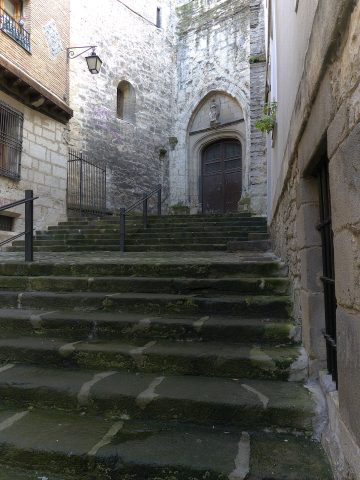
The Bibat Museum in Vitoria-Gasteiz is one of those places where history doesn’t just sit behind glass—it breathes. Housed in a former 13th-century convent, the building itself is a quiet witness to centuries of change. The Santa Clara monastery, with its layers of Gothic arches and Baroque flourishes, tells its own story before you even step inside. The courtyard, with its worn stone columns and dappled light, feels like a threshold between past and present, a place where time moves differently.
The museum’s collection is rooted in Basque culture but reaches far beyond it. Archaeological finds, everyday objects, and artworks trace the region’s evolution from prehistoric settlements to modern life. Tools, textiles, and household items reveal how traditions shaped daily existence, while documents and personal artifacts offer glimpses into the lives of people who called this land home. One of the most compelling sections focuses on medieval Álava, where weapons, jewelry, and coins unearthed from local digs sit alongside reconstructed interiors of period homes. The exhibits don’t just display objects—they reconstruct the rhythms of life, from the way people worked to how they celebrated.
Art holds a special place here. The museum’s galleries feature works by Basque painters spanning several centuries, from religious altarpieces to landscapes that capture the region’s rugged beauty. The 19th century stands out as a particularly vibrant period, when local artists began blending European influences with distinctly Basque themes. Some of the most striking pieces are those that depict rural life, where the interplay of light and shadow mirrors the stark contrasts of the northern Spanish countryside.
What makes Bibat more than just a repository of artifacts is its role as a living cultural space. Temporary exhibitions, workshops, and talks breathe new life into the collections, often tying them to contemporary issues or seasonal traditions. The museum frequently hosts events that celebrate Basque heritage, from folk music performances to demonstrations of traditional crafts like blacksmithing or lace-making. For many visitors, a visit here becomes the starting point for exploring the wider region, where the landscapes and towns mentioned in the exhibits suddenly feel more tangible.
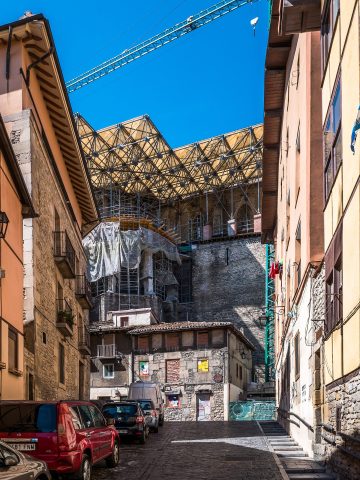
The building itself is worth lingering over. The Santa Clara convent is a patchwork of architectural styles, where a Gothic doorway might lead to a Baroque chapel or a cloister with Romanesque columns. The inner courtyard, with its arcaded walkways, is particularly atmospheric, especially in the warmer months when it hosts concerts and gatherings. There’s something about the way the light filters through the arches that makes even a quiet moment feel significant.
For locals, Bibat is more than a museum—it’s a touchstone. Vitoria-Gasteiz is a city that prides itself on its modernity, but places like this remind residents of the layers beneath the surface. The museum doesn’t just preserve the past; it engages with it, constantly updating its approach to stay relevant. Some visitors might spend hours poring over every detail, while others wander through, soaking in the atmosphere. Either way, the experience feels personal, as if the stories on display are being shared rather than presented.
What sets Bibat apart is its lack of pretension. There are no grand narratives here, just the quiet accumulation of lives, objects, and moments. The museum doesn’t try to impress with scale or spectacle; instead, it invites you to look closer, to see the craftsmanship in a simple tool or the emotion in a centuries-old portrait. It’s the kind of place that lingers in your memory long after you’ve left, not because it’s flashy, but because it feels real. And in a world where so much history is polished for tourists, that authenticity is rare.