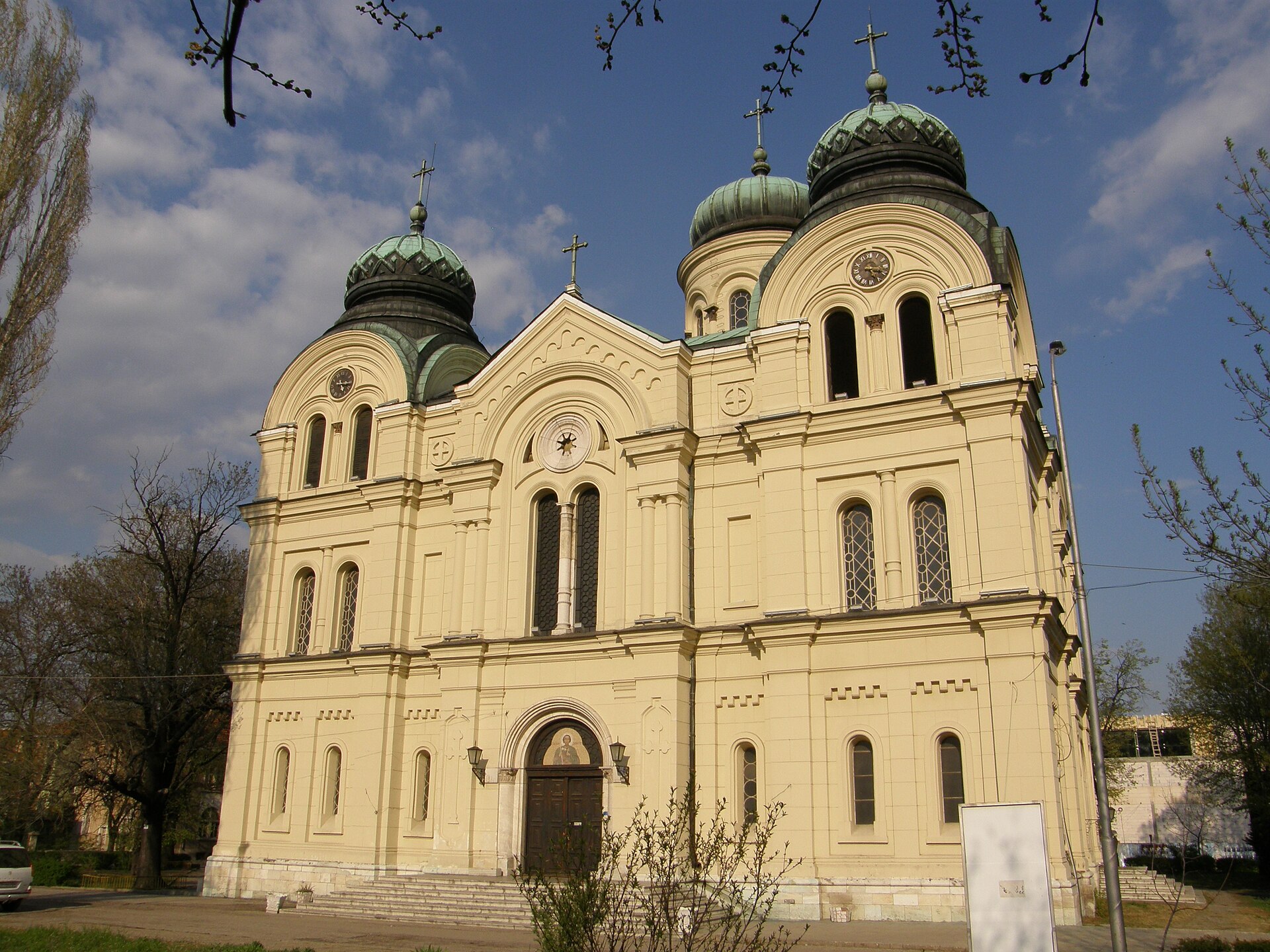
St. Demetrius Cathedral in Vidin is one of those places where time seems to stand still, preserving not just religious traditions but the layered history of a city that has seen empires rise and fall. Built in the mid-19th century, the cathedral emerged during a pivotal moment for Bulgaria—a time when the country was reclaiming its identity after centuries of Ottoman rule. Vidin, a key northern stronghold, became a symbol of this cultural revival, and the construction of the cathedral marked a turning point. Funded by local residents, the building reflects both the architectural trends of the era and the collective hopes of a people longing for self-determination.
The cathedral’s design blends traditional Orthodox elements with distinct local influences, creating a structure that feels both timeless and rooted in its surroundings. Built in the Neo-Byzantine style, it carries the weight of history in its arches and columns, while its prominent dome dominates the skyline, visible from afar. Inside, the space feels expansive and luminous, with high vaulted ceilings adorned with frescoes that evoke a sense of reverence. The iconostasis, crafted by local artisans, remains a testament to the skill and devotion of the region’s craftsmen, with similar works still found in other churches across northern Bulgaria.
St. Demetrius Cathedral is deeply intertwined with Vidin’s past. During the Russo-Turkish War of 1877–1878, the city became a crucial hub for the Bulgarian liberation movement, and the cathedral served as more than just a place of worship. It was a gathering point for fundraising efforts to support the Bulgarian volunteers fighting for independence. After the war, the cathedral continued to play a central role in the city’s life, hosting celebrations for national holidays and solemn religious services. Today, it remains an active place of worship, its doors open to anyone seeking a connection to history.
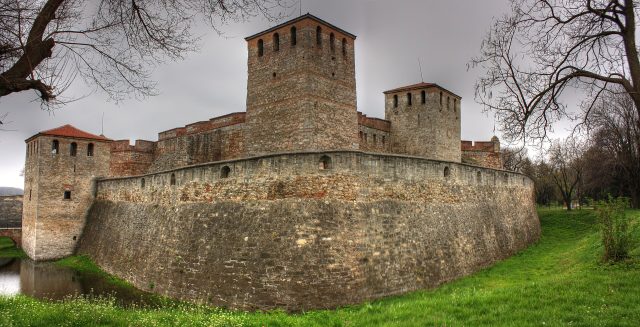
Vidin itself is a city of contrasts, shaped by its strategic location along the Danube. Throughout the centuries, it has been a crossroads of cultures—a medieval royal residence, an Ottoman stronghold, and later, a battleground for independence. The cathedral stands as a bridge between these eras, situated in a square that once bustled with the energy of a thriving trade hub. Now, the area is quieter, the only sounds breaking the stillness being the occasional toll of the bells.
A visit to St. Demetrius Cathedral offers more than just a glimpse of beautiful architecture; it’s an opportunity to reflect on how Vidin has evolved over the centuries. Inside, the passage of time is visible in the darkened icons, the worn pages of old religious books in the church shop, and the faint inscriptions left by generations of worshippers. There’s no museum-like sterility here—everything feels lived-in, carrying the weight of countless prayers and quiet moments. Services are held regularly, and if you’re lucky, you might hear the choir performing traditional hymns, their voices filling the space with a sense of continuity.
For those interested in Bulgaria’s history, the cathedral provides insight into the country’s 19th-century revival. This was a period when Bulgarians sought to reclaim their cultural and religious autonomy, and churches played a vital role in that process. St. Demetrius was one of many built during this time, but its significance to Vidin is unmatched. It didn’t just beautify the city; it reinforced a sense of community and pride in a shared past.
Today, the cathedral remains a place where both locals and visitors come to connect with Bulgaria’s soul. Unlike the more tourist-heavy churches in Sofia or Plovdiv, it sees fewer crowds, making a visit here feel more intimate. You can sit quietly on a bench in the courtyard, studying the architectural details, or step inside to feel the coolness of the stone walls. Time moves differently here—slowly, deliberately—and that sense of calm is a rare find in the modern world.
Vidin isn’t a city that often makes it onto must-see lists, and that’s part of its charm. It exists on its own terms, untouched by the pressures of mass tourism, and St. Demetrius Cathedral is very much a part of that authenticity. There’s nothing performative about it; it simply is, and that’s what makes it special. For travelers seeking places with genuine history and character, the cathedral offers something far more meaningful than a typical tourist attraction. It’s a quiet witness to the past, a place where the echoes of history feel almost tangible.