Vidin’s Square of Saints Cyril and Methodius is one of those places where the city reveals itself slowly, without the rush of tourist crowds or the pressure to capture the perfect photo. Instead, there’s a quiet rhythm here, a sense that time moves differently—unhurried, almost deliberate. Tucked in the heart of the old town, the square feels like a crossroads where different eras of Bulgarian life still linger, from the Middle Ages to the present day. It’s not just an open space between buildings; it’s a place where history settles into the cracks of the cobblestones and the facades of the surrounding houses.
The architecture here isn’t grand or imposing, and that’s part of its charm. The low-rise buildings, with their wooden shutters and carved balconies, reflect the style of Bulgaria’s National Revival period—a time when the country was rediscovering its identity. Among them stands the former boys’ gymnasium, built in the late 19th century, a quiet testament to Vidin’s role as a center of education and culture. Its modest lines and understated details hint at a past when the city was more than just a fortress on the Danube. Nearby, the small Church of Saint Panteleimon blends seamlessly into the surroundings, its presence unassuming but deeply rooted in the lives of locals. The sound of its bells on Sunday mornings still calls people to prayer, just as it has for generations.
The square is named after Cyril and Methodius, the brothers whose work laid the foundation for Slavic literacy. For Bulgaria, they are more than historical figures—they are symbols of cultural pride, their legacy woven into the very fabric of the nation. It was through Bulgaria that the Cyrillic alphabet spread to Russia and beyond, and that connection is still felt here. There’s no towering monument to the brothers on the square, but their influence is everywhere—in the Cyrillic signs, in the way the city embraces its language, and in the quiet reverence for tradition. In that sense, the square isn’t just a physical space; it’s a reminder of how the past continues to shape the present.
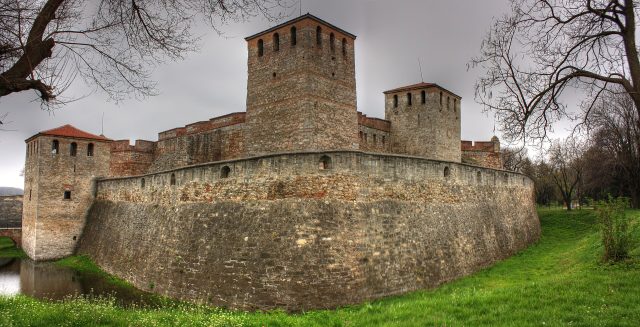
Vidin hasn’t always been the quiet town it is today. In the Middle Ages, it was a key fortress on the Danube, and in the 19th century, it became the heart of the Vidin Principality, a short-lived but defiant attempt to resist Ottoman rule. Back then, the square was on the edge of the old city, a bustling hub where merchants gathered, news was exchanged, and music filled the evenings. Little remains of that era now, but if you listen closely, you can still catch echoes of it—the slow pace of life, the scent of fresh bread from a nearby bakery, the way the Danube’s presence lingers in the air.
These days, the square is where different generations come together. In the mornings, you might see elderly men playing backgammon at the small café tables, their games unhurried and deliberate. By afternoon, schoolchildren rush past on their way to class or linger during breaks, their laughter mixing with the sounds of the city. In the summer, the square comes alive with open-air concerts, art exhibitions, or impromptu gatherings of friends with guitars. Winter brings a different kind of quiet, the kind that makes the place feel even more intimate, as if inviting you to stay awhile, sip a coffee, and watch the world go by.
One of the square’s defining features is its proximity to the Danube. The river is just a short walk away, and that closeness gives the place a unique character. For Vidin, the Danube isn’t just water—it’s a lifeline, a border, a source of inspiration. The river’s presence is felt here, in the way the wind carries the scent of water or how the sunset paints the sky in shades of gold and pink. Sometimes, tourists from river cruises stop by, but more often than not, the square remains a local secret, a place where people come to escape the noise and simply be.
In recent years, Vidin has started to attract travelers looking for the quieter side of Bulgaria, places untouched by mass tourism. The Square of Saints Cyril and Methodius is exactly that—a spot where you can experience the city as it truly is, without the gloss of tourist brochures. There are no luxury hotels or flashy restaurants here, just the chance to wander the nearby streets, peek into small shops selling local honey and cheese, or sit on a bench and watch life unfold at its own pace.
For first-time visitors, the square might seem unremarkable at first glance. There are no grand cathedrals or ancient ruins to draw the eye, nothing that screams "must-see." But that’s precisely what makes it special. This isn’t a museum or a staged attraction; it’s a living part of the city, a place that doesn’t try to impress but simply exists, quietly reminding us that history isn’t just about grand events or famous names. Sometimes, it’s about the small, unassuming corners where time slows down, leaving behind nothing but memories and the faintest hint of nostalgia.