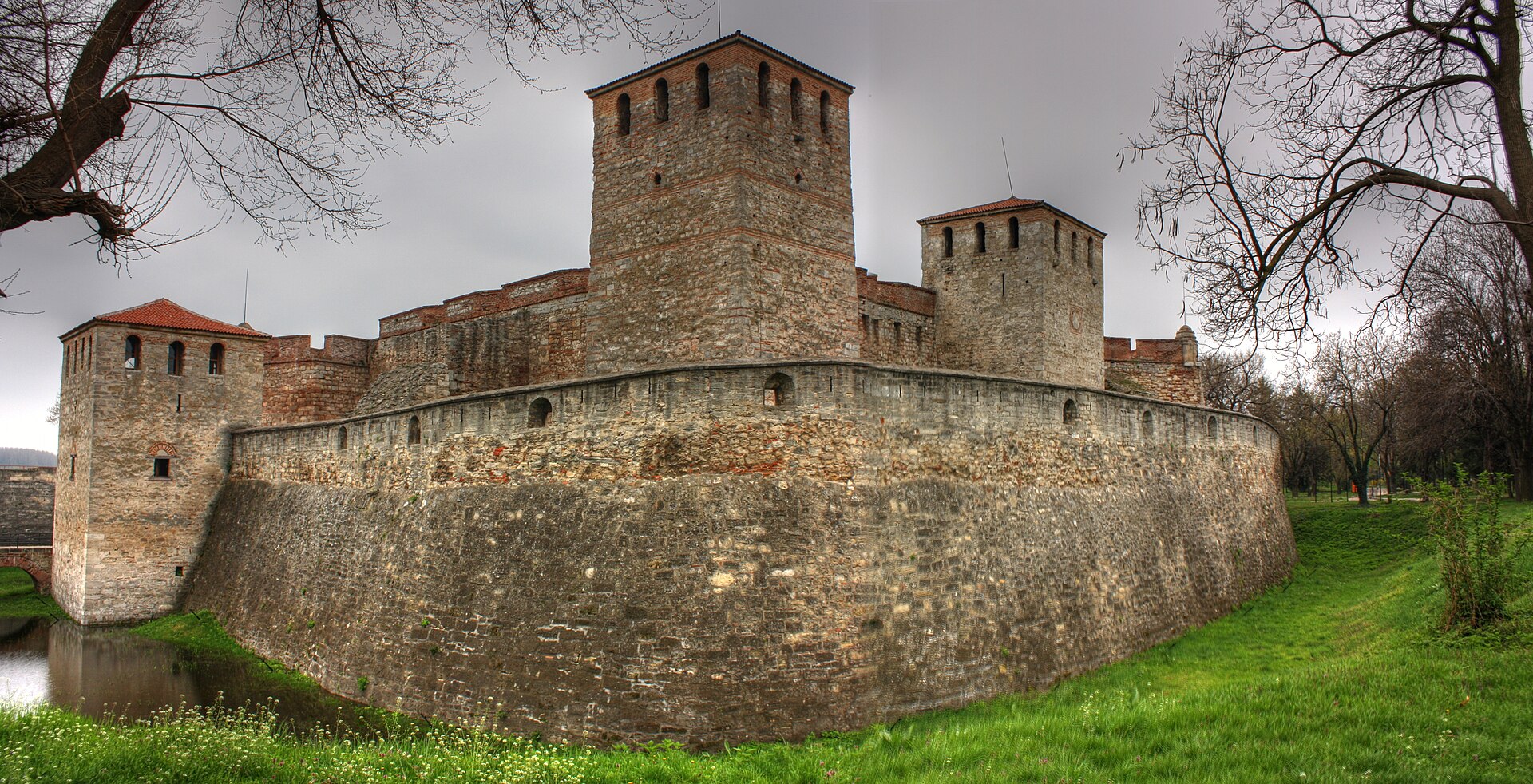
Perched on the banks of the Danube, Baba Vida is a fortress that seems to have paused time itself. It stands in Vidin, a quiet town in northwestern Bulgaria where the river widens into something almost majestic, its currents carrying centuries of stories. This isn’t just another medieval ruin—it’s a place where history feels tangible, where the layers of the past haven’t been smoothed over by modern tourism. The fortress has watched empires rise and fall, armies march and retreat, and traders come and go, all while remaining a steadfast presence in the life of the town.
The origins of Baba Vida trace back to the 10th century, though its foundations rest on something even older. Long before the Bulgarians fortified this spot, the Romans had built Bononia here, a small but strategic outpost along the Danube. The fortress we see today, however, took shape under Bulgarian rulers, who turned it into a symbol of power as much as a military stronghold. Its thick walls, deep moats, and sturdy towers were designed to withstand sieges, but they also served as a statement—Vidin was no backwater, but a key player in the region’s shifting alliances. Over the centuries, the fortress changed hands more times than anyone could count, passing from Bulgarian tsars to Hungarian kings and finally to the Ottomans. Each new ruler left their mark, reinforcing the walls or adding their own touches, yet the core of Baba Vida remained unchanged, a rare constant in a land of perpetual upheaval.
Walking through Baba Vida is like stepping into a medieval blueprint. The main gate, facing the town, leads into a courtyard encircled by high walls punctuated with arrow slits. From here, you can climb one of the towers, where the view stretches over the Danube and the flat, fertile plains beyond. The most imposing structure is the keep, or donjon, a squat, thick-walled tower that was the last line of defense during an attack. Its narrow windows and heavy stonework speak of a time when survival depended on such fortifications. Inside the fortress, the remnants of living quarters, storage rooms, and even a small prison hint at the daily life that once filled these spaces. It’s easy to imagine soldiers patrolling the ramparts, merchants haggling in the courtyard, or prisoners staring out at the river, wondering if they’d ever see home again.
What makes Baba Vida special isn’t just its age or its architecture, but the atmosphere that lingers here. Unlike more famous Bulgarian fortresses, it hasn’t been polished into a tourist attraction. There are no crowds, no souvenir stalls, no guided tours rushing you along. Instead, there’s a sense of quiet discovery, as if you’ve stumbled upon a secret that the rest of the world has overlooked. The Danube, just steps away, adds to this feeling. For centuries, it was both a barrier and a highway, connecting Vidin to the wider world. Ships laden with goods from distant lands docked at its banks, while armies used it as a natural defense. The fortress was built to control this vital artery, and even now, standing on its walls, you can almost hear the echoes of that past—the creak of wooden ships, the shouts of dockworkers, the distant clang of armor.
Today, Baba Vida isn’t just a relic; it’s a living part of Vidin’s cultural life. In the summer, the courtyard transforms into an open-air stage for theater performances, concerts, and festivals. The fortress comes alive in a way that feels both unexpected and entirely natural, as if the stones themselves are joining in. The best moments are in the evening, when the walls are bathed in soft light and music drifts across the Danube. It’s a reminder that history isn’t just something to be observed—it’s something that can still be felt, still be part of the present.
Vidin itself is often overlooked in favor of Bulgaria’s more tourist-friendly destinations, and that’s part of its charm. There’s no rush here, no pressure to see and do everything in a day. The town moves at its own pace, its streets lined with Ottoman-era houses, their wooden balconies sagging slightly with age. A few mosques stand as quiet reminders of the centuries under Ottoman rule, their minarets rising above the low-slung rooftops. Nearby, you can find traces of even older history—Roman ruins, medieval churches, and the occasional crumbling wall that hints at a time when this was a far more important place. But Baba Vida remains the heart of it all, a place that draws you in not with grand promises, but with the weight of its own quiet significance.
If you do find yourself in Vidin, take your time. Sit by the Danube and watch the water flow past, slow and steady, just as it has for thousands of years. Think about the armies that once marched along these banks, the traders who relied on this river, the people who built their lives around it. Baba Vida isn’t just a fortress—it’s a fragment of a much larger story, one that’s still being written. And standing within its walls, you might just feel the past brush against you, as real and present as the stones beneath your feet.