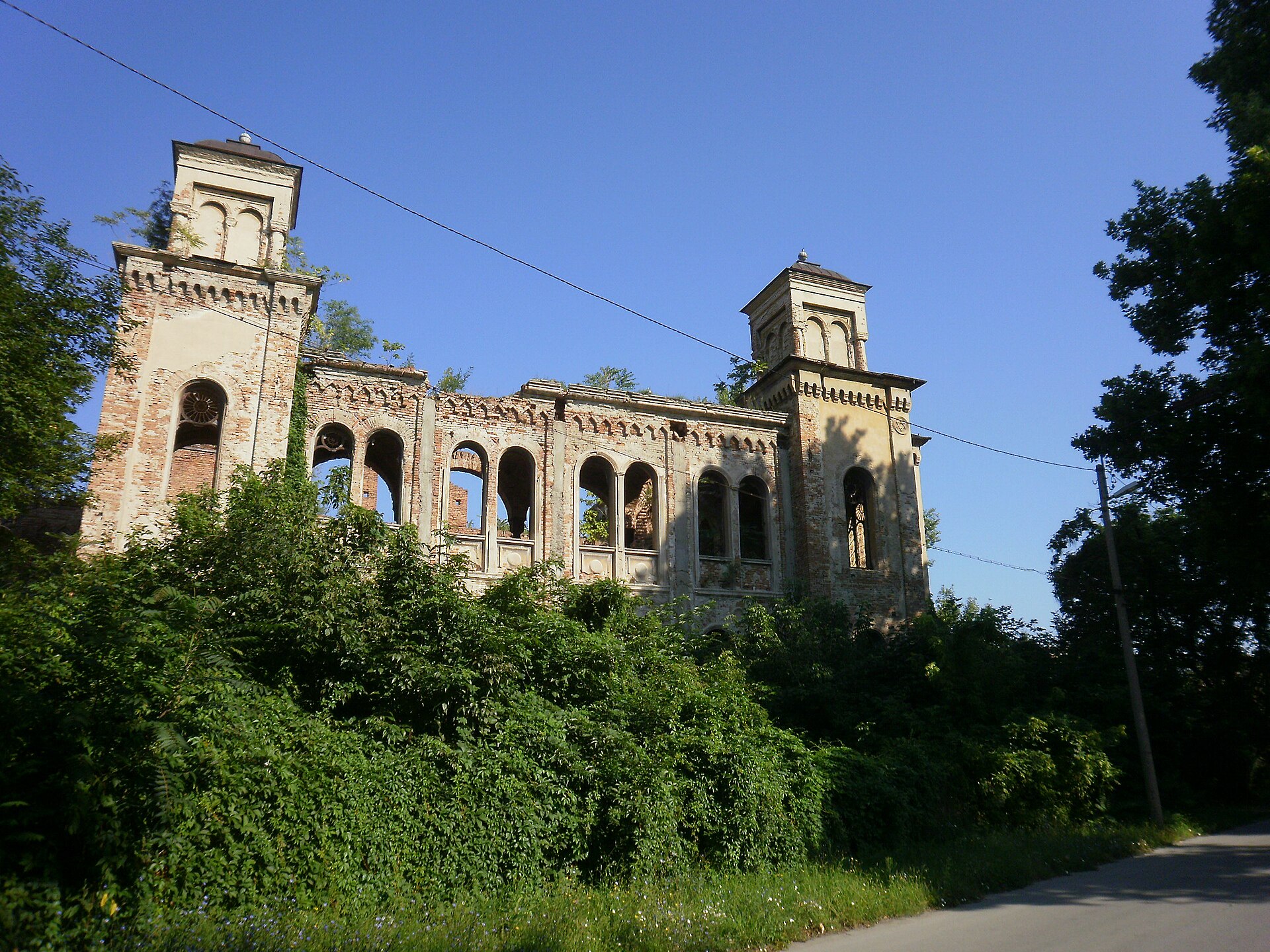
Vidin’s synagogue is one of those quiet places that seem frozen in time, holding onto memories of people and eras long gone but not forgotten. Tucked away on a side street in the old part of the city, it stands almost unnoticed among Vidin’s more imposing landmarks. The building itself is unassuming—low walls of pale stone, narrow arched windows, a roof with the faintest hint of a dome. There’s no grand display here, just a quiet dignity that feels fitting for a place where generations once gathered to share faith and hope.
The synagogue didn’t appear in Vidin by chance. By the 19th century, the city had become one of the most important centers of Jewish life in the Balkans. Sephardic Jews, expelled from Spain in the late 15th century, had settled here, later joined by Ashkenazim from Central Europe. Vidin became a home where traditions, languages, and lives intertwined. The Jewish community played a significant role in the city’s development—merchants, craftsmen, doctors, and teachers all contributed to its growth. The synagogue wasn’t just a place of worship; it was a symbol of that community, its unity, and its resilience.
The architecture reflects the spirit of the time when it was built. In the 19th century, Bulgaria, newly liberated from Ottoman rule, was embracing new styles that blended European influences with local traditions. Vidin’s synagogue is a perfect example of this synthesis. Inside, if the surviving descriptions are anything to go by, the space would have been adorned with the traditional elements of a synagogue: a carved wooden *aron ha-kodesh* housing the Torah scrolls, and a *bimah*, the raised platform for reading sacred texts. The walls were likely decorated with intricate patterns, while chandeliers cast a soft glow over those gathered in prayer. The atmosphere would have been one of quiet reflection, the kind of place where time slows down.
The synagogue’s fate, like that of Vidin’s Jewish community, has been far from easy. The 20th century brought wars, political upheavals, and the mass emigration of Jews to Israel. By the end of the century, the community had nearly vanished, and the synagogue fell into disrepair. For years, the building stood abandoned, its walls crumbling, its interior decaying. It seemed as though time was erasing all traces of Jewish life in Vidin. But in recent decades, interest in Bulgaria’s Jewish heritage has begun to revive. Restoration efforts have started, though progress is slow and uneven.
Today, the Vidin synagogue is more of a monument than an active house of worship. Visitors are rarely allowed inside, and when they are, it’s usually with a local guide or museum staff. But even from the outside, the building tells a story. It’s a reminder of how many cultures and peoples have shaped Bulgaria’s identity, their lives intertwined on this land. Vidin, perched on the banks of the Danube, has always been a crossroads—a place where merchants from Europe and the Ottoman Empire met, where travelers and pilgrims passed through. The Jewish community was part of that diversity, and the synagogue is one of the few remaining witnesses to its existence.
Visiting the synagogue isn’t just about seeing an architectural landmark; it’s an opportunity to reflect on how fragile the memory of the past can be. Inside, little remains of the original decor—just fragments of faded murals, peeling plaster, and the faintest traces of the life that once filled the space. But it’s this very incompleteness that gives the place its power. There’s no attempt to impress with grandeur; it simply exists, a silent witness to times gone by. If you listen closely, you might almost hear the echoes of voices that once filled the room—prayers, conversations, the laughter of children.
The synagogue isn’t just part of Jewish history; it’s part of Bulgaria’s story. It serves as a reminder that national culture is never monolithic, that it’s woven from countless voices and traditions. In the 19th century, Bulgaria was searching for its own identity, and every community—regardless of faith or origin—played a role in that journey. The Jewish community was an integral part of that process, and the synagogue is one of the few places where you can still feel that connection.
Today, there are almost no traces of Jewish life left in Vidin. The shops where Jewish merchants once traded, the homes where their families lived, the schools where their children studied—all have disappeared, swallowed by time. Only the synagogue remains, a building that was once the heart of that life. That’s perhaps why it feels so poignant. Here, the past isn’t just remembered; it’s something you can almost touch, something you can feel in the air. That’s the magic of places like this—they don’t just tell a story; they let you experience it.
The Vidin synagogue isn’t the kind of attraction that draws crowds. There are no bright signs, no souvenir shops, no cafes. It’s a place for those who seek meaning rather than entertainment, who are willing to pause and reflect. It doesn’t demand anything from visitors except attention and respect. And maybe that’s why it feels so valuable. In a world that moves too fast, places like this remind us that true beauty often lies in stillness and simplicity.