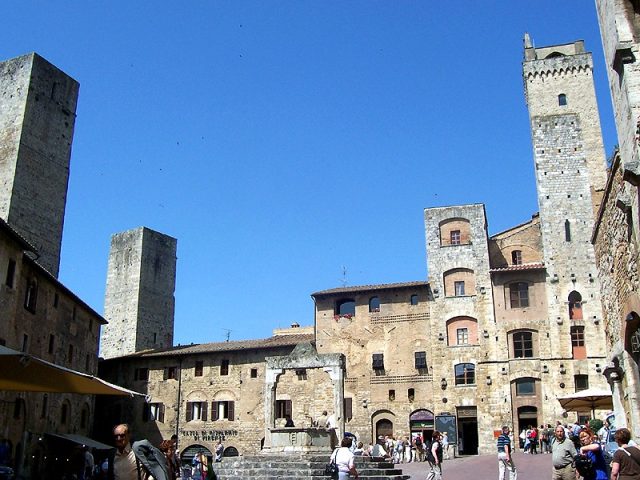
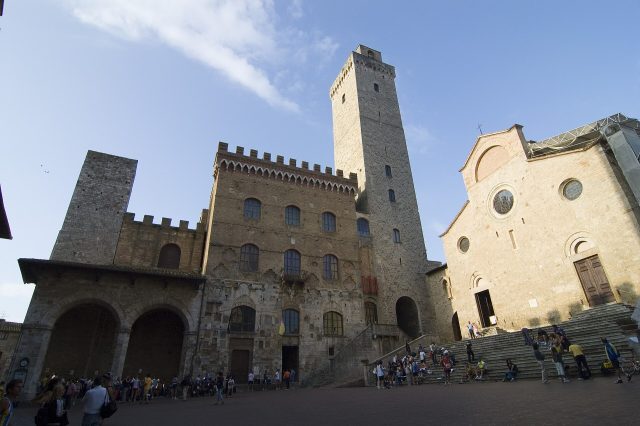
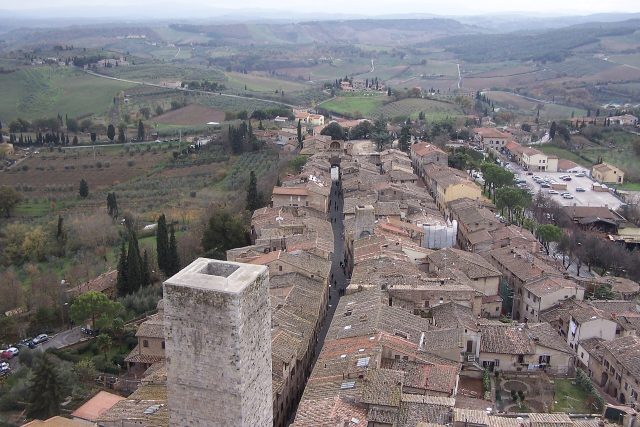
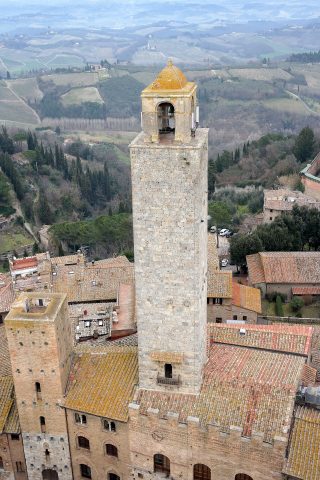
San Gimignano is a town that seems frozen in the Middle Ages, and its Collegiate Church, often simply called the Duomo, is one of those rare places where time feels strangely dense. Built in the 12th century on the site of an older church, it became not just a religious center but a symbol of the town’s prosperity, fueled by the trade in silk and saffron. Back then, San Gimignano was known as the "City of Beautiful Towers"—over seventy of them once pierced the skyline, each built by noble families to flaunt their wealth and power. Today, only fourteen remain, but the Duomo still stands at the heart of the town, a quiet witness to an era when merchants and pilgrims shaped its destiny.
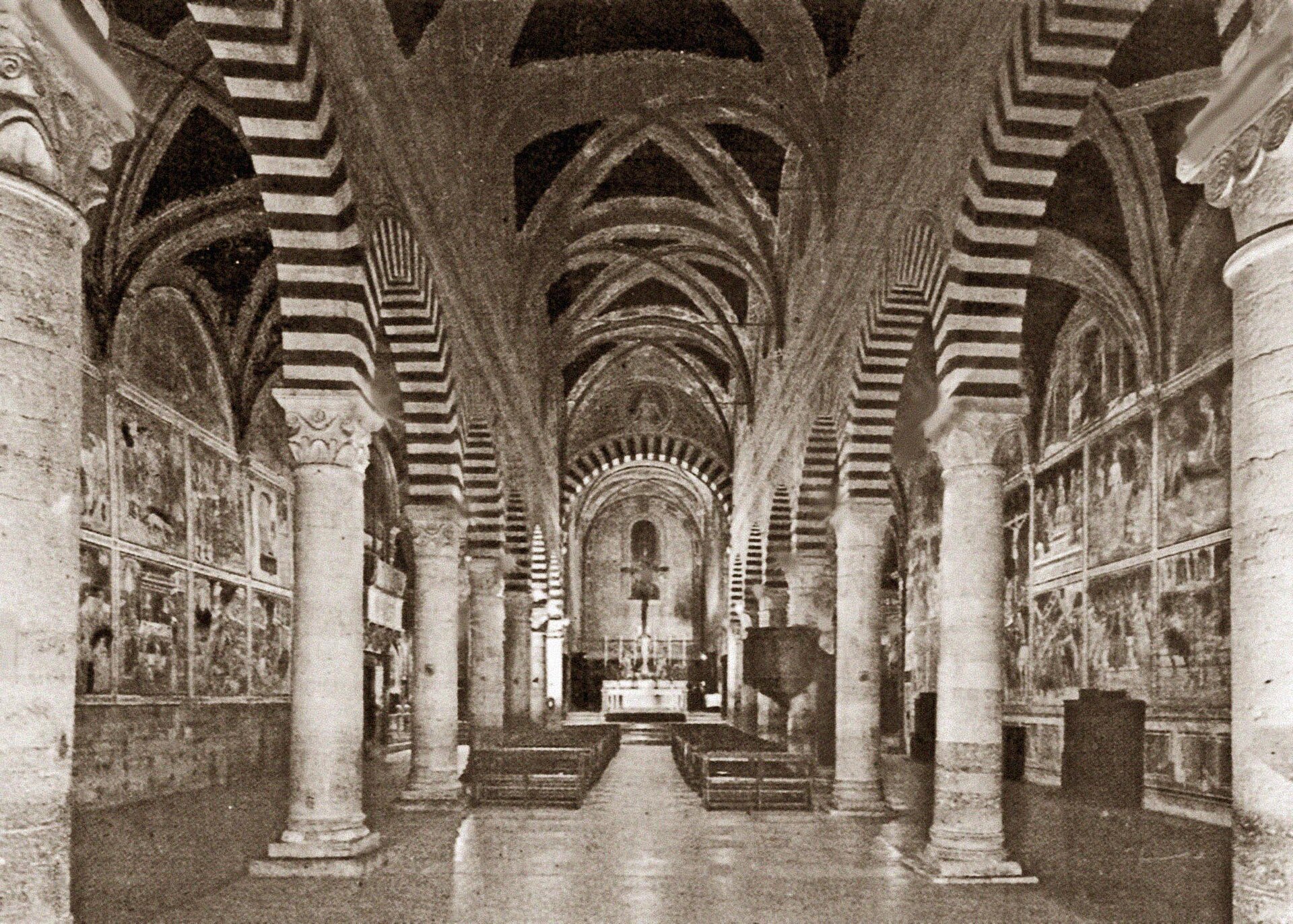
From the outside, the church is unassuming, its Romanesque facade plain and austere. But step inside, and the simplicity gives way to an explosion of color and storytelling. The walls are covered in frescoes, turning the Duomo into a vast, open-air gallery where every scene unfolds like a chapter from history. The main nave is adorned with works by Bartolo di Fredi and Lippo Memmi, masters of the Sienese school who, in the 14th century, filled the space with biblical narratives. Here, the Old Testament comes to life—from the creation of the world to the trials of Joseph—while episodes from the life of Christ are rendered with such vitality that the figures seem almost to breathe. The most striking are the depictions of the Last Judgment, where angels sound their trumpets and sinners are dragged into the depths of hell, a spectacle that still holds its power centuries later.
One of the most moving parts of the church is the Chapel of Santa Fina, dedicated to the town’s patron saint, a young woman who spent her life lying on a cypress board, her suffering believed to have protected San Gimignano. The chapel was frescoed by Domenico Ghirlandaio, one of the great artists of the Renaissance, and his work here is nothing short of extraordinary. The scenes depict Santa Fina’s life—her illness, her visions, her death, and the miracles that followed. One panel shows angels carrying her soul to heaven while the townspeople mourn at her bedside. Ghirlandaio captured not just the religious devotion but the raw human emotion, making these frescoes some of the most poignant in Italian art.
The Duomo hasn’t always looked as it does today. In the 16th century, it was remodeled in the late Renaissance style, with a new portico added to the facade, giving the building a more imposing presence. Yet inside, the medieval atmosphere remains intact. Even the later additions—a marble altar, intricately carved wooden pews—blend seamlessly with the older elements. The worn stone floors, smoothed by the footsteps of countless visitors, the flickering candlelight, and the way sunlight filters through the narrow windows to dance across the frescoes all contribute to a sense of timelessness. It’s as if the church exists in its own rhythm, untouched by the centuries.
San Gimignano has always been a crossroads. The Via Francigena, the ancient pilgrimage route from Northern Europe to Rome, passed through here, and the Duomo was a place of rest and reflection for travelers. Pilgrims would pause to pray, receive blessings, and gather their strength before continuing their journey, comforted by the thought that the town’s patron saint watched over them. Today, the church still welcomes visitors, though now they come for different reasons. Yet the distinction isn’t as sharp as it might seem—both pilgrims and tourists are drawn here by something deeper than mere curiosity.
Inside, the Duomo is cool even on the hottest Tuscan summer days. It’s a refuge from the heat and the bustle of the streets, a place to sit in silence and listen to the echoes of the past. Occasionally, the church hosts concerts of sacred music, and the sound of an organ or a choir fills the space, lending it an even greater sense of grandeur. But even without music, the Duomo has its own quiet life—the murmur of visitors, the creak of wooden pews, the distant chime of the town’s bells. Together, these sounds create an atmosphere that makes it easy to imagine oneself as part of this centuries-old story.
The Duomo is more than just an architectural landmark; it’s a living part of San Gimignano. Services are still held here, along with baptisms and weddings, and locals visit not just on special occasions but in their everyday lives. For them, it’s a place of memory, a link to those who came before. For outsiders, it’s a window into another era, a chance to touch something real and unspoiled by time. In a world where so much feels artificial and fleeting, places like this take on a special significance.
When you step back outside, the town greets you with the hum of daily life—the scent of fresh bread, the chatter of voices, the sight of the towers reaching toward the sky. San Gimignano feels unchanged by the centuries, and perhaps that’s its greatest charm. The Duomo remains its quiet, steadfast heart, holding within it the spirit of a time when art and faith were inseparable. If you ever find yourself here, don’t rush away. Sit on the steps for a while, look at the frescoes one more time, and you might just feel what so many others have felt over the centuries—a connection to something enduring.