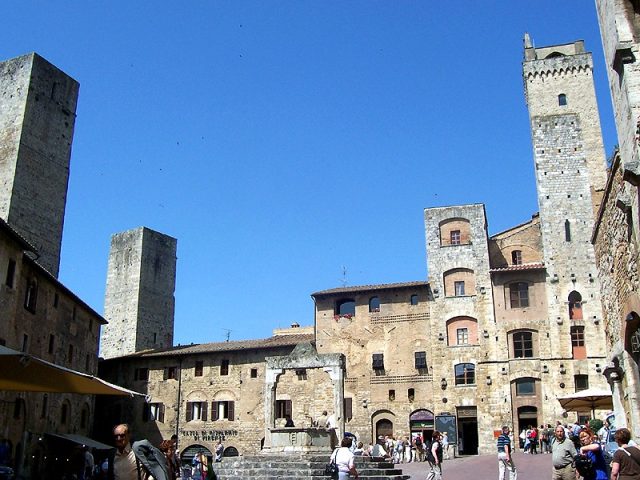
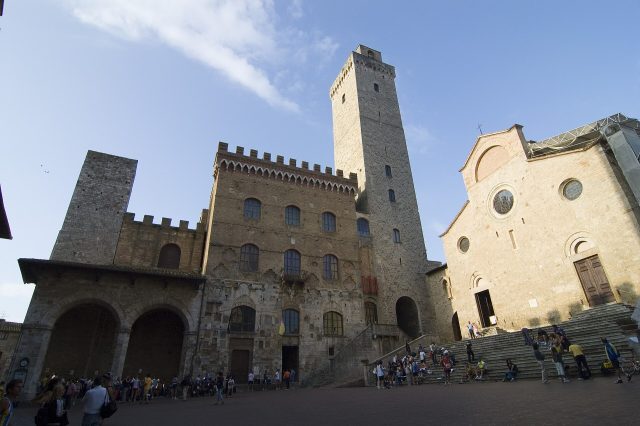
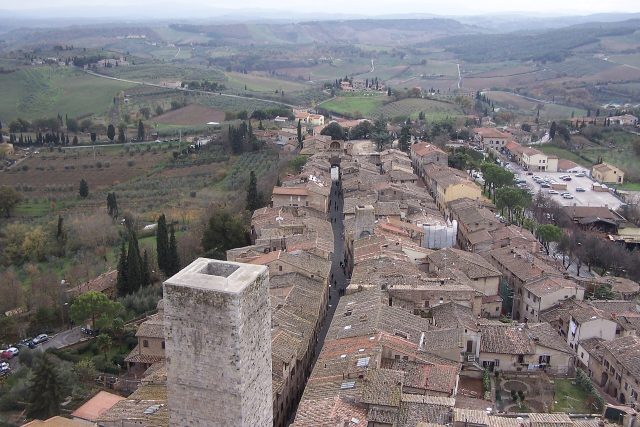
San Gimignano is often called the town of towers, and for good reason. In the Middle Ages, seventy-two stone giants rose above its skyline, each one a declaration of wealth and influence by the families who built them. Today, fourteen remain, their silhouettes shaping the town’s identity in a way that makes it instantly recognizable from a distance. These towers weren’t just fortifications—they were status symbols, their height directly tied to the power of their owners. The taller the tower, the more formidable the family.
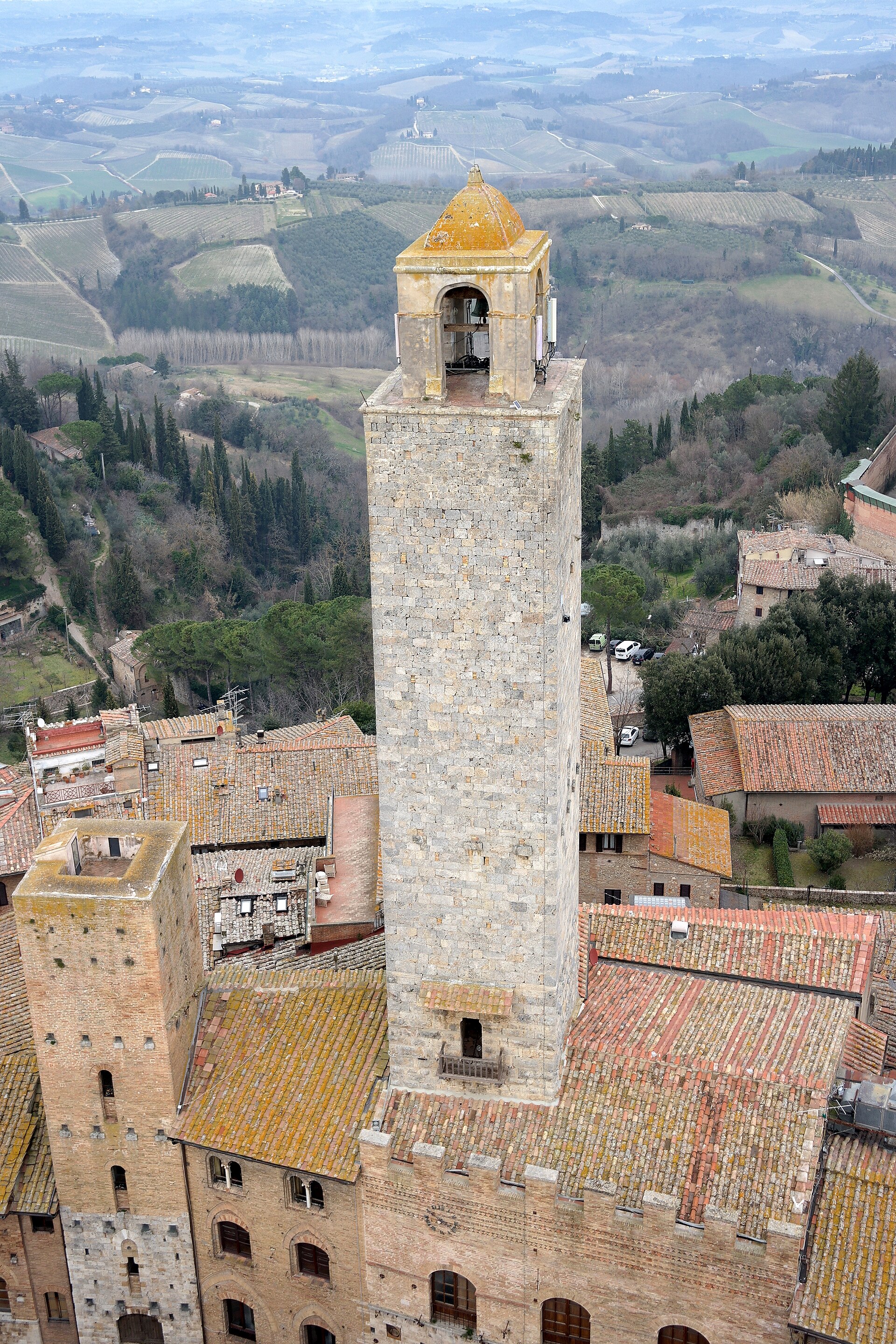
Among them, the Rognosa Tower stands as one of the oldest. Built in the early 13th century for the Ardinghelli family, it has witnessed centuries of the town’s history. At fifty meters, it wasn’t the tallest in San Gimignano, but its position on a hillside gives it a commanding presence, especially at sunset when the stone glows warmly in the fading light. The tower’s name, *Rognosa*—meaning "scabby" or "rough"—hints at its weathered appearance, though time has only added to its character.
The architecture is unmistakably medieval Tuscan: thick stone blocks, narrow slit windows designed for defense, and walls that taper slightly as they rise. Inside, traces of wooden floors remain, though the tower is closed to visitors—its staircases long gone. Even from the outside, its stark simplicity is striking. There’s no ornamentation, no grand flourishes, just the raw functionality of a structure built to endure.
Like many of San Gimignano’s towers, the Rognosa has survived wars, fires, and neglect. In the 19th century, when Italy rediscovered its medieval past, the town underwent restoration, and the tower was returned to something closer to its original form. Some details, though, like the crenellations that once crowned its top, exist only in old engravings. What remains is a quiet monument to an era when families competed not just in trade or politics, but in the very skyline of their city.
Today, the Rognosa stands on a small square, surrounded by low houses with terracotta roofs. The pace here is unhurried—locals sip coffee under the shade of plane trees, while visitors wander the cobblestone streets, cameras in hand. The tower itself is off-limits, but its presence is felt everywhere. It’s a reminder of how San Gimignano once was: a place where ambition was measured in stone, and every family’s reach was literally set in the sky.
There was once another tower belonging to the Ardinghelli nearby, but it didn’t survive. That loss makes the Rognosa feel even more solitary, like the last witness to a time when these structures dominated the town. San Gimignano’s towers have been compared to Manhattan’s skyscrapers, both shaping the horizon in their own way. But unlike the glass and steel of modern cities, these towers were built by hand, their stones laid one by one by families who wanted to leave their mark.
The walls of the Rognosa have seen it all—the clamor of medieval festivals, the quiet tension of political rivalries, the bustle of merchants haggling in the square below. Now, the streets are quieter, but the echoes of the past aren’t hard to imagine. On a still evening, when the light slants just right, it’s easy to picture the clatter of hooves on cobblestones, the distant toll of church bells, the murmur of voices rising from the piazza. The tower doesn’t just stand there; it holds those moments, suspended in time.
San Gimignano’s towers are more than just relics—they’re a living part of the town’s identity. The Rognosa, with its rough-hewn stone and unassuming presence, is a perfect example. It doesn’t demand attention like some of the taller towers, but it has a quiet dignity, a sense of endurance. In a place where history is etched into every corner, it’s one of the most tangible connections to the past. And while the world outside has changed beyond recognition, here, the view from the square hasn’t changed much at all. The tower still watches over the town, just as it has for centuries.