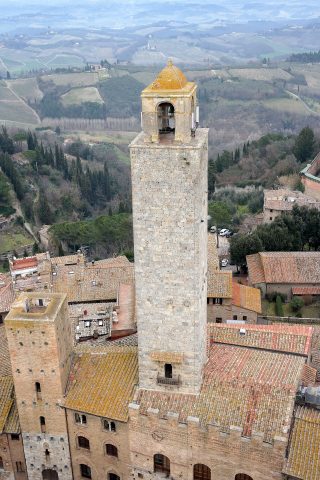
San Gimignano is often called the Town of Fine Towers, and the Torre Grossa stands as one of its most striking landmarks. Rising above the medieval rooftops, it feels like a silent witness to an era when wealth and influence were measured in stone and height. Built in the 13th century by the Gualtieri family, the tower wasn’t just a display of their power—it became a symbol of the town itself, which thrived as a key stop on the trade routes between Florence and Siena during the Renaissance.
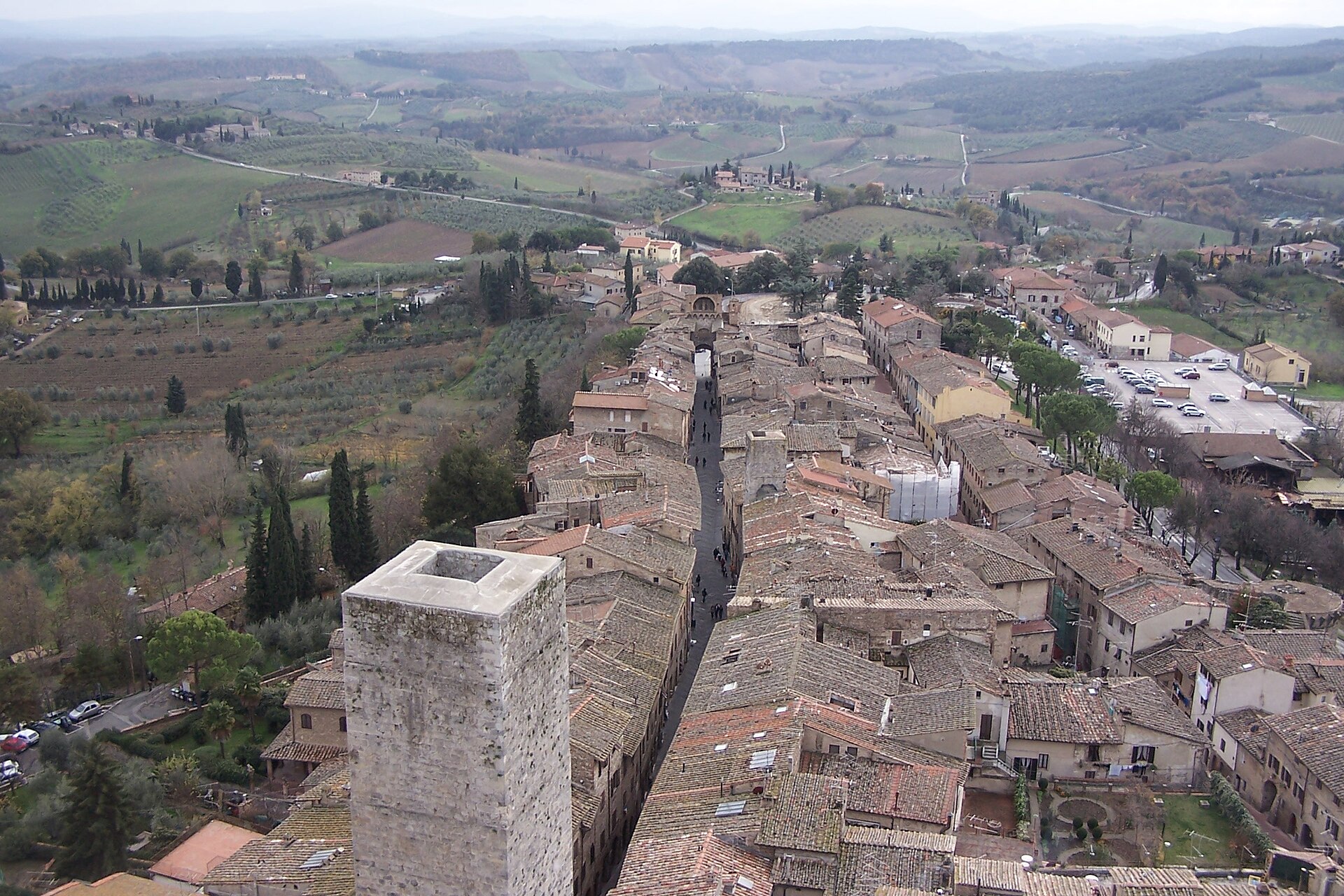
Climbing the steep stone steps of the Torre Grossa is like stepping into another time. From the top, the view unfolds in layers: terracotta roofs huddled together, narrow streets winding toward the central square, and the rolling hills of Tuscany stretching beyond the old city walls. On clear days, the horizon seems endless, and the only sounds are the distant murmur of visitors below and the occasional rustle of wind through the battlements. It’s a quiet reminder of how small the modern world feels when set against the vastness of history.
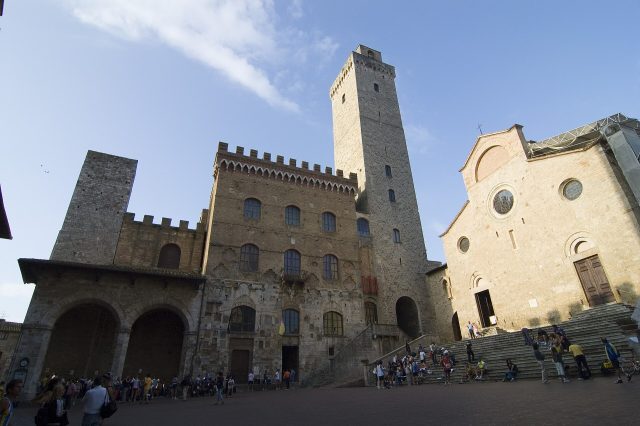
The tower’s story is woven into the fabric of San Gimignano’s past. During the Middle Ages, the town was a battleground for the Guelphs and Ghibellines, and towers like this one served as both status symbols and fortresses. Wealthy merchant families competed to build the tallest structures, though many were later demolished or shortened by order of the authorities. The Torre Grossa, standing at around fifty-four meters, survived as one of the most imposing. Its height wasn’t just for show—it was a practical advantage, offering a vantage point over the surrounding countryside.
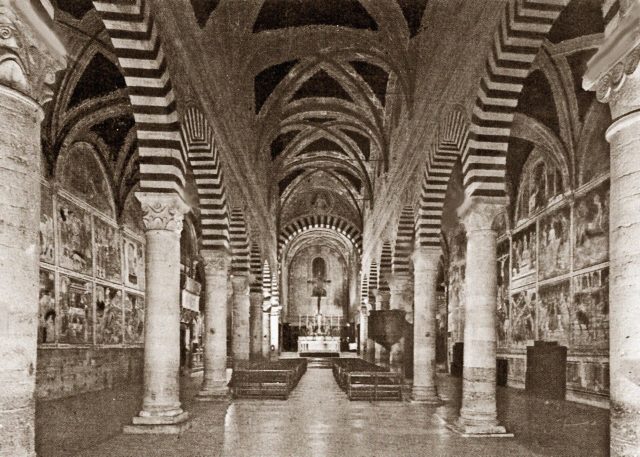
The architecture is pure Tuscan medieval: sturdy, unadorned stonework, narrow slit windows that once served as arrow loops, and thick walls that have weathered centuries. Inside, the wooden beams of the original floors still creak underfoot, echoing the footsteps of long-gone guards. The walls bear the marks of time—cracks, worn edges, patches of damp—each imperfection telling a story. Climbing to the top isn’t just about the view; it’s a slow unraveling of the past, where every stone feels like a piece of a larger puzzle.
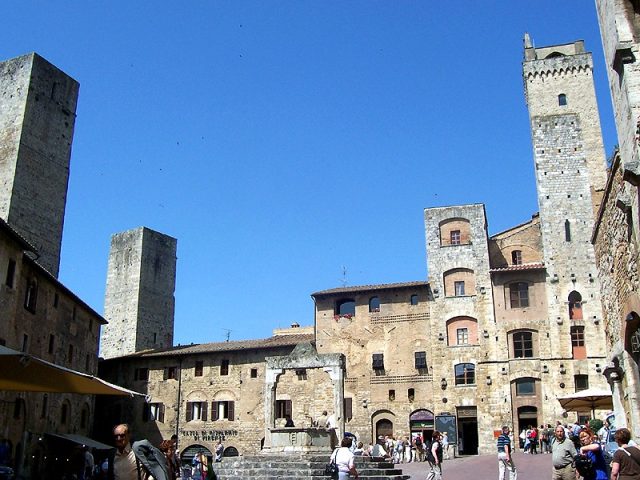
The tower stands near Piazza della Cisterna, one of San Gimignano’s most picturesque spots. The square is a snapshot of medieval life, with its ancient well, noble family crests carved into building facades, and quiet cafés serving local Vernaccia wine. In the evening, when the crowds thin out, the square softens into a pool of golden light, the stone walls glowing under the lamplight. It’s easy to imagine the scene centuries ago—merchants haggling, monks hurrying to prayer, and watchmen scanning the horizon from the tower’s heights.
What makes the Torre Grossa special is how seamlessly it fits into the town’s daily rhythm. Locals pass by without a second glance, tourists pose for photos in its shadow, and children play at its base, oblivious to the weight of history above them. It doesn’t feel like a relic; it feels alive, a natural part of the landscape that has simply endured. That’s the magic of San Gimignano—its past isn’t locked away in museums but woven into the streets, the air, the very stones beneath your feet.
For anyone curious about medieval Tuscany, the tower offers more than just a view. It’s a window into a time when city-states were constantly at odds, and towers were both symbols of power and essential defenses. San Gimignano’s hilltop position made it an ideal lookout, and its towers allowed residents to spot approaching threats. Today, the military significance is gone, but the atmosphere remains—a quiet echo of the conflicts and ambitions that once shaped the town.
As you climb the narrow staircase, it’s hard not to wonder about the countless people who have walked these same steps. Merchants rushing to market, guards keeping watch, families seeking shelter from raids. Each left behind an invisible trace, and now those layers of history blend with the present. Below, the town hums with life, while above, the wind carries a silence that feels timeless. It’s as if the past isn’t just remembered here—it’s still alive, lingering in the air.
The Torre Grossa isn’t just a landmark; it’s a meeting point between then and now. It reminds you that history doesn’t always fade—sometimes it stays, etched into stone, carried on the breeze, or felt in the quiet awe of standing where others have stood for centuries. San Gimignano may be a small town today, but its towers still hold the memory of a time when it was a center of trade, culture, and power. And in that memory, the past feels closer than ever.