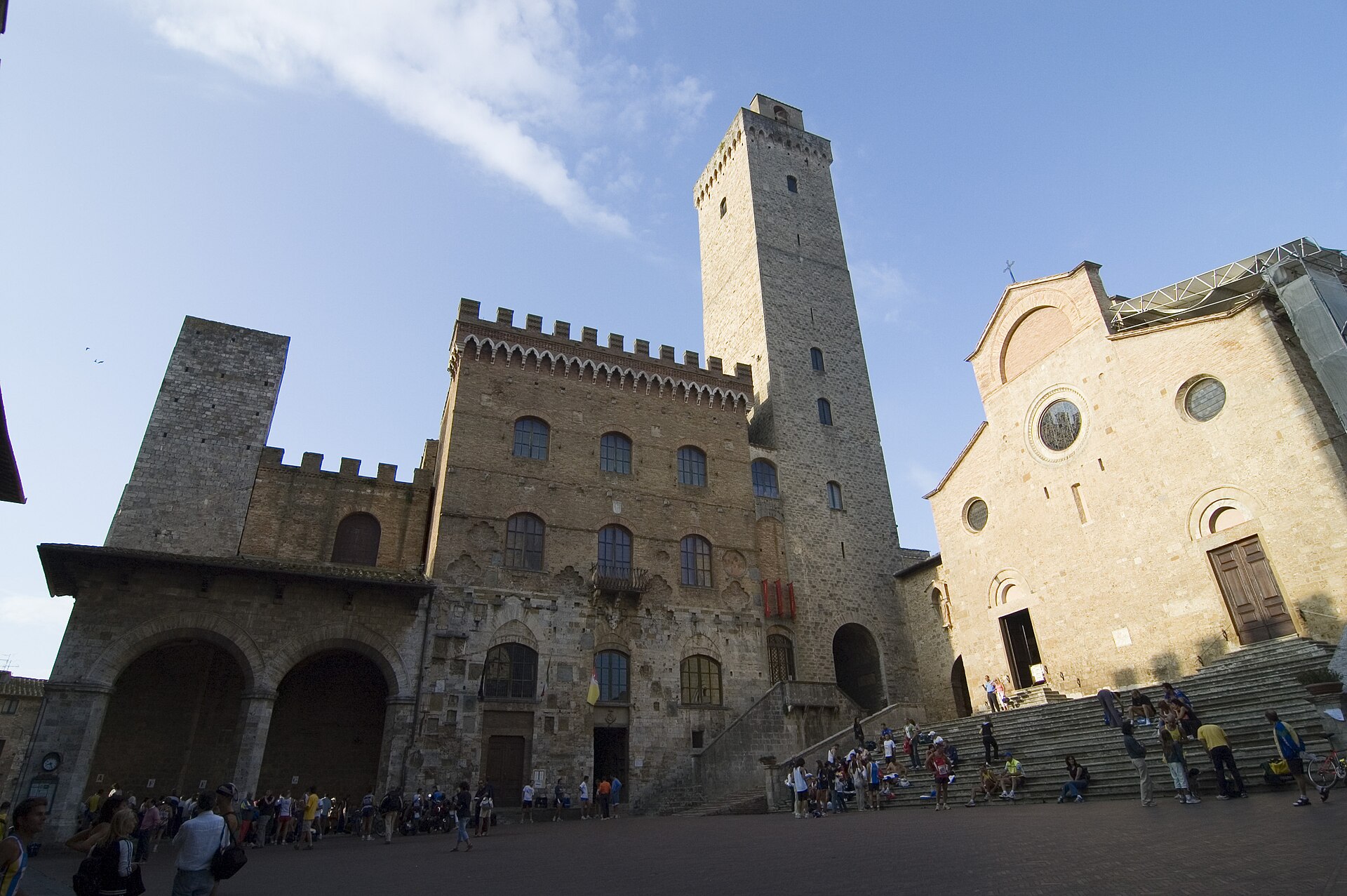
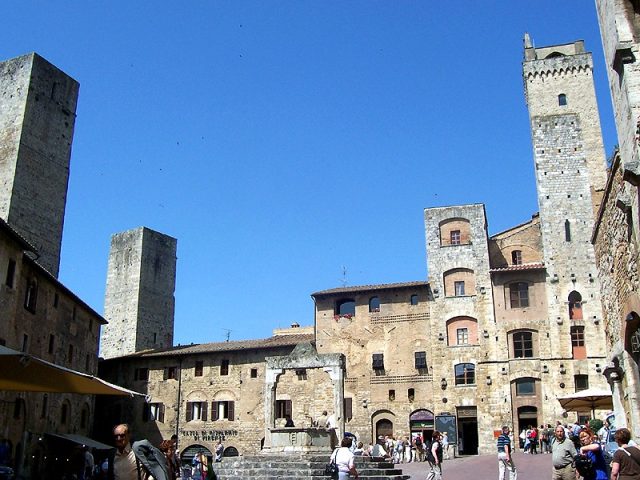
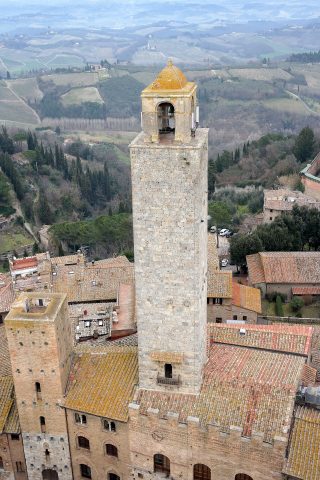
San Gimignano’s Piazza del Duomo is where the town’s medieval soul lingers most vividly. The square sits at the heart of the old city, framed by the skeletal remains of its once-fierce ambition—towers that still pierce the sky like the spines of a slumbering giant. These were not mere status symbols but declarations of power, built by rival families during a time when San Gimignano vied with Florence and Siena for dominance in Tuscany. The towers that survive today are only a fraction of what once stood, but they still cast long shadows over the cobblestones, a silent testament to an era when wealth and influence were measured in stone and height.
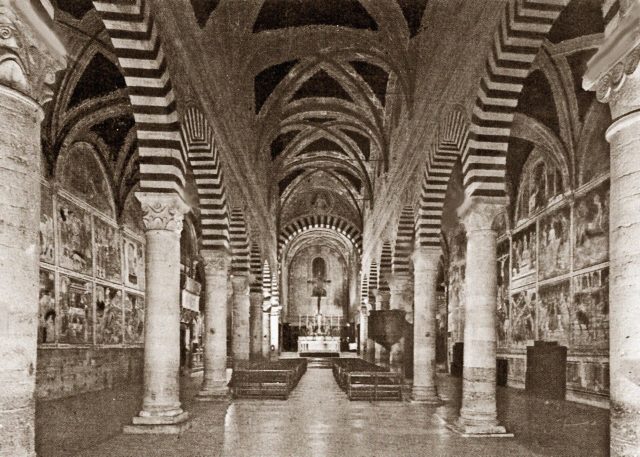
The square itself is small, almost intimate, yet every inch feels deliberate. The uneven paving stones, worn smooth by centuries of footsteps, guide the eye toward the Collegiate Church, its unassuming facade belying the treasures within. Inside, the walls come alive with frescoes by Domenico Ghirlandaio, Benozzo Gozzoli, and other Renaissance masters. The scenes unfold with such immediacy that the biblical stories feel less like distant parables and more like moments frozen in time. The Last Judgment is particularly striking, its figures rendered with raw emotion—saints radiant with divine light, sinners twisted in despair. Standing beneath them, it’s easy to forget the centuries that separate you from the artists who painted them.
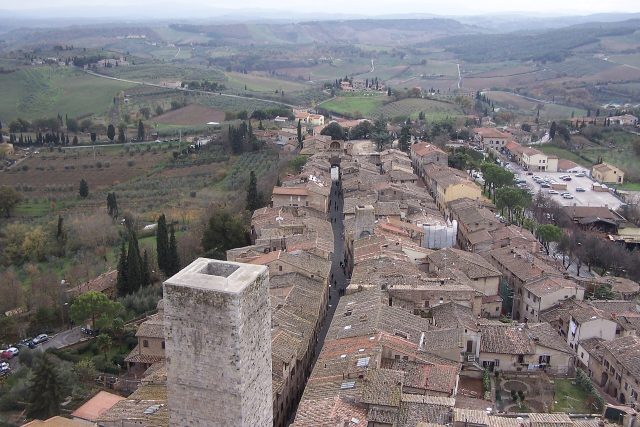
Beside the church, the Palazzo del Podestà looms, its massive bulk softened by the passage of time. The tower attached to it, the Torre Grossa, is the tallest in San Gimignano, and climbing its narrow staircase is like stepping into the past. The wooden steps groan underfoot, their surfaces polished by generations of hands and feet. From the top, the view stretches across the town’s clustered rooftops and out to the rolling hills of Tuscany, a landscape that has changed little since the Middle Ages. Below, the square hums with life, but up here, the air is still, as if the weight of history has settled into the stones themselves.
The palace’s interior offers another layer of the town’s story. The grand halls are adorned with faded frescoes depicting scenes of medieval life—feasts, battles, and the daily rhythms of a society governed by strict hierarchies. Coats of arms belonging to long-forgotten noble families are carved into the walls, their colors still faintly visible. These were the people who shaped San Gimignano’s destiny, and their presence lingers in the quiet corners of the palace, where the echoes of their voices seem to rise from the very floors.
Piazza del Duomo is far from a relic. It remains a living part of the town, a stage for the same rituals that have played out here for centuries. Markets still spill across the square, vendors hawking local cheeses, wines, and olive oil beneath the watchful gaze of the towers. Festivals and weddings fill the space with music and laughter, just as they did in the days when merchants and pilgrims crowded the streets. The best time to experience the square’s magic, though, is when the crowds thin—early morning, when the first light slants across the cobblestones, or late evening, when the last tourists have drifted away. In those quiet moments, the past feels almost tangible. The scent of woodsmoke from a nearby café mingles with the faint aroma of baking bread, and the distant strum of a guitar drifts through the air, as if the town’s medieval troubadours have never truly left.
The towers that surround the square are more than just architectural marvels; they are the remnants of a fierce competition that once defined San Gimignano. In the 13th and 14th centuries, wealthy families vied to outdo one another, building taller and more elaborate towers as symbols of their power. At its peak, the town boasted over seventy of these structures, their silhouettes creating a jagged skyline that must have been a sight to behold. Today, only fourteen remain, but they still dominate the landscape, their stark lines softened by time. Each tower has its own story—some were built for defense, others purely for prestige—but together, they form a kind of vertical history of the town, a reminder of how deeply ambition and rivalry shaped its identity.
What makes Piazza del Duomo so compelling is the way it balances history with the present. It’s a place where the past isn’t just preserved but actively lived. Locals still gather here, sipping espresso at outdoor tables or chatting on the steps of the church, their voices blending with the murmur of tourists. The square’s cafés and shops offer a taste of modern Tuscan life—creamy pecorino cheese, robust Vernaccia wine, and the kind of simple, hearty food that has sustained the region for generations. Yet even these everyday pleasures feel infused with history. Eating a plate of pici pasta on a terrace overlooking the square, it’s easy to imagine the same meal being served centuries ago, perhaps to a weary traveler or a merchant counting his coins by candlelight.
San Gimignano is often called a museum town, but Piazza del Duomo defies that label. It’s not a place frozen in time but one that has adapted, absorbing the rhythms of each new era while retaining its essence. The square has seen countless changes—wars, plagues, the rise and fall of empires—but it has endured, its stones bearing the marks of every generation that has walked across them. Whether it’s the bustle of a festival, the quiet of a winter afternoon, or the golden light of sunset gilding the church’s facade, the square never feels static. It breathes, it shifts, it lives. And that, perhaps, is its greatest trick: making the past feel not like something distant and untouchable, but like a story that’s still being written.